Showing posts with label American fiction. Show all posts

Sunday, November 18, 2018

Lolita by Vladimir Nabokov


 I may have mentioned I love Baroque music.  Here is J.S. Bach's Trio Sonata in C Major BWV 529.

And if any of you are wondering what happened to the dust jacket of my book, let me introduce you to the culprit:


In the line up we have Mrs. Oliver on the left and Lt. Columbo on the right, but who is that in the middle trying to hide?


I believe it is Miss Lemon, my serial book nibbler.


LolitaLolita by Vladimir Nabokov

My rating: 3 of 5 stars


This was a book I was never interested in reading, but a fellow blogger made a comment about the book that persuaded me to give it a try.

Is Nabakov a powerful, eloquent writer? Sure. Is the subject matter horrible? Yes.

I have a number of opinions about this book. If something is brilliantly written, does that justify the subject matter? Am I a better person for having read this book? Am I a smarter person? Was this book a valuable addition to my library?

The answer is no. All I can say is that I now have read a very famous and controversial book. When I was young that was the motive for reading a lot of books. I think that is why most people read 50 Shades of Grey. They read it so they can say they read it. They're on the "in", not on the "out".

At my age, I no longer care what anyone else is reading.

As most people already know, the book is about a forty-something man who has a fixation on barely pubescent girls, nymphets, he calls them. He explains it as some kind of unrequited love from when he was a pubescent boy and loved a girl his age. He is hungering for something out of reach.

He is European, but travels to America and moves in with a woman and this is where he meets Delores Haze, his Lolita. A weird series of events leads him to becoming the guardian of Delores, he marries the mother and she is killed through a freak accident, and he basically kidnaps Delores and travels around the country in order to escape detection.

Delores is at his mercy and has to do whatever he wants, whenever he wants, wherever he wants, like in a classroom at one time, but mostly hotel rooms.

Nabokov reveals a lot in his first person narrative. The man, Humbert, hears Delores sobbing at night, but makes no comment rather than report it. It's little remarks like that that fill you with horror for this little girl.

Humbert tries to appease her by buying her all sorts of gifts and ice cream, things that a twelve year old would want. And Delores occasionally gets the upper hand.

One wonders what exactly Humbert saw in Delores, other than her age, sex, and helplessness. He honestly describes her as rude, stupid, dirty, she doesn't shower or wash her face, her nails are torn and dirty. Her clothes are unclean. I doubt that is how the actresses who portrayed her in the movies looked. I think Nabokov wanted us to see just how perverse Humbert is. There's nothing all that appealing about Delores.

Sometimes Humbert blathers. He really gets wrapped up in his own narcissistic eloquence.

But I find myself rooting for Delores and praying for her escape.

The final justice is in the end when Humbert finally realizes that for all of his obsession, he was never someone of any importance to Lolita. Hardly a blip on her map.

Now I do not know what kind of research Nabokov did on Sociopaths, but I doubt many of them bother justifying their actions the way Humbert did and I doubt any of them think as poetically as he did. Most of them think and act like animals. Worse than animals. Animals don't imprison other animals for their personal pleasure.

People can gush about this book but they need to look real sex criminals in the eye like the bus driver who kept those poor girls prisoner in his house all those years. That's how they really are. In fact Delores is based on a real person, eleven year old Sally Horner who was abducted in 1948, although Nabokov denied this.

I've read reviews that call this book "wickedly funny". I fail to see the humor. I cannot forget what sort of person is narrating the story.

Why did Nabokov write a book like this? Supposedly he explains at the end of my edition. When I finished reading it, I still did not understand why someone would find such a topic so alluring.

I guess if someone writes something well, it doesn't matter how gruesome the topic is.

Actually I don't guess. Because of this book, I hesitate to read another Nabokov.


View all my reviews


Miss Lemon making her escape.  You can run, but you can't hide, Miss Lemon

Until next time, Adieu from all of us!


Thursday, May 24, 2018

Lions, Harts, Leaping Does and Other Stories by J.F. Powers


Here is Mendelssohn's Violin Concerto E Minor OP.64, performed by Hilary Hahn with the Frankfurt Radio Symphony Orchestra.


This is another book I read while on the plane to Virginia Beach, where my son was graduating a couple of Saturdays ago.  I started the book about a year ago and couldn't get into it. This time, I gathered the author's style and intent and found the stories, if not riveting, rather interesting.


Lions, Harts, Leaping Does and Other StoriesLions, Harts, Leaping Does and Other Stories by J.F. Powers

My rating: 4 of 5 stars


Interesting collection of stories centered around the day to day lives of priests. I am not Catholic but I found the personalities, thoughts, trials and mundane details of the various priests existence to be interesting. Some of the stories are depressing, but some are quite funny.

One priest feels stuck in a small parish where he has been the underling to a superior priest for years. He dreams and hopes of getting his own parish. Yet he seems to persist in a stubborn unawareness that his ambition is what keeps him back. As well as his carnal and decidedly un-spiritual view of life.

Another priest chaffs under the skin flinty and domineering ways of the priest over him. In fact more than a few stories are about subordinate priests suffering under the authorities of a narrow-minded, old-fashioned and cheapskate priest in charge.

A couple of stories are narrated by a parish cat that is both poignant and humorous.

The final story is about a young man who wanted to become a priest but was not accepted into the seminary. He partners up with a man who is a bit of a con man and sells Catholic supplies to various priests. In this story we go from feeling sorry for the young man to realizing he's a bit of a shyster himself because it appears he was actually trying to avoid the draft.

These stories provide a unique cultural perspective in a certain faith, in the mid-west in the thirties, forties and fifties of the last century.


View all my reviews


And briefly, a free download on my Kindle: a book on poetry...

Modern British PoetryModern British Poetry by Louis Untermeyer

My rating: 4 of 5 stars


This is a collection of poets from the turn of the last century who were leaders in their genre. Untermeyer gives a brief biography and sketch of the development of each poet's craft followed by a couple of examples of their work. This book was written in 1911 so one has to realize that the word "modern" must be used inside that time frame.


View all my reviews


And here's a teaser:

Meet Lt. Foyle


But more about him next time...

Thursday, August 20, 2015

Death of a Salesman by Arthur Miller


 This review contains spoilers.

I had read this book years ago but this second reading brought home its significance for me.  I suppose one has to have accumulated years of experience and wisdom to appreciate what Miller was driving at.

Death of a Salesman is about Willy Loman, his wife Linda, his sons Biff and Happy and some other characters who briefly enter into the story.  Willy Loman is a traveling salesman who has created a myth about his life to his family.

He wants his wife to believe that he is successful and sales are doing great but he's tired of all the traveling.  Linda encourages him to speak to his boss about working locally.  They've got bills to pay and there's a lot of pressure.  He is not the salesman he was.

What mostly torments Willy is that his dreams rested on his sons, mainly Biff, who was going to be a football star.  Biff was on the verge of getting a full scholarship to a big college for football but he failed a final exam in high school thus rendering his dream, no pun intended, academic. 

At the time of the story's opening, Biff has just returned from living out west where he worked various jobs such as ranching.

Willy feels as though he's been handed a raw deal.  He doesn't care that Biff works or can live independently from him.  He wants him to dream the same dream Willy has been dreaming all these years.  He wants Biff to become a big shot success story in New York.

There is constant friction between Willy and Biff because of their opposing viewpoints about life.  Willy wants Biff to recreate the smashed dream and Biff knows it's over.

Miller exposed a profound truth in this play.  There are people who would rather live a lie than face the truth.  That's what Willy is determined to do.  He's determined to play the role of the successful salesman and he wants Biff to play along.  He doesn't bother with Happy because Happy has already made the decision to think no deeper than the next woman to sleep with and bottle to get drunk by.

Biff started out the same way as Happy.  They both grew up selfish and irresponsible, neither believing they needed to exercise self-control, deal honestly with others or show any kind of sense of honor.  When natural consequences followed, so did their rage at the "bad luck" that, in their minds, was foisted on them by other people.

Biff refused to study for his high school exams because he didn't want to.  His cousin, Bernard, tried to tutor him, warned him that he wasn't going to pass.  Biff didn't listen, he was going to be a football star and football stars don't live by the rules lesser mortals abide by.

When Biff failed his exam, he went running to his father to make it right.  What comes next is the turning point for Biff.  He makes the horrible discovery that his father is not the man he thought he was.  He had never  quavered in faith that his father knew what was best.  With this myth shattered Biff runs off.

When he finally returns it is to confront his father and break hold of the lie his father clings to and has wrapped around his sons.  He realizes that his dad is too far gone.  His father cannot accept that none of his aspirations will ever come to pass.  He's a worn out, useless salesman that receives no respect from his employers. Happy is a shallow punk.  Linda is tormented over her husbands unhappiness but he knows he's betrayed her so he is nasty and disrespectful to her to hide from his own duplicity.

Only Biff has awoken and he tries to tell his father the truth.

Biff:  And I never got anywhere because you blew me so full of hot air I could never stand taking orders from anybody!

Willy can't hear what his son is saying to him because he's too far gone.  A friend told me once that when we're young we have a choice over how we think or act but when we play a role for so many years we become a passenger on the train.  There's no going back.  That's where Willy arrived.  He could no longer face reality.

But somewhere in the recesses of his mind he must have known the truth.  He decided once for all to make money for his family and get everyone to care about him.

His plan only partly works.  After several unsuccessful attempts at crashing his car he finally manages to kill himself in a wreck.  The insurance pays off his debts.  But it raises him in no one's eyes.  At the funeral his wife asks why nobody came.

The play does not leave the reader completely bereft of hope.  While Happy is determined to live on and "beat this racket" for his father's sake, Biff finally understands and moves on.

The story implicitly asks the question, why are we here?  What is the purpose of our existence?  To become a "success"?  How is that word defined?  If this world all there is, then work hard, make lots of money, use your talents and be the best you can be.

Some religions, such as Buddhism or Hinduism, believe in higher realms and we must stop caring about this world in order to achieve the next level.

Christianity believes that all we do in this world should honor our Creator.  And not only should we honor him but have personal relationship with Him, more than even our spouse, children or closest friends.  We strive to be the best in this world but only as a means to an ultimate destination to live  with God and enjoy Him forever.

That is my perspective and it trivializes any worldly dream.  What I saw in Miller's play was a fear of reality because of the hopelessness it produced.  As long as the characters could chase something they could forget everything else.  Because without God, what's left?


Sunday, August 2, 2015

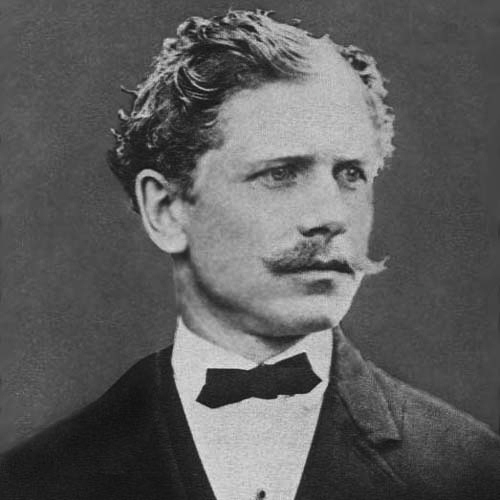
Civil War Stories by Ambrose Bierce


Ambrose Bierce was an enigmatic man.  He wrote for newspapers, short stories, and poetry.  His writing was colored by acerbic wit and more than a touch of bitterness.  He traveled to Mexico in 1913.  In a farewell letter he wrote, "If you hear of my being stood up against a Mexican stone wall and shot to rags, please know that I think it a pretty good way to depart this life..."

That was the last heard of Bierce.  It is assumed that he died in the siege of Ojinaga in January 1914.

This collection of stories are considered some of the best of Bierce's fiction.  They are inspired largely from his own experiences in the war.  However, Bierce's writing isn't worth reading because he is an authority on the Civil War but rather because of his ability to cause the reader to dive into each scene and experience along with the characters the events that take place.

Perhaps he is a little verbose on detail but that seems to be a characteristic of writers of that day.  Another common story technique that Bierce uses is to create a story line that appears to have no arc.  It simply builds until the final paragraph, sometimes the last sentence, where the full force of the story arrives home to astound the reader.  

My one criticism is that in some of the stories the difficulty for the protagonist could have been avoided if he had only employed common sense.  In one such story a man does amazingly foolish things because, as it turns out, some idjit of a woman back home "hoped he wouldn't turn out to be a coward as Captain so and so claimed."  Really?  We counter that with risking our life to the point of finally losing it for nothing?  How about just finding a new girlfriend?

Another story has a Captain so blindly following orders that he knowingly engages in friendly fire because ordered to "shoot ahead no matter what" by a superior who had also told him to never question an order.

But there are also some real gems.  Parker Addison, Philosopher is my favorite.  A Union spy engages in a witty, belligerent repartee with a Confederate General who has him in custody.  The wit and belligerence is all on the side of the spy.  The general merely asks formal questions.  He even smiles at some of the remarks.  The spy apparently has no belief in any kind of afterlife and thumbs his nose at his imminent death.  Until he is unexpectedly faced with it.  The ending is tense and the action lightening-speed paced culminating to a surprisingly peaceful end.  Well, at least for one of them.

Bierce doesn't spare the reader the horrors of war.  There is no romanticism here.  Nevertheless his stories are told with rich descriptions and show the honor and respect due to both sides as they each act according to their convictions.  Probably the most poignant of his stories deal with the dividing of families as each choose the side they serve, sometime with harrowing  results.

Anyone interested in Civil War history and plot twist play in the style of Poe, O Henry or even Lovecraft will enjoy this small collection of short stories by a man who, sadly, lived  through enough of the war to become tired of living.


https://upload.wikimedia.org/wikipedia/commons/5/57/Abierce.jpg