Showing posts with label Autobiography. Show all posts

Sunday, May 29, 2016

Agatha Christie: Five novels and I Should be Dead by Bob Beckel


Mozart's Sonata for Violin and Piano in F K376 is playing in the background as I review two very different books for my latest blog post.  This is going to take a little longer than normal since I sliced my ring finger while cutting vegetables.  The bulky bandage my poor finger is sporting allows me use of only the pointer finger but so far I'm getting along passably without too many mistakes.

http://ecx.images-amazon.com/images/I/51oXTB73LEL._SX342_BO1,204,203,200_.jpg

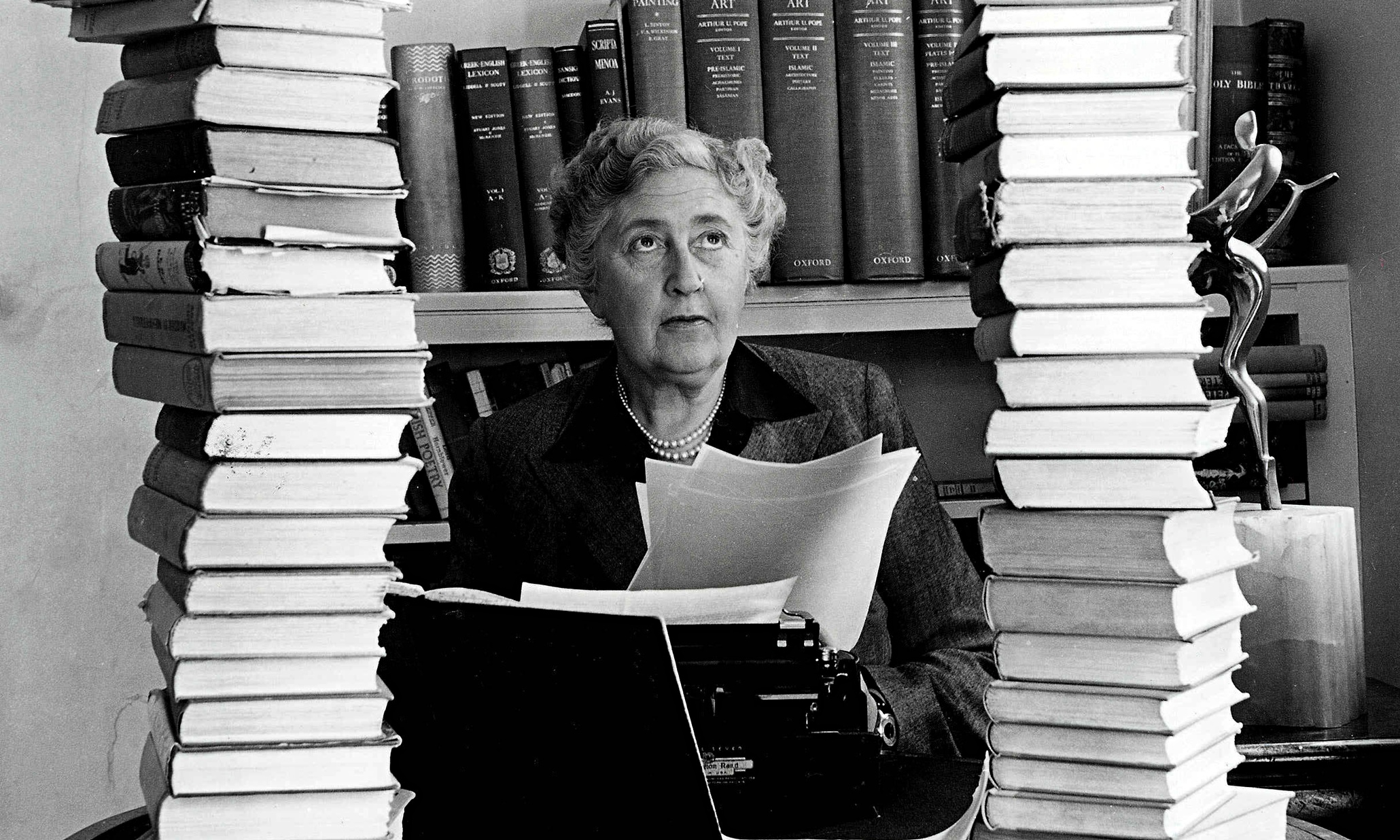
Agatha Christie's novels are different than her short stories, or any short mystery stories.  In the short story version of murder mysteries, the fatal occurrence happens almost immediately with a quick overview of clues and possible motives before sliding into home and ta da!  Mystery solved.

In Christie's novels, almost half the novel is used to develop the characters almost to where one forgets he is reading a murder mystery.  I suppose this is to give added depth to characters.  And I suppose it would if it was a murder mystery written by Tolstoy.  Agatha, bless her heart, does a fair job at plot development but other than getting murdered, acting suspicious, and solving crimes, her characters don't have a lot of inner soul.  


In short, I don't find her novels as interesting as the short stories.  In the first few novels, she succeeds in making everyone equally amoral and suspicious of the crime.  Her strategy would be to keep you guessing as to which of these emotionally detached people actually committed the crime when all of them seem capable of it. 

There's a sameness to the quality of her characters and stories so that individuals aren't worth describing because the difference is in the details: the place, names of characters, murder victim...otherwise it's the same template.

Maybe it's that I find using a human body as a stage prop around which to build a story a little disturbing, although I do like reading them so I can't be too self-righteous about it.

The story that rises above the rest is Dead Man's Folly which stars Inspector Poirot.  Because the suspects aren't respectable, it's a relief to be able to attach oneself to a lovable character with a moral compass.  He is the sun shining through the clouds and provides balance. 

Dead Man's Folly was also better developed than the other stories and had an unexpected twist that brought the whole thing to a gratifying conclusion.

  Another exception is the last story, M or N.  This story is not based on a murder and I enjoyed it better than the others.  It is about a husband and wife team, Tommy and Tuppence Beresford, who served in WWI and are now being called back into commission  during WWII. 

 Their job is to ferret out a German spy team, male and female, believed to be residing in a small coastal town.  We meet all the people living in a boarding house, one or two who must be the German spies.  Here Christie succeeds in meting out her clues, spaced far enough apart to maintain the reader's interest and to allow him to feel as though they lead to a logical conclusion.  She does not always do this in her other stories.

Too often she throws new information out at the end, putting everything in a different light.  I think this is a cheap trick and not satisfying.  

In M or N I was able to collect clues and successfully guess who the spies were before the end.

That was a good story.
https://static.guim.co.uk/sys-images/Guardian/Pix/pictures/2015/4/27/1430140140647/Agatha-Christie-surrounde-009.jpg


http://ecx.images-amazon.com/images/I/41HeDseKh4L._SY344_BO1,204,203,200_.jpg

I don't have cable and rarely watch TV; however, before I got smart and started bringing my Kindle to the gym, I would idly watch one of the shows playing on one of the many TV screens as I pedaled, stepped or ellipped (what's the word for using an elliptical?)  With inane sitcoms, MMA, and talk shows (I won't say which in case I offend anyone), I would usually settle for FOX news.  The show normally on when I was working out was The Five at Five.  

This show has a semi circle of conservative hosts who comment on current events in a snarky, entertaining way (if you enjoy such).  They had one token liberal on the show, a middle-aged, overweight man in suspenders bearing a striking contrast with his younger, attractive fellow commentators.

I think it is an irony that even though I really didn't agree with much of what Bob Beckel had to say, I liked him.  He was witty and always had a quick comeback for the sarcastic remarks directed at him by his co-hosts.  He seemed kind of like the underdog and I always root for the underdog, even if I oppose his politics.

So it was with interest that I read an article in a magazine interviewing him about his Christian faith.  When I saw his autobiography at a book fair I bought it.

I'm always interested in people's journey to faith. Beckel's story is one of an alcoholic/hard substance abuser whose life was a train wreck.  He credits Jesus Christ with turning his life around.

His conversion only comes into the last fifty pages of the book.  The rest of it is how his life became such a wreck in the first place:  alcoholic parents, abusive father etc..

I was impressed with his honesty.  He sugarcoats nothing.  He spent his youth mostly stoned.  He joined the Peace Corp to dodge the draft then hid in Indonesia to avoid working for the Peace Corp.  While in Indonesia he spent his time doing what he liked best:  drinking, taking drugs and sleeping with prostitutes.

Throughout his escapades one wonders how he managed to stay alive.  Even when he checked into rehab centers he conned his way into what he wanted. 

Beckel states that there are two types of people coming out of alcoholic families: victims and survivors.  He was a survivor.  He learned early on what to say to people in order to use them.  Prostitutes were the best way to attain sexual gratification with no strings attached.

In middle age, he married and had a family and it seemed began caring about other people, mainly his children.  This was what I consider the beginning of his redemption.  He became desperate to want to change, realized he couldn't do it by himself and turned to God.
 
The other valuable contribution this book provides is Beckel's experience in politics.  Beckel rose in the political world becoming campaign manager and consultant for governors, senators, including Jimmy Carter and Walter Mondale.
He reveals the inner machinations of our political system and it is eye opening.  If for no other reason, this book is worth reading to see how politicians operate, who they listen to, and how they make decisions.  Hint:  the average person has little to do with how the big boys make laws. 

 My only complaint is that Beckel's language is raunchy  and I don't know how a Christian finds it acceptable to use language that is unbecoming to a follower of Christ.  I will conclude that he is a work in progress as are the rest of us.

Finally, Beckel has a great sense of humor and the book is well written, moves at a good clip and is both heart rending and entertaining.  I read it in one sitting (I stayed up until 5 am.)

Due to a slow recovery from back surgery, Beckel resigned from his job at Fox and is now a commentator and analyst on CNN.

Sunday, February 10, 2013

The Travels of Sir John Mandeville translated by C.W.R.D. Moseley


 I found this book in a school library. It had been donated.  The school was private and didn’t mind donating the book to me.  It’s a pity this book is obsolete because it is not only interesting but offers an invaluable insight to the workings of the medieval mind.

    Sir John Mandeville wrote this book around 1356 AD.  He claims that the book is a collection of his journaling while he traveled from Europe to the Holy Land and beyond across the Middle East, India and eventually ending up in China.

     While some scoffers think his travels went no further than the nearest library, one cannot deny that his book is filled with a fast flowing narrative providing plenty of rich detail of every place he visited.  Reading Mandeville’s writing is like experiencing a viewfinder flashing its pictures quickly past your eyes. 

       A dry account it isn’t.  Suffused with the value of relics and Holy Places only a medieval Catholic could endow, one learns not only of all the places in Israel and Palestine that were important to a Christian of the Middle Ages but all the relics and miracles that give each place its value.

      Mandeville leaves the Middle East and moves on to Persia, India and China.  One can verify his veracity as far as historical leaders go.  We know that the Kahns did rule most of Asia and Russia at the time but one has to wonder about the fantastical places where he purports to meet humans who have bodies and abilities that sound as though they come straight from Greek and Roman mythology.


        Whether Sir John actually traveled as he claims or the book is a product of a vivid imagination, his writing is fluid and eloquent and it is worth noting that the likes of Christopher Columbus and Leonardo da Vinci as well as many others possessed copies of his book and relied on it for hard geographical information.

       And as the back cover says,

 Sir John’s book demands that, as well as enjoying it, we take it seriously as an indispensable aid to our underwstanding of the world picture of the late middle Ages and the Renaissance.


For more information:
       

Sunday, May 13, 2012

Knights in Shining Armor? Two books by Navy SEALs


I was saddened and sickened to find out today that Chris Kyle the author of American Sniper was murdered. My most heartfelt prayers are with his wife and children.

This is the first review in a series I will be doing of war documentary novels. For the second review go here.


Since the Navy SEALs sent Osama bin Laden to meet Allah, interest in this elite group of soldiers skyrocketed. Not a few editors eyes went “ka-ching” and found some SEALs who were willing to tell their stories via ghost writers.


I am enthusiastic reader of war stories. Not because I glorify war but it is one venue in which man can rise to his greatest heights in endurance, self-sacrifice, and bravery. It’s when people realize it’s not just about me but also my suffering fellow humans; that my liberty and rights as a human are not to be taken for granted. This applies not only to soldiers but everyone afflicted by the ravages of war.

Consequently, I eagerly bought two books and read them in a couple of bites. What I learned from them about war, Navy SEALs and the countries where they fought was both fascinating and disturbing.

Amercian Snyper is about Navy SEAL Chris Kyle (a home boy-from Texas). Kyle has the distinction of the most recorded sniper kills in U.S. Military History. In his book he takes us on a brief tour through his Texas upbringing, how he joined the Navy and eventually became a Navy SEAL. He then embarks on where he was when the trade center was attacked and his subsequent career in Iraq.

What I liked: anybody’s life is interesting, Kyle’s is no exception. I’m glad he included a little about his growing up in Texas and personal parts about his wife. For all his brashness and bravura his love and dedication to his wife and family comes shining clearly through. They went through some hard weather together but they stuck it out and stayed married. Something many people would not have done in the same circumstances.

The training of a Navy SEAL is exciting to read about. That there are men capable of putting themselves through such extreme duress is amazing. I guess that’s why they can go out and accomplish what they do. His travels to Iraq and the various battles he was involved in are forceful.

Some interesting information he shared: most of the Iraqi soldiers they encountered were obviously drugged up on heavy dope or barbiturates. Apparently in order to “jihad” they had to dull their senses to be able to go through with it. The Iraqi’s insurgents were also cowardly, often hiding behind women or children to avoid getting killed.

Another interesting fact: Kyle observed that it was ridiculous to try to let the Iraqis take over before they even knew they wanted to be a united country. He states that most Iraqis identified themselves with certain tribes, not a whole country. Until they could see themselves as a unified nation they weren’t equipped to govern themselves.

He also states that our military presence had a tremendous impact on influencing the average Iraqi. Before the war they saw the insurgents as all powerful terrorists. After our military came and showed its teeth to the insurgents the Iraqis no longer viewed them as an insurmountable presence and became motivated to fight for themselves.

What I didn’t like: for one, the filthy language. If this book were a movie it would be rated “R”. I found the coarse vulgarity so intrusive, it was a chore filtering it out to get at the substance of his story. Also, Mr. Kyle has a pretty big ego and all the maturity of a six year old if his stories about bar brawls and subsequent arrests are to be believed. Not only him, but apparently all the Navy SEALs enjoy brawling and hazing each other. Maybe it’s true but it’s not very inspiring and I think some facts could have been left out.

One last thing: I know it’s necessary to kill those who want to destroy and oppress others but I don’t think it’s necessary to enjoy it. Kyle describes his kills as though he were picking off deer from a blind in the woods. Because of these last two attributes, instead of leaving the book enthused and regarding Kyle as a hero I found myself thinking, “this knight's armor is a little tarnished.”


I am a SEALTeam Six Warrior are the memoirs of Howard E. Wasdin. Not only was Wasdin a Navy SEAL but he was a member of the elite of the elite: Team Six. This means that in addition to going through the “hell week” training all Navy SEALs go through, they endure even harsher training besides.

Wasdin was a Navy SEAL in the mid-nineties and aside from the training to become a SEAL Team Six Warrior, he describes his experiences in Somalia as they attempted to oust the Warlord Aidad.

Of the two books, this is the better written story. At least the young reader’s version is. Although, again, I’m surprised at the language-especially since this particular book is suppossed to be written with a younger audience in mind. Even my seventeen year old son was laughing at the term the SEALs called the bad guys. (His exact words were; “‘Booger eaters’? That’s something a six year old calls people!”)

As for the story, the step by step account of setting up on the roof tops, engagements, intense battle and rescue scenes (he was a part of the Black Hawk rescue attempt that the movie Black Hawk Down was about), it was as exciting and riveting as any action adventure movie you’d ever hope to see. More so, because you know it’s real. I could hardly turn the pages fast enough.

Wasdin exposes the blatant bias of our media who talk of our soldiers gunning down “innocent civilians.” He includes a photo of women walking down the street pretending to hold babies when, in fact, they are transporting explosives. He describes one scene where a line of women are walking down the street with their robes spread out. Then they suddenly stop and bring their robes down to reveal men with AK 47s hiding behind them. What is our military to do? Of course they had to shoot all of them or be shot themselves. Aiding and abetting terrorists is not innocent, even if you are a woman. Again it shows the cowardliness of a society that holds woman and children so little in value that they have no conscience about using them as expendable pawns.

Wasdin's heroic colors truly shone out one night.

He and his team were stationed on a roof top hiding. About the same time every evening, something that smelled like dead, rotting flesh would waft up to them. Wasdin looked down to the porch of the house they were on and saw a young boy, his feet ripped off from a mine he walked over at school. Aidad would plant these horrible things in the school yards of opposing tribes to prevent the young boys from fighting against him.

Against orders Wasding grabbed a medic, went into the house, cuffed the entire family and treated the boy. They did this each night until the boy’s wounds were on their way to recovery. The last night the father held out tea for them, at last convinced they weren’t going to hurt them.

Both of these books show how misinformed America is about what our soldiers and countrymen are risking their lives for and also, how insulated we are over here. 


Wednesday, December 14, 2011

The Night Sky: a Journey from Dachau to Denver and Back by Maria Sutton


    When Maria Sutton was four years old her family immigrated to America after WWII as displaced persons and settled in Colorado. One day, when Maria was thirteen, she overheard her mother and a fellow DP talking about the old country. Both had lived in labor camps in Germany during the war. From the bits and pieces of Polish Maria was able to pick up, she heard something that shocked and deeply disturbed her: for the first time in her life she came to know that the man she had believed was her father was not really her father. Another man still living in Europe was her and her sister's biological father.

This spurred a deep unrest in Maria that propelled her to undertake a long and arduous journey into her and her mother's past. “Night Sky” is Sutton's account of this journey. It takes place over several years and leads her to the labor camps of Germany as well as to Poland and the Ukraine where her mother and biological father's family still resides.

Maria is a good story teller. Her descriptions of her feelings, her near-obsession with finding her “real” father, plus the events and people she meets- either in person or through second hand testimony are painted in rich, colorful detail and plenty of suspense. Maria's faithful rendition of her mother's harrowing experience-being snatched from her family while still a young girl, being forced to work on the farm of a German family where she meets and falls in love with Maria's birth father- a tall, handsome, blue-eyed and blonde Pole, Jozef Kurek, adds yet another poignant personal picture of what so many endured in Europe in the 1930's and 40's.

As Maria travels through the past while investigating in the present she makes many discoveries about her family, some wonderful, some horrific, some that unites her to long lost relatives and others that shatter cherished dreams.

Anyone interested in world history would enjoy this book but I believe all citizens of a free world should read “Night Sky” as a reminder of a nightmare that happened not too long ago. As Maria quotes in her book, I also quote:

Those who cannot remember the past are condemned to repeat it. (George Santayana)

I received this book for free by the author.

For more information about Maria you can visit Tattered Cover Bookstore
For another review of Night Sky you can visit Lesa's Book Critiques or Lavender Dreams Too


or the Kindle Edition $7.99:


Thursday, September 8, 2011

Book Review for Surprised by Oxford by Carolyn Weber


   Surprised by Oxford is the story of a young Canadian girl who received a full scholarship to attend Oxford University in England. Written in a style imitative of the literature masters (not surprising since her major is Romantic Literature) the author, Carolyn Weber, describes through lots of word painting, her journey from being an angry atheist to a person who comes to understand that she has no earthly lover pursuing her but the very One who chased her all the way down from heaven to bring her to His kingdom.

With broad, impressionistic strokes, Weber describes her childhood. By that I mean that she doesn't prosaically document her family's breakdown and her father's abandonment but rather uses a poetical style that obligates the reader to form conclusions as to why her family was so successful until her father went to jail (she never explains why he went to jail) and why he was so erratic in his participation in their family. Maybe the memory is too painful. What is clear is that after her father left, Carolyn's family was extremely poor and by her own hard work and determination she somehow managed to graduate from high school, go on to earn a Bachelor's degree all the while working with little sleep or food to sustain her.

This chapter of her life comes to an end when she is offered a full ride to one of the most prestigious and oldest institutions in the world. Off she goes half way around the world carrying much more than just a lot of shoes in her baggage. She carries anger, bitterness and more than a little contempt for the male gender as well as God.

The rest of the book describes all the various and diverse people she meets while at Oxford, most of them atheists, like her, but some of them not. This “not” group intrigues her and little by little win her over with their intellect, sound reasoning, joy of life, and unconditional love that flows out from them and pours onto her.
Carolyn has a lot of arguments with these Christians, some fellow students, some professors-all just as intellectual and in love with literature as she is. Carolyn finds herself having more and more arguments with herself, trying to persuade herself that it's all a lot of bunk but having her prejudices “debunked” as the Christians she meets refuse to conform to any stereotypes she tries to apply to them.

One of my favorite passages is when she empties both barrels of her “anti-man” venom on a fellow student she only refers to as “TDH” (tall, dark and handsome). TDH is a Christian who has befriended Caro (as her friends refer to her-Italian for “beloved”). He lets her rant until both man hating fangs are empty then he quietly tells her he won't be her whipping post for man hate.

All in all, Weber does a good job of drawing the reader into her experience in England and all its fine old traditions and customs. While her arguments may seem a little served up, I don't care because I think she was trying to puree down all the many conversations she had with her friends and professors into their basic points. So while much of the dialogue can seem a bit contrived the reasons and arguments are very good and pretty much the standard arguments non believers give for rejecting Christianity. Someone in the searching stage who's questioning whether Christianity might actually be true will find this book a highly interesting and relevant source.

Lovers of classic literature will appreciate all the quotes and references that are peppered throughout the book.

I received this book for free from Thomas Nelson Publishers in exchange for my honest review.

For another review go Parchment Girl and Bookwi.se

Saturday, June 11, 2011

Book Review for Jesus, My Father, the CIA, and Me: A memoir of sorts


”Book


What author would I like to meet?  Hmm...A living one?  Hmmm....Could we fantasize and meet a dead one?
I'd love to meet GK Chesterton.  I'd like to debate him even though I know I'd lose abominably.  I'd just like to hear his responses.

Jesus, My Father, The CIA, and Me: A Memoir. . . of Sorts


Jesus, My Father, the CIA and Me: A Memoir....of Sorts is Ian Morgan Cron's account of growing up Catholic with a father who on occasion worked for the CIA but mostly spent his days in a drunken stupor. I can divide this book up into three sections: The Good, the Bad and the Ugly.

The Good: Cron is a good writer. This is obviously not the stuff of a ghost writer. Cron has an agile mastery of the English language and a scathing sense of humor to boot, both of which he puts to good purpose in his book. The first half of the book is filled mostly with humor, going to Catholic school with scary nuns, his first (and traumatic) experience as an altar boy and trying to fit in at school but failing miserably. These are experiences many of us can identify with and laugh at.

The Bad: About the middle of the book the story takes a dark turn. The humor is gone and replaced with a tone of bitterness and anger. He describes the hardship of having to live with an alcoholic father and a workaholic mother. Furthermore, Cron himself starts experimenting with drugs and alcohol as a teenager and by the time he's in college he's a raging alcoholic. In this section Cron loses his faith. He decides that God doesn't listen to the prayers of a young person begging to be delivered from the hell of an alcoholic home.

The Ugly: Because this book is published by a Christian company (and “Jesus” after all is in the title) I kept waiting for Cron to give an inspiring testimony of how he finally turned to God and was delivered from the hatred he had for his father and his own demons of alcoholism. He does write of being delivered from his addictions but no prayer is uttered, no explicit credit is given to God. I suppose it is implied: his psychologist is an Episcopalian priest, his wife is a Christian and he has a mystical fascination with the Eucharist.

When he talks of the Christian youth groups he attended in high school and college at the urging of well-meaning Christian friends he more or less sneers “it was dumber than I thought it'd be” (pg. 162). He also talks about God in an irreverent way which I'll assume we're supposed to chalk up to his bitterness.

Cron's turning point comes in the middle of a church service when he hears a voice asking him for forgiveness. He later concludes that Jesus was asking for his forgiveness. He gives it and things seem to take an upturn swing after that.

I guess that's the ugliest thing in this book: Cron's act of making God in his own image. Please show me in the Bible where Jesus asked anyone for forgiveness. Did the woman who bled for seventeen years demand it? Did the parents of demon-possessed children expect it? What about the lepers or the men blind from birth? In fact there's only one group of people I saw in the Bible that thought Jesus was accountable to them. They were called Scribes and Pharisees. A Perfect, Sinless Being would never ask for what He does not need.

I can understand being angry at God. All of us have been angry at Him at one time or another- some of us, like people with alcoholic or otherwise abusive parents have more reason than others, I'm sure.
But true repentance and salvation comes not when we call God on the carpet but when we understand that all humans are on the carpet, accountable for a sin-sick soul. We all possess lives that need God's forgiveness and His Son's sacrifice to pay what our sin owes. This crucial point is what's missing in Cron's book.

Somehow he ends up becoming an Episcopalian priest but he never tells us how he arrived there. And here's another ugly detail of the book: For a man of God, Cron has riddled his book with vulgar and coarse language. Unfortunately I'm seeing this as a disturbing trend in many Christian circles, literary or otherwise.

If you're wondering why I haven't mentioned Cron's father's work in the CIA it's because it really doesn't play a large role anywhere in the story. This book is mainly about Cron's father's and then his own substance abuse.

I think this book could benefit people who bear the scars of living in a household held captive by alcoholism yet at the same time, he doesn't offer a true path to healing and deliverance. For that you'd need to find a book that actually makes God and His Scripture as the focal point rather than a young man's angst.

 I received this book for free from Thomas Nelson Publishers
If you'd like to buy this book please do so through the link below, thanks!

Friday, May 20, 2011

Book Review for My Forty Years as a Diplomat by Feng-Shan Ho


My Forty Years as a Diplomat by Feng-Shan Ho


Feng-Shan Ho was appointed ambassador of the Republic of China by Chiang Kai-shek in the 1930's. As the title states his career spanned forty years and saw several governments in various countries come and go. His initial job was to establish relations with countries to help China in their “War of Resistance” against Japan and later in a race to get countries to recognize the Republic of China as the legitimate government of the Chinese people rather than Mao Zedong's communist regime.


While Ho's writing (translated by his son) is not written in a flow-able storyline it is a book worth reading for the wealth of information it provides. Ho recounts his work as Ambassador to Austria during Hitler's regime, the development of leadership in Middle Eastern companies and his efforts to keep them from sympathizing with Communist China. He describes the tactics of Communist China in their efforts to gain support throughout the world as well as the sad shrinking of the Republic of China until it is finally delegated to the island of Taiwan.

His work in Germany is probably most notable for his efforts to get as many Jews out of the country as was in his power. Many Jews were not accepted in the Allied countries but they could get a Visa to Shanghai and stay there until they were able to move on to Israel or the United States. Ho was instrumental in providing Visas to many Jews. Even after his government back home told him to desist and ultimately recalled him, he continued to hand out Visas. As his train was leaving Vienna, he passed Visas through the train car window to outstretched hands. It's interesting to note that some of these Jewish refugees stayed many years in China, receiving their education and employment there. In 2001 Ho was posthumously recognized in Israel as one of the Righteous Among the Nations.

One of the most interesting aspects of Ho's memoirs is his efforts to get Chang Kai-shek's China recognized and to prevent the People's Republic of China (communist) from making headway in countries around the world. His book exposes the double talk and hypocrisy of many political leaders-such as the ones in Egypt and other Middle Eastern countries and India as they said one thing to the Western countries and another to the Communists.

Also interesting is his description of the development of the Arab nations as they went from being poverty-stricken nomad countries living in a 2000 year old way of life to being the richest countries in the world at the expense of American and British engineers who harvested their oil for them.

One of the most provocative things he wrote about was the strategies of Communist China to get themselves recognized and consequently validated throughout the world:


I had long known of the seriousness of the Communist infiltration. Their ultimate objective was to establish diplomatic relations. I had already experienced the 'three-phased' strategy of the Communists when I was in Egypt. The first phase was to offer to buy goods, to entice with profit. The second was to apply for opening a trade fair, in order to exchange delegations and establish a permanent trade relationship. The third phase was to shift from commerce to politics, the final purpose being to request diplomatic recognition.....


...In seven years, the Communists launched fourteen infiltrative activities in Mexico. They sent to Mexico an economic delegation and a trade delegation, which started to trade and do business... They tried to infiltrate culturally by sending a circus troupe.(pg. 193)

Hmmm.. none of that has transpired in the U.S., has it?

Ho also describes how the Communists worked to infiltrate into the media, fine arts and performing arts (television, movies) of their targeted countries (including the US). Surprise, surprise.


While Ambassador Ho met with varying success in the Middle East, he did successfully counter Communists efforts in Mexico. A colleague had this to say about him:

Mexico is a large country in North America. She has a boundary of over a thousand miles with the United States. It is here that Ambassador Ho blocked the infiltration of the Chinese Communists.(pg. 208)


All in all, anyone interested in the history of the international political arena for the past eighty years from the viewpoint of someone from another culture and time (and who does not always paint a flattering picture of Western countries) would benefit greatly from reading this book. I personally think anyone who cares at all about the future welfare of our own country (which should be everyone) should read this book.


I received a complimentary copy of  this book as a member of the
Dorrance Publishing Book Review Team. Visit dorrancebookstore.com
to learn how you can become a member of the Book Review Team.


Saturday, April 16, 2011

Book Review for They Are Still Alive: A Family's Survival in France during World War II


They Are Still Alive is a memoir by Philip Pressel. It is a recounting of his years as a young boy in Europe during WWII and his subsequent years growing up in America.

Really, anybody's life story is interesting if told well but Pressel's story is especially interesting because he came from a Jewish family from Belgium that had the misfortune of living during Hitler's reign of terror. Pressel's parents fled Belgium to live in France where they made a meager living while trying to escape capture from not only the Nazi's but the French police who acquiesced  to the Germans in trying to round up Jews.

In order to protect their son, Pressel's parents entrusted him to a local French Catholic family who cared for Philip while his parents went underground. Pressel does an excellent job of describing the hardship he and his family went through as well as the generosity of his French foster parents as they all tried to survive those nightmarish times.

After the war, Pressel's family immigrated to the United States where his dad got a job as a translator for the United Nations. This portion of the book serves as a good example of how children thrived and succeeded in getting an education through the public schools despite being foreign, poor, a minority and not being able to speak the language.


I first attended the Arrandale Elementary School and, by necessity, learned English very quickly....In Europe, I had practiced speaking and reading English with my parents. Now I was forced to use my English and really learn it so I could keep up with my studies and socialize. ...I must have had a strong French accent, but it eventually disappeared as I became more “American.” It is amazing how being forced to speak and read English helps people learn the language quickly! Now, in my older years, I disapprove of teaching children in their native language instead of in English. (pg.88, 89)


The rest of the book is a chronology of Pressel's life in America. He got an engineering degree, got married, had kids, worked and pretty much lived a normal life. In his seventies he finally returned to France and was reunited with the family who took care of him there.

Pressel includes letters of his parents that were written during the war years. They can be quite heart rending as they describe their predicament and plea with family members and government officials in America to allow them to immigrate, something that the Allied countries seemed to be stubborn in preventing many desperate Jewish families from doing.

The most interesting aspect of the book for me, beside Pressel's personal account of surviving Hitler's regime (which most of his extended family did not) is the great detail he goes into in describing all the Jewish customs, traditions and holidays.

For my educational benefit, my parents joined Temple Israel, the Conservative synagogue in Great Neck. …


….We (celebrated) Hanukah at home. I lit the candles and she (his mother) made the traditional latkes, potato pancakes. For the New Year holiday Rosh Hashana, we would normally have dinner at her sister Sonia's house and Maman would make her carp dish. On Yom Kipper, the Day of Atonement, she fasted....


On passover, a holiday celebrating Moses leading the Jews from Egypt, we attended the Seder at Aunt Ruth's house..Ruth's husband was Orthodox and ran the service very strictly. He would sit at the head of the table in a white robe, leaning on some pillows. He made sure to recite each word on the Haggadah..... (pg 92,93)


Pressel describes breaking the Matzo and hiding one piece and how he and his cousins would contrive to steal it for presents, since the Seder couldn't be complete without both halves of the Matzo.

Both his parents came from Orthodox Jewish families in Europe, were great Zionists and zealous in preserving their Jewish culture and identity. Nevertheless, Pressel and his family didn't believe in God.

They were not at all religious and the war certainly had a tremendous negative effect on their faith, especially on my father. The loss of his family hit him hard and he lost any belief in God he may have ever had.


…..Maman told me of her own disbelief, but she always felt it was important to realize and be proud we were Jewish. She stressed being supportive of Jewish causes and Israel, even if we were not observant or true believers. (pg. 92)

As far as his own belief is concerned, Pressel has this to say:

..starting at age 8 I learned about being Jewish. Later I observed others...go through the rituals in the synagogue and prayers for various occasions... As I matured I could not understand why so many prayers were read or recited in a language (Hebrew) I could not understand...My parents did not actively practice religion but still wanted me to learn and be proud of my heritage. My father rarely went to synagogue, but he was a secular Zionist of the highest order.....

.....as I matured, I kept saying to myself 'If there really was a God, why did he let the Holocaust happen? …..'Why did God let my son die?... why did God let my father die so young? The more of life that went on, the less I believed in a God...

...What I enjoy the most is the traditional music during the Jewish service. My basic belief is that man created God, not the other way around, in order for people 'in power' to help control populations...(pg177,178)

Pressel's beliefs struck me as especially poignant since I have been studying the book of Isaiah and particularly Chapters 58 and 59:


Declare to my people their rebellion and to the house of Jacob their sins. For day after day they seek me out. They seem eager to know my ways, as if they were a nation that does what is right and has not forsaken the commands of its God..Why have we fasted, they say, and you have not seen it? Why have we humbled ourselves and you have not noticed?


Yet on your day of fasting you do as you please...Your fasting ends in quarreling and strife.....you cannot fast as you do today and expect your voice to be heard on high..(Is. 58:1-4)

Surely the arm of the Lord is not too short to save nor his ear too dull to hear. But your iniquities have separated you from you God. (Is 59:1,2)

In other words, empty ritual, ritual practiced for the sake of tradition and preserving one's cultural identity is not God's original intention in proscribing these feast days and festivals to the Jewish people. It was to show them the way to unite with their God. One can't misuse religious practises by ignoring the One who handed them down to you. It renders them obsolete. It also renders the practitioner helpless and lost. Traditions never saved anyone from disaster only God's Redeemer can do that.

The Lord looked and was displeased that there was no justice. He saw that there was no one, He was appalled that there was no one to intervene; so His own arm worked salvation for Him and His own righteousness sustained Him...

The Redeemer will come to Zion to those In Jacob who repent of their sins. (Is 59:15-20)

I think many Jewish people, like Pressel, believe that Messiah is going to come and save them from their oppressors. He is. But first He is going to save them from their own sinful selves. Not only Jewish people but all of us.

I wish Pressel and others like him knew of God's plan of redemption for the world so they could see WWII and all human suffering as something that is coming to an end because one day God is coming to claim His own.
And it won't be practitioners of traditions that have lost sight of the One who has preserved the Jewish race since His covenant with Abraham.

In my next post, I am going to review a biography of someone who didn't survive the Holocaust, yet his conclusions about God were very different from Pressel's.


I received a complimentary copy of They Are Still Alive as a member of the
Dorrance Publishing Book Review Team. Visit dorrancebookstore.com
to learn how you can become a member of the Book Review Team.

You can purchase this book at http://store.yahoo.com/cgi-bin/clink?dorrance+7XZRvv+index.html


Wednesday, March 23, 2011

Book Review for We Be Big: The Mostly True Story of how two kids from Calhoun County, Alabama became Rick and Bubba


We Be Big: The Mostly True Story of How Two Kids from Calhoun County, Alabama, Became Rick and Bubba


“We Be Big” is the story of two Alabama boys and how they came to be the highly successful “Rick and Bubba” radio show. Rick and Bubba recount in alternating chapters their childhood ambitions that led them to working on radio stations separately and finally to working together to become the famous, smart-alecky, southern drawling and -in their own words- “sexiest fat men” to ever grace a radio dial.


Bubba was a techno geek from an early age, discovering he could broadcast on radio when he readjusted a copper wire in a walkie talkie. Rick, on the other hand, hoped to follow in his football coaching father's footsteps. Rick did impress the college coaches with his outstanding performance in high school football but a strange set of “coincidences” led Rick out of a career in football and into one as a deejay on a radio station. One day Rick and Bubba would discover there was an Orchestrator of many such coincidences.

Bubba never swerved from his fascination with radio electronics and wound up as engineer at another radio station. They eventually got together, slowly weened music out of their program, started speaking with their actual country accents and primarily focused on talking to each other and the ever-increasing amount of callers that would provide colorful conversations for the show.

These two “country boys” relate how hard work, determination and Someone Else will help you succeed at using your God given talents. According to the book, most radio stations are run from an elite (or elitist) board of directors and marketing experts- all who mostly decided that two good ol' boys from northern Alabama weren't safe advertising draws. Their show moved around from one station to another until even the Big Boys had to admit that “The Rick and Bubba Show” was hugely popular.

The added ingredient to their success -and what partly made the “experts” consider their show risky- was the fact that both men are open about their faith in God. Rick candidly admits in his chapters that he didn't start out that way. He was like so many professing Christians in that he was a “cultural Christian”: went to Church, went through the motions, but there was no real commitment or any real difference in his lifestyle.

That gradually changed and Rick became a man, like Bubba, who wasn't ashamed or embarrassed to share his beliefs on the air. It also made the difference when dealing with the stressers that working in the entertainment industry can hand to you. Both men credit God for the many “coincidences” that occurred and led to their success.

This is a good book for anyone interested in a career in radio or who have listened to Rick and Bubba's show and would like to know more about their personal backgrounds, walk with God and how they came to be the two sexiest fat men alive.
 
I received a complimentary copy of this book from BookSneeze for my honest review.

Please buy this book through my link below so I can receive a small percentage of the price.  Thanks!!

Monday, March 7, 2011

Book review for Life in Spite of Me: Extraordinary Hope After a Fatal Choice

Life, In Spite of Me: Extraordinary Hope After a Fatal Choice


      Life in Spite of Me is a riveting account of one young girl's incredible journey from the jaws of death to another chance at life.


Kristen Anderson grew up your typical all-American kid. Her family attended traditional church. She considered herself a good person. As she was soon to find out, being a good person or attending church wasn't enough to help her withstand life's trials. The first strike against her (maybe the first two?) was that her father's family had a history of depression. Her grandmother suffered from it and her father suffered from it. As Kristen entered adolescence it soon became apparent that she, too, would be battling those “black demons” that sit on our shoulders and whisper futile thoughts into our ears. All it took were a few triggers. These triggers came in the form of the death of her grandmother and the death by suicide of a dear friend.


These two losses in her young life were were hard for Kristen to cope with. She couldn't stop brooding over them. Especially the suicide of her friend. Over and over she questioned, “Why did he do it?”

Then, one night at a party, Kristen found herself alone with an older man. Taking advantage of Kristen's youth and their solitude, he raped her. Not date rape. Not statutory rape. He forced himself on her like a thug in a back alley.

Kristen told no one about this. She blamed herself or tried to persuade herself that it was consensual. When this man later called her up and threatened her if she called the police, she shut down completely. Any feeling of self-worth or control over her life vanished. From that time forward Kristen's descent into black depression was complete.

Her family and friends saw things were wrong. They attributed it to defiance, rebelliousness, teenage angst, depression that needed medication. The psychiatrist, listened long enough to label and medicate her. When she glared at him in frustration, he called her a defiant brat who would end up working at McDonald's for the rest of her life.

So one night, on the way home from a party that her parents had forbidden her to go to, Kristen finally succumbed to the overwhelming sense of uselessness, guilt, and oppression. She wanted to release herself from a misery that wouldn't let her go.

In the distance she heard an approaching train.  She walked up to the nearby railroad, lay across the tracks and waited.

She lay there listening to all thirty-three freight train cars running over her body at fifty-five miles per hour. Afterward, she was still alive.

When she looked up, she could see her legs lying far away on the other side of the tracks.

I know. Pretty big introduction. But the most exciting part of the book just begins. Kristen then relates to the reader her hard, physical and spiritual trek up a steep mountain. A rough one that she had to, figuratively speaking, rock climb legless.

Bit by bit Kristen starts a new life. One without legs. Still battling depression, still medicated-only now she has to take drugs for physical as well as mental pain.

One day at church, a lady she didn't know or had seen before approached her. “You're lucky you're alive.” She said. “Otherwise you'd be in hell.”

Stunned, Kristen sought her family for reassurance. Oh no. They all quickly rallied. You'd have gone to heaven. You're a good person.

Was she?

The brief exchange with someone she had never seen before or since was the turning point for Kristen. The more she thought about it the more she wondered. This led to her truly surrendering her life to Jesus Christ and thus embarking on her new spiritual life.


I believe God works everything together for the good of those who love him.(pg136)


The rest of the book is Kristen's journey toward the one who saved her life on the train tracks. Not only did Kristen learn to forgive, she slowly learned to live life without anti-depressants or pain killers. Instead,she learned to live with joy, peace and a life that had meaning through the One who wanted all along to live with her and show her that He had a clear purpose for her life. She had to lose her legs before she started to truly live with, and for, Him.

This book is for those who battle depression, suicidal thoughts and need to know the One who loves them so much that He came to die so they could live.
I received this book for free from Blogging for Books in exchange for my honest review.
If you buy the book through my blog, I get a small percentage back, thanks!

Please take the time to rank my review, thanks!!


Sunday, February 27, 2011

Black History Month: My Tribute to Langston Hughes


Selected Poems of Langston Hughes
Before Black History Month completely escapes me, I want to pay homage to one of my favorite poets, Langston Hughes.  I first learned about Hughes in the fourth grade when the best teacher I ever had, Ms. Rogers, divided us up in groups and assigned us different people to research and make a display for the school's "Black History" exhibit held in the cafeteria.  My group got Langston Hughes and our exhibit was comprised of  some of his poems written on poster board with illustrations that we drew and colored.  I never forgot the beauty of those poems. 
So on the last day of February in celebration of Black History month, I am posting a couple of my favorite poems by Langston Hughes.

Winter Moon
How thin and sharp is the moon tonght!
How thin and sharp and ghostly white
Is the slim curved crook of the moon tonight!

Dream Boogie
Good morning, daddy!
Ain't you heard
The boogie-woogie rumble
Of a dream deferred?

Listen closely:
You'll hear their feet
Beating out and beating out a-

You think
It's a happy beat?

Listen to it closely:
Ain't you heard
something underneath
like a-

What did I say?

Sure,
I'm happy!
Take it away!

hey, pop!
Re-bop!
Mop!

Y-e-a-h!

Hughes' semi-autobiographical book, Not Without Laughter, is also well worth reading.  In his actual biography, The Sea, Hughes explains where the story and his own life actually diverge:

I wanted to write about a typical Negro family in the Middle West, about people like those I had known in Kansas. But mine was not a typical Negro family. My grandmother never took in washing or worked in service or went much to church. She had lived in Oberlin and spoke perfect English, without a trace of dialect. She looked like an Indian. My mother was a newspaper woman and a stenographer then. My father lived in Mexico City. My granduncle had been a congressman. And there were heroic memories of John Brown's raid and the underground railroad in the family storehouse.


But I thought maybe I had been a typical Negro boy. I grew up with the other Negro children of Lawrence, sons and daughters of family friends. I had an uncle of sorts who ran a barber shop in Kansas City. And later I had a stepfather who was a wanderer. We were poor--but different. For purposes of the novel, however, I created around myself what seemed to me a family more typical of Negro life in Kansas than my own had been. I gave myself aunts that I didn't have, modeled after other children's aunts whom I had known. But I put in a real cyclone that had blown my grandmother's porch away. And I added dances and songs I remembered. I brought the boy to Chicago in his teens, as I had come to Chicago--but I did not leave behind a well-fixed aunt whose husband was a mail clerk.


The Life of Langston Hughes: Volume I: 1902-1941, I, Too, Sing America (Life of Langston Hughes, 1902-1941)The Short Stories (Collected Works of Langston Hughes, Vol 15)