Showing posts with label Biography; History/Political. Show all posts

Sunday, March 4, 2018

Andrew Jackson by Robert V. Remini; American Lion by Jon Meacham


Here are two biographies of one of our most controversial presidents.  No, not you-know-who, but Old Hickory.  Each book has valuable information of one of America's most pivotal leaders.  and while you're reading listen to this beautiful rendition of Mahler's Symphony no. 5, the slow movement, arranged for the piano and performed by Alexandre Tharaud.


The Life of Andrew JacksonThe Life of Andrew Jackson by Robert V. Remini

My rating: 5 of 5 stars


Love Andrew Jackson or hate him, and there's good reason for doing both, one thing you can never do is yawn at him.

The important thing about history is to realize that nothing new is happening. Andrew Jackson could give Donald Trump a run for his money as far as colorful personalities go.

Raised from humble beginnings, a veteran of the Revolutionary War, Jackson brought himself up by his own boot straps and worked his way into politics.

He fought in the 1812 War and lead his troops into New Orleans where they defeated the British, thus securing his reputation as a formidable military leader.

Later he became president and an ardent federalist. He destroyed the National Bank because he believed that private business exploited the under-privileged while promoting elitism. Jackson believed that only a large government represented everyone's interests and had fail-safe locks in the structure to keep corruption and self-interested individuals out. A rather naive assumption on his part, but to his dying day he fought those like Henry Clay and Daniel Webster who believed in limited government.

It is easy to see the origins of the Democratic platforms. In fact, the Democratic party was developed under Jackson. They use the same rhetoric about being for the common man as they do today. How much of that is believable depends on each person.

The book did help develop an understanding to the Trail of Tears which is a sad mark in our nation's history. It was also more complicated than I realize. Americans kept moving westward and the Indians retaliated by butchering people in newly erected towns. Who was right and who was wrong is an academic point today. Our energies now would be better spent in trying to solve the poverty and drug and alcohol abuse common on Native Reservations rather than pointing fingers at people long dead or their descendants who had nothing to do with it.

Prone to duels of honor and defending the "Sacred name" of his wife. Politics in the Jacksonian era could just as ugly as today. Smears of sex scandals, corrupt dealings and lies to defame each other's character was just as prevalent then as today.

I highly recommend this book as it will increase your appreciation of today's political landscape from reading our past's.


View all my reviews


American Lion: Andrew Jackson in the White HouseAmerican Lion: Andrew Jackson in the White House by Jon Meacham

My rating: 5 of 5 stars


"History has been ransacked to find examples of tyrants sufficiently odious to illustrate him by comparison. Language has been tortured to find epithets sufficiently strong to paint him in description. Imagination has been exhausted in her efforts to deck him with revolting and inhuman attributes. tyrant, despot, usurper; destroyer of the liberties of his country; rash ignorant, imbecile; endangering the public peace with all foreign nations; destroying domestic prosperity at home..."

While some of you may be assuming I have quoted a contemporary political commentator, and our current political climate has certainly taken on the dizzying aspects of a three ringed circus, I am in fact quoting Thomas Hart Benton, a devoted partisan to Andrew Jackson who is describing "Old Hickory's" enemies, of which there was no shortage.

Surprisingly, thirty years earlier, during the War of 1812, Benton was one of those enemies who got into such a fierce altercation with then General Jackson, that they tried to kill each other in a duel.

Ron Meacham's excellent biography of one of our most controversial presidents does not record Jackson's life before becoming the seventh president of the United States but starts with his first years after becoming president. This is perhaps a pity because those years are quite spectacular and give valuable context to how Jackson became the sort of president he was, but one will have to go to Robert Remini's more thorough Life of Andrew Jackson.

But we see the drama, the color, and Jackson's legacy. We also see how nullification and secession was broiling in the South back in the 1830s. We also are given clearer understanding as to what caused those feelings of succession. Slavery was not actually on the table then since only a few Christian missionaries and abolitionists (also Christian) were the only outspoken opponents of slavery.

What the South decried was they considered to be unfair taxation of their produce. This may or may not be valid, but one will have to go to another source of information because neither Meacham nor Remini provide enough to allow the reader to form a conclusion as to whether the taxes on Southern goods was fair or not.

We do know, according to Meacham that Jackson made some concessions and partially lowered the tax rate but not to the satisfaction of the South, nor John C. Calhoun, Jackson's former vice president.

Yes, Jackson had two vice presidents because the first, Calhoun, turned on him and decided to run a bid for the presidency against him. Van Buren became Jackson's second president and also the nation's succeeding president.

What is one to make of Andrew Jackson? We know about the Trail of Tears enforced by him. His documents show that he saw clear incompatibility with the Native and American cultures but insisted that if the American Indians conformed to American society they could keep their land and stay. This was a false promise. The Indians that chose to stay and conform soon found themselves thrust on to the Trail to the West. Certainly a blot on our history.

Yet Jackson adopted an Indian boy and raised him for many years (until the boy in teenage years became ill and died).

Jackson was not against slavery. He had slaves and he did not free them when he died. But he was vehemently against secession. He passionately believed in the Federation.

In fact he firmly believed so much in the Federation and that as president he was the Federation. The people had elected him. He represented their interests and nothing was going to interfere with that. He apparently did not believe that members of the House or Senate represented the people because he made a record number of executive orders, setting the ground work for later presidents.

He destroyed the National Bank for this reason. He believed that a private bank was corrupt and would exploit the people. As the people's spokesman he acted believing that everything he did was in the American citizen's interest. How he possessed this special knowledge of the will of the people he never explained and often it seemed as though he confused his personal will with the people's will. As a result he had the habit of ram-rodding over anyone that conflicted with his intentions.

The main legacy Jackson left was the groundwork for the Democratic Party as we know it today. He firmly believed it was the government's job to provide for and protect the people.

It was under Jackson's presidency that Texas became encouraged to join the Union. Stephen F. Austin pleaded with Jackson to send in troops and protect the U.S. citizens living inside the Texas territory from the marauding Mexican gangs that were over running American cattle farms and General Santa Ana who was determined to make Texas a part of Mexico. Jackson inexorably reminded Austin that Texas was not a part of the United States and therefore was not entitled to U.S. protection. The Battle of the Alamo was a pivotal moment in Texas history that led to Texas becoming a member of the United States of America.

Towards the end of his life, Jackson experienced a kind of conversion. He had always considered himself a Christian, although he refused to join a church because he thought the leader of the country should be religiously neutral. However, there was a radical change in his attitude and beliefs towards the end of his life. He joined a church and on his death bed gathered his family and slaves around them.

"'God will take of you for me.' He was speaking not only to his relations and the children, but to the slaves who had gathered in the room to mark the end. Jackson said: 'Do not cry; I hope to meet you all in Heaven- yes, all in Heaven, white and black.'.

Near death, Jackson sought comfort in the promises of the faith he had embraced in retirement. 'My conversation is for you all,' he said and then renewed his talk of the world to come. ' Christ has no respect to color,' Jackson said. 'I am in God and God is in me....'"

As are most people, Jackson was a complicated person, but, love him or hate him, one cannot deny that he set in motion significant events that propelled us to the country as we know it today.


View all my reviews


Thursday, September 11, 2014

At Ease: Stories I Tell to My Friends by Dwight D. Eisenhower


Pile of books to review

Having read and reviewed a book about one of the British towering figures of the first half of the twentieth century(see review on Churchill),  I then read a book about one of our own, written by himself.

I read Eisenhower's biography in a 1830's log cabin deep in the heart of Texas twenty minutes southwest of Austin. It was June and extremely hot so afternoons were spent inside the cabin.  While I didn't suffer cabin fever (ha,ha) I did enjoy reading about the life of a great man.


Log Cabin in Kyle, Texas

Eisenhower wrote this book a couple of years before he died and after he became president, although he doesn't mention his presidency.  The book can be broken up into a couple of sections.  His childhood in Kansas and Texas.  His time at West Point, time spent in WWI and a little bit of time during WWII.  He states that he didn't feel the need to devote much time to the second war since he had written a whole book focusing on his time as General then.

His childhood is what we have come to know the greatest generation for.  Eisenhower first describes his parents upbringing and how those values shaped his own life.  People were poor back then and life was tough.  Electricity and running water were for the rich, not the common man until the forties and even fifties.  The hard work incurred from running a household from scratch involved everyone pulling their weight.

Ike has nothing but good memories of these times, however, and the greatest respect for his mother and father.  This was a time when families stuck it out, divorce was unheard of, and children came before career or status.

From Kansas, Eisenhower went to West Point.  It was surprising to me to find that he was not the stellar pupil there.  In fact, it took him a long time to figure out what he wanted to do with his life.  The one thing that sustained him was coming from a family that didn't coddle him.  He could take the discipline and hardship that was imposed on him at the Academy.  Other students didn't fare so well.

He spent some time in Texas and in Panama where he read voraciously the books by Greek philosophers and trained a race horse.  He and another general developed a prototype of the tank but were scorned by the Army who saw no need for a tank in war- a short-sighted attitude if ever there was one.

Between wars he became president of Columbia University and helped develop it into a major college draw for brilliant young minds.

While not delving too heavily into WWII he does tell some amusing stories that happened overseas as well as his relationships with Generals Patton and MacArthur.  He gives an interesting perspective of Patton who apparently was quite flamboyant.  According to Ike, Patton love to push the envelop and say or do things grossly inappropriate just to get a rise out of other people, like foreign dignitaries.  This, of course, would cause considerable embarrassment to the Americans.  Ike would have to take Patton aside and reprimand him.  Patton would respond by throwing his arms around Ike and crying that he would never do it again.  Awkward.

Eisenhower also shares his philosophy about running a country successfully and protecting it against nations and people who are hostile to its freedoms.

The book is written in a friendly, chatty format, as though Ike is just sharing anecdotes to friends seated in his living room.  The stories run one into another and I doubt young readers today would get half way through it.  But it is invaluable to read the thoughts of one of the greatest men of the last one hundred years and the processes that made him great.  I fear the culture that produced men like Eisenhower has pretty much disappeared.


http://eisenhowerfoundation.net/
http://www.whitehouse.gov/about/presidents/dwightdeisenhower
http://www.biography.com/people/dwight-d-eisenhower-9285482

Sunday, March 24, 2013

The Complete Works of Josephus translated by William Whiston


 It took me three years but I have finally finished Whiston’s translation of the complete works of Josephus. It is probably overly ambitious to try to review this 1,147 page translation in one post, but I will share the highlights of specific sections.

The first work is The Life of Flavius Josephus which was written by Josephus himself. In this book Josephus informs us that he is a Levite; which is to say that his is a descendant of the Aaronic order which were the priests. He was born in the first year of the reign of Caius Caesar, also known as Caligula. This was the crazy Caesar who initiated the Caesar cult, made his horse a god, and also one of the crueler ones, maybe even crueler than Nero, if he had been allowed to live long enough. (He was murdered by his own body guard, that’s how horrible this particular Caesar was.)

In Josephus’ autobiography we are informed of how destructive the internal fighting for power was among different Jewish factions that ultimately led to Rome stepping in and the resulting fall of Jerusalem. He also lets us know what kind of warrior he was. According to him, he was a very fierce warrior. We learn of all the intrigues and deceptions that transpired back and forth between different Jewish leaders and how his own life was at peril by opposing leaders and their armies and how he successfully fought them off.

To get an idea of the brutality of the times, I’ll mention one example where another Jewish leader attempted to overthrow Josephus by spreading lies and slander about him. He then set an army against him but Josephus fought back with his own army and captured the leader. In his “mercy” he allowed the man to cut off his own right hand in exchange for his life. After hanging the man’s hand around his neck, he let him go as an example to the others. Gee. What a guy.

As I read of all the wars and battles included in this book I gather this was a common practice. This was an era when there must have been a lot of mutilated men walking on the earth.

It was enlightening to read  about the vying for leadership between the priests, Sadduccess, Pharisees and Zealots. Each one was determined to rule over Jerusalem and none of them seemed to care what sort of chaos, misery or suffering they caused to do it. I had not previously understood how this internal division had led to Jerusalem’s destruction.

What all of them seemed to forget is that Rome considered them a province and Vespasian and his general Titus eventually arrived with troops and caused even greater slaughter than the Jews were already experiencing at their own hands, if that were possible. The blood bath described is unimaginable. One particularly harrowing account describes the cannibalism that peoples in the city resorted to because they were being starved out. There’s one particularly hideous account but I don’t have the heart to write about it.

The second book is titled The Antiquities of the Jews. This is comprised of twenty books that starts with the Creation, works its way through the Patriarchs, the Kings of Israel, the destruction of Jerusalem prophesied by Jeremiah and Isaiah and the ensuing Babylonian captivity. It ends with the Jews departure out of Babylon, return to their homeland, rebuilding their sacred city and Roman rule.

What I found exciting about these books were their faithful account and affirmation of the historical account of the Bible. Josephus’ history of the Jews is not a word for word repetition of the Old Testament but a reliable secondary source and substantiates the historical veracity of the Biblical account and its place as a valid historical document.

Also enlightening is the historical account of what happened in the four hundred year gap between the Old and the New Testaments. Here we learn about Cleopatra, Mark Antony, Alexander the Great, and the Herods. One has to read Josephus’ account of Herod Antipas to truly appreciate what a paranoid, murderous monster he was. Nobody was safe around him. Not his wives, his children, no one. He believed everyone was plotting against him.

Of course, they all were. It’s interesting to see the world in which despots live. Everyone is constantly fearful of his own life while seeking to snuff out the next person’s in order to rise in power. It didn’t matter who that person was, either. If it was a son, or mother or father. People willingly threw their own relatives to the wolves if it meant furthering their own position. Were people ever really happy back then?

The final book is The War of the Jews. This is a more in-depth description (seven books) of the fall of Jerusalem. When one reads of the bloodshed and destruction of the time, Jesus’ prophecy in Matthew 24, Mark 13, and Luke 21 takes on a whole new understanding. The mass slaughter of humans defies description. I don’t know how there can be any Jews left after this whole sale destruction of humans. Thousands upon thousands were killed. Lakes were filled with bodies. Yet the Jews wouldn’t surrender. The remnant that was left was dispersed and would not return to their own country until two thousand years later.

The last section is essays by the translator, William Whiston, who contends that Josephus became a Christian and was one of the first Bishops in the church. He cites many early sources to support this. I don’t know if that is true or not but the only thing for sure is a direct quote where Josephus mentions Jesus Christ:

Now there was about this time, one Jesus, a wise man, if it be lawful to call him a man; for he was a doer of wonderful works, a teacher of such men as receive the truth with pleasure. He drew over to him both many of the Jews and many of the Gentiles also. He was the Christ. And when Pilate, at the suggestion of the principal men among us had condemned him to the cross, those that loved him at the first did not forsake him for he appeared to them alive again the third day as the divine prophet had foretold them and ten thousand other wonderful things concerning him: and still the tribe of Christians, so named from him, are not extinct at this day. (Antiquities of the Jews, Book 18 pg. 379 and Appendix, dissertation 1 The Testimonies of Josephus concerning Jesus Christ, John the Baptist and James the Just, pg. 979.)

The Complete Works of Josephus is not a quick, easy read. But it is a highly rewarding one and, if you’re willing to invest some time in reading a little a day, you’ll find your own historical insight and appreciation for the Judeo-Christian culture and tradition all the richer.

There are a number of translations available. I recommend William Whiston’s because it is extensively annotated and has the added bonus of Appendices that include seven dissertations by Whiston as well as ancient Jewish weights and measurements, several maps, and a list of Ancient testimonies and records cited by Josephus.


Kindle: $1.99


Sunday, November 4, 2012

Cleopatra: a Life by Stacy Schiff


      Cleopatra is one of the legendary figures out of history that we hear about but may not necessarily know much about.  I had read about her in the works of Josephus.  Shakespeare wrote about her and so did some French romanticists. Elisabeth Taylor glamorized her and others have vilified her. Other than that I was fairly ignorant about this “Queen of the Nile.” 

    Stacy Schiff writes a colorful, if not very objective, biography of one of the most famous-or infamous depending on your viewpoint- historical figures.  In her book, Cleopatra: a Life, she attempts to weed out the legend and get at the heart of who this woman really was.


     It’s interesting that Schiff starts out her book by declaring that most historicists throughout the ages had a biased opinion against Cleopatra rooted in the age old sin of chauvinism.  Sure, she murdered her own family members in her quest for power.  Sure, she slept with powerful leaders of the Roman Empire.  Okay, and maybe she poisoned a few hundred prisoners in order to get just the right sort of elixirs to use on her enemies. Hey, she had a country to maintain.  What’s a poor girl to do? 


    Ms. Schiff’s prejudice for her subject is exposed in an especially revealing response to a question in an interview printed at the end of the book.  After blasting all those rotten men for relentlessly attacking Cleopatra just because she was a woman, the interviewer asks her why a woman, Florence Nightingale, referred to Cleopatra as a “disgusting woman.”


    Ms. Schiff answers the question thus: 

     By the time Florence Nightingale got her neurotic hands on Cleopatra, she had been mangled beyond recognition by both history and literature.  For their own political reasons, the Romans needed her to be a femme fatale who seduced Mark Antony and lusted after Rome.  Shakespeare took it from there.


     Neurotic hands?  Uh, maybe Ms. Nightingale found someone who would murder her own family members and poison hundreds of people disgusting.  Does Ms. Schiff not find that disgusting?  My advice to Ms. Schiff is not to fall in love with your subject if you want to be taken seriously.  And, by the way, I find it somewhat chauvinistic to assume that because a writer is male he can only have nefarious reasons for writing about a female historical figure.  That’s called presuming motives.


     In fact, after establishing that it is practically impossible to know the true Cleopatra, we are then expected to take Ms. Schiff’s word for who she says Cleopatra is.


     Still, I have to say that I found Cleopatra: a Life to be engaging, interesting and a book that finally put a definitive face on someone I had never taken the opportunity to examine before.  Frankly, I don’t know why Ms. Schiff takes the ancient biographers denigrative portrayal of Cleopatra so personally.  She accuses Josephus of hating her, but-having personally read Josepus’ account- I didn’t see where Cleopatra got special treatment.  The times were brutal and so were the leaders of the era.  Josephus makes her out to be a typically manipulative power monger. Schiff admits the same in her own account.  Besides, it’s nothing compared to his description of Herod Antipas.  Yeesh.  No wonder Joseph fled to Egypt with Mary and baby Jesus.  What a monster.


     In Ms. Schiff’s book we follow Cleopatra as she climbs to power in Egypt and how she carefully maneuvers herself and her country into a favorable position with the Roman Empire.  Her first conquest is Julius Caesar, by whom she has one son, Ceasarian.  When Julius falls to assassins, she then turns her sights on Mark Antony.  Her relationship with Mark Antony produced three children.  Cleopatra gambled in order to secure her position inside of the Empire but unfortunately aligned herself with what -after several acrimonious years of power struggling with Octavian (Augustus Caesar) - became the losing team.  This led to both her and Mark Antony’s death by suicide.  Better kill yourself than be dragged through the Roman streets in chains or worse.


     Ms. Schiff has done her homework and her bibliography testifies to the meticulous detail and research she invested in this book.  It reads as well as any novel and will give the reader a definite taste of the time period preceding the first century A.D.  I recommend Ms. Schiff’s book to anyone interested in the life of one of the few female rulers of the ancient world.


or buy on Kindle for $9.99


Other links:

http://stacyschiff.com/

http://manoflabook.com/wp/?p=1244

http://briansbabblingbooks.blogspot.com/2012/07/cleopatra-life.html


Sunday, July 1, 2012

Meet David Watts, Jr. Author of Hope in Hungnam


Today I am pleased to interview the author of Hope in Hungnam, David Watts, Jr. For the book review, you can go here.


David, can you tell us a little bit about your background and how you got into writing?


Well, I live in East Texas with my wife, three children and various dogs and cats.  By day I work as technology consultant and project manager.  By night, I write.  Often, my work has me traveling each week back and forth across the country.

My dad was a preacher, and perhaps that influenced me at a young age to take an interest in writing. I always saw him writing: writing sermons, articles, bulletins, etc. I think that I realized at a young age that writing was a very important way to reach people. Of course, I also did a lot of reading as a kid and I think when you love good stories, you start wanting to write good stories.


How old were you when you started writing?

I was in the sixth grade or so when I first tried to write a novel. It was science fiction and was undoubtedly horrible. I never finished it, but the notion was in my head. About 13 years ago I wrote several short stories while I was traveling all over the country on business and have just finally published these as a small collection.


Is historical fiction your favorite genre?

In short, I love the power of telling stories. But I've especially grown to love the power of historical fiction. As a kid in school I hated history. It was boring and stuffy. But through powerful historical fiction we can bring these stories to life and put the reader in the story. Good historical fiction is a time machine!


What caused you to take an interest in this particular story from the Korean War?


I remember watching a special on TV about US Korean War vets that go back to South Korea and meet up with their South Korean counterparts.  It was interesting of course to see their reunion, and to see them visit sites near the DMZ(demilitarized zone).  But in the middle of this special, there was about a 10 minute focus on the story of the evacuation from Hungnam and in particular, the work done by the Captain and crew of the SS Meredith Victory.  I was completely amazed that virtually no one had heard of this story.


And what was it in particular that caused you to take an interest in the story of the evacuation?

I think it was really the fact that no one has heard of it. I remember the narrator saying that if this event had happened during World War II, there would have been movies made about it by now. I also remember a comment making a comparison between Oskar Schindler and Leonard P. LaRue, the Captain of theMeredith Victory.


 The comment in particular was that Schindler saved a thousand or so while LaRue saved 14,000, yet while everyone knows the name Schindler, no one has heard of Captain LaRue. At that moment, I knew I had to write something of the story of the evacuation and the Meredith Victory. Of course, none of this comparison detracts from the remarkable work done by Oskar Schindler to save so many Jews from slaughter during World War II. Rather, it makes me want to tell the story of the Meredith Victory and Captain LaRue.


You mentioned that the Meredith Victory saved 14,000 refugees? That’s an incredible number of people. Was this in one voyage?

Yes, it’s one of the incredible aspects of the story. This was one voyage, one ship, and not a particularly large ship at that. I’ve toured one of the few remaining Victory class ships, the SS American Victory.  It was berthed next to one of the modern cruise ships.  In comparison, it was absolutely tiny.  I imagined it carrying 14,000 while the much larger and much more modern cruise ship might carry two or three thousand.  Today, the Meredith Victory still holds the Guinness World Record for the gretaest number of persons evacuated on a single ship.


So tell us more about how you wrote this story. This is historical fiction, so what parts are true and what parts are fiction?

You’re right, Hope in Hungnam is written as historical fiction. The underlying details are all true. The Battle at Chosin Reservoir, the evacuation down to Hungnam, the escape from Hungnam, the role and actions of the officers and crew of the Meredith Victory. The technical details are as accurate as I have been able to make them. 

Since I first learned of this story about six years ago, I’ve been researching and reading as much as possible. I have been privileged to have access to many newspaper articles, stories and clippings which were published when the news of the Meredith Victory’s accomplishments were first reported. 


I've also been able to meet with, or in some cases correspond with, surviving officers and crew from the voyage. I’ve even been able to talk with one of the 14,000 refugees that was on board the Meredith Victory. So, hopefully, I’ve been able to get the heart of the story accurate.


What about the hero and heroine?


The part about the American soldier and the Korean woman is fiction.  When you try to wrestle with the reality of 100,000 civilians rescued from North Korea-it really is staggering.  So I thought I would try to really humanize the story by zooming in on what the rescue of just three people (Tae-bok and her children) meant.  How did even that small thing change the world?  And of course, if just the rescue of those three changed the world (even in a small way), how much more so the rescue of 100,00?


Although they are fictitious, I am convinced this sort of story has played out many times in reality. Even in the shadow of death, folks will find ways to bridge the cultural divides between them and fall in love.


You’ve spoken with surviving crew members and one of the actual refugees that was onboard the ship?

Indeed, it has been a real thrill to get their first hand accounts. As far as I know, there are only three of the original forty-six man crew still living. I’ve been able to talk with all three of them. One of the men served on board the ship in an administrative function. One served as part of the bridge crew. One served in the engine room. So it has been great to get a very full perspective.

And the refugee?

Yes, he was fourteen years old at the time of the evacuation. He left his home in North Korea with his father and was rescued by the Meredith Victory. It has been absolutely great to get his perspective. And I’m thrilled that his portion of the story has been woven into Hope in Hungnam.


You mentioned that it was said that if this event had occurred in World War II, there would have been movies made about it by now. Should we expect a Hope in Hungnam movie some day?

I’m content just to get the story published and to make sure this important part of history is more widely known. But, I think this story has everything to make a great movie: War, combat, love, hatred, racism, reconciliation, drama on the high seas, and perhaps most importantly: hope.

Is hope a key theme in your book?

Yes, I believe hope is certainly a key theme running through the book. I’ve tried to paint an accurate picture of US Military forces during the darkest days of the Korean War – desperate for survival, desperate for meaning, and with very little hope. But the same was also true for many of the civilians fleeing from Communism. Yet the whole story drives inexorably toward Hungnam and in the darkest moments of the war, hope refuses to be vanquished. As long as there is life, there is hope.


And now some questions for all of us writers:  


How did you get published?

I decided to publish independently with (a) Createspace for the paperback format and (b) Kindle Direct for the Kindle version. I chose to go exclusive with Amazon for at least the first 90 days in order to participate in their lending program. Since I'm in their program, it allows those who are Amazon Prime to borrow the book for free, and yet I still get some royalty on each borrow.

Did you not consider traditional publishing, sending query letters to agents etc.?

I did try to find an agent, but I was concerned about the fact that many of this generation are passing from us quickly. I just could not justify holding the story for six months, or a year, or perhaps longer. This was very poignant for me as I wanted the four men that were there (Burly Smith, Merl Smith, J. Robert Lunney and DH Won) to have access to this story. I just hated the notion of waiting any longer. This issue has been made very real to me as my father-in-law's brother served in Korea. He has begun to slip into the ravages of Alzheimers. Sadly, It seems I was not quite fast enough for him.


Any writing advice?  
My best advice to is hire a good editor. I know its expensive, but if the story is important and needs to be told - hire an editor to make it all that it can be. For me, I felt it was my duty to put everything I had into the story. After all, these men risked their lives to take 100,000 to freedom. All I had to do was risk a relatively small amount of money. And, nobody was shooting at me!

Can you recommend any good books on writing?
I did buy and study several books on writing and such to try to improve my craft. I'm a little torn about them. I think it is possible to spend endless time reading about writing, and thus you end up never writing. I know we  need some education on the craft of writing, but I'm wary of spending too much time talking about the craft and too little time practicing the craft.

David, thanks for the interview and God's blessings on your book and future writing endeavors!


For more information:


Youtube Hope in Hungnam

Facebook page

Goodreads


Tuesday, January 25, 2011

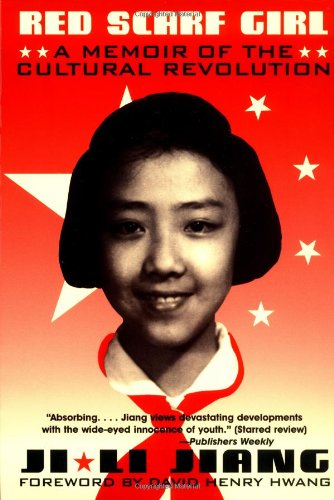
Book Review of Red Scarf Girl by Ji Li Jiang

https://images-na.ssl-images-amazon.com/images/I/51HCgjlk7TL.jpg


Red Scarf Girl is a disturbing account of one girl and her family's experiences during the Cultural Revolution of China during the sixties. It's amazing how we look at our world. I remember watching documentaries of the hippies, anti-war demonstrations, psychedelic drugs and “free love” that seemed to personify American and European culture during the 1960's. It's strange to think that at the same time on the other side of the world, another group of people were experiencing a very different reality and culture.


This book is the real-life account of Ji Li Jiang. Ji Li was a smart, motivated, academic achiever who totally embraced the cultural revolution. . She proudly wore her red scarf and carried around her little red book of Mao Ze-Dong's sayings to show her support of the revolution. Like others her age, she believed that China was in a new age.  Anything old or traditional had to be erased or destroyed. This meant that many families had to be deposed of.  “Black family” was the name given to any family that belonged to the old order of things:  landowners, anyone with money or had servants. In order to rid the “New China” of these backward old ways, these wealthy, educated families were turned out of their homes and sent to “re education” camps or labor farms. The people or mobs that turned them out then looted their houses. These mobs were primarily comprised of young people who worshiped Mao Ze-Dong. They believed that they were serving China by ridding her of these “bad” remnants of the past.

Many of the people who were persecuted for their “evil oldways influences” were elderly but no mercy was shown them. People who were once respected members of society were humiliated and forced to do demeaning tasks, such as collecting garbage or sweeping streets. What is especially shocking is the lack of any sympathy the young people felt towards these older people, even their own parents. One boy smirked as his father was forced to ride through the city streets on top of a wagon wearing a dunce hat and his arms tied up above his head.

Even Ji Li was shocked at this but the boy insisted he was glad it happened because his father was part of the “four-olds” (old ideas, old culture, old customs and old habits).  As things worsened and more and more of Ji Li's friends and relatives fell victim to persecution, Ji Li grew increasingly concerned with the hardened attitudes of people all in the name of Mao Ze-Dong and a new and better China.

She speaks of a wealthy neighbor who was thrown out of her house, all her possessions taken from her and forced to sweep the streets in front of her old mansion.

  She kept her eyes on her work and moved the big broom back and forth laboriously....Somehow she tripped over the broom and fell.


It looked like a serious fall. She moved her hand and struggled to get up, but she couldn't seem to stand. I was about to go to help her when I saw her youngest son, my cousin Shan-shan, walking toward us. Shan-shan would help her, and I didn't want to embarrass her by making her realize that I had seen her sweeping the alley......


After a few steps I turned around to see if they were all right. I could hardly believe my eyes. Shan-shan had walked right past his mother! She was lying there, injured, and he had not stopped to help her.... He must not have wanted to expose himself to criticism by helping someone from a black category....


I took a step toward Aunt Xi-wen and stopped.  Maybe I shouldn't help her either. People would probably say something if they saw me, especially since I was from a black family too..


At school she was respected and held a leadership position but the cultural revolution had its strongest disciples in the school. Teachers were accused by students and turned out and replaced with new teachers who taught the “new ways” which meant showing no respect to teachers or adults or teaching much of anything for that matter.  Also, good grades and academic achievement no longer merited acceptance into a good school. Students who didn't achieve or make good grades had an equal chance of getting into schools that had previously been reserved for those who made high test scores.  Acceptance into schools was based on names pulled out of lotteries. This was to promote equality and to make sure no one was looked upon as a leader, therefore “better” than others who did not achieve as well.

Eventually Ji Li's family was exposed and their house looted. Her father was taken away to a reeducation school and forced to confess all his crimes. Ji Li finds out that any hope for promotion and academic opportunity in school is dependent on her telling the officials all the “crimes” committed by her parents.

She refuses to do this and is consequently ostracized.

The book ends in despair with no resolution. The epilogue informs us that years later Ji Li and her family somehow immigrated to the United States where she subsequently wrote her memoirs.

It is a bleak story but an excellent example of group think and what happens to societies that place their faith in man-made ideals rather than God-made ones.

The forward of the book explains that Mao Ze-dong started the Cultural Revolution to preserve his power which he felt was threatened by other government members. The human suffering and misery one man caused for his own gain is about the most appalling aspect of the madness that overtook the Chinese young people. Ji Li explains in her own words:

  Many friends have asked me why, after all I went through, I did not hate Chairman Mao and the Cultural Revolution in those years. The answer is simple: We were all brainwashed.


To us Chairman Mao was God. He controlled everything we read, everything we heard, and everything we learned in school.


….I asked An Yi's mother if she had hated Mao when she was forced to climb the factory chimney. 'I didn't hate him, ….I believed that the Cultural Revolution was necessary to prevent revisionism and capitalism from taking over China. I know that I was wronged, but mistakes happen under any system. If the country was better for the movement that persecuted me, I was still in favor of it. It was only after Mao's death that I knew I was deceived.'


This is the most frightening lesson of the Cultural Revolution: Without a sound legal system, a small group or even a single person can take control of an entire country.

This is the concern I have with ideologues in my own country. They scorn God and His laws while worshiping their utopian ideologies. I hope they never come to overpower the rest of us. Keep praying.
If you buy this book, please do so through the link above so I can receive a small percentage.  Thanks!


I'm linked up with:

Sunday, November 15, 2009

Eyes of the Tailless Animals by Soon Ok Lee


This is probably one of the most gruesome books I've ever read. All the more so because it is true.
Soon Ok Lee was a dedicated member of the Communist Party in North Korea. She lived well, had status, and a loving family. All that changed when she refused to give a fellow worker more than the legal limit of a shirt fabric that she had brought back from China.

Because of her adherence to the law she was taken suddenly from her home and family and thrown into prison. Inside prison, she was subjected to tortures so horrible that I believe the only reason she survived was so she could tell people outside North Korea of the horrors that are going on there.

It seems that basically, North Korea provides goods for outside nations by ensuring a large prison class who work for free. They are also mostly worked to death. They are given hardly anything to eat and only allowed to sleep a couple of hours a day in order to make the required quotas. Many people who were in prison are there because they tried to work to feed their starving children but it was work that they had not been given permission to do.

The North Korean government controls every one of their citizens' lives so stringently that no one may leave their town without permission, or do any kind of work that they do not have explicit permission to do.
If someone is thrown in prison their family loses all status as well. They lose their homes, jobs, everything.
Lee noticed that as cruelly as the prisoners are treated, there is one group that's treated even worse, if that's possible. These are the Christians. Because they believe in heaven they are never allowed to look at the sky but must go about always looking at the ground. If they, or any of the prisoners for that matter, break one iota of the rules they are tortured so viley that they often do not survive.

This book is an account of one North Korean's journey from wholly believing in the ideals of the Communist Party and North Korea's then dictator, Kim Il Song, to realizing the brutal oppression of North Korea's citizens. It is also an account of her spiritual journey from atheism and belief in the state as God to accepting Jesus Christ as her savior.

At the end of the book, she describes her final exit from the prison to liberty.

As she leaves the prison she looks back and suddenly, at the same time, the Christian prisoners who are never allowed to look up, all raised their eyes to meet hers. In them she saw a pleading to expose what is going on in North Korea. In her forward, Lee explains that this is ultimately her motive for writing the book.
Some things the rest of us need to consider: Why are countries like Japan and France trading with North Korea? Lee mentions these countries because of the cost of life it took to meet the demands for products by these two countries.

Also, if something doesn't happen to stop this dreadful regime, will there be any North Koreans alive in fifty years? Will North Korea be the first country to completely annihilate its own people?