
One of my favorite type of book is collections of photographers. Not just any type of photographer, mind you, but the ones that recorded every day people in both ordinary and dramatic life situations. Sometimes this is a family sitting at the dinner table or children playing on the sidewalk. Other times its men and women in war time. The photographers' works I'm reviewing here documented the lives of ordinary people, nothing exciting or adventurous but poignant in the same way one feels about Vermeer's painting of a maid pouring a pitcher.

Lewis Hine (1974-1940) photographed people with a serious purpose. He wanted to motivate the viewer toward social reform. He took many now famous photos of children laboring in factories that helped created labor laws prohibiting children from work.
Now I'm going to put myself on a limb and be called a bad person. While I am glad that there are laws protecting children from exploitation and indeed all people from slave labor wages, the issue was not so cut and dry.
Many families needed every consumer of food in their house working so there would be enough food for everyone. The evil practices by share croppers that purposely caused people to work themselves into debt needed to be abolished and those plantation owners needed to go to jail.
But at the same time, safe, viable wages needed to be provided for families. Many families desperately needed everyone to work to afford basic life necessities. When laws were implemented that prevented children under the age of fourteen to work, many families found that their life became more harsh, not less because fewer wages meant less food for everyone.
I'm not advocating child labor, I'm only pointing out that sometimes things aren't so simple. Children today certainly aren't in the same kind of danger, working with machinery or in a deprived environment but are their lives less busy, going to before-school daycare, school for eight hours, after-school daycare, then whatever sports or activities they're enrolled in, homework, going to bed exhausted, seeing their parents for only a couple of hours a day?
And history shows that while new immigrant families lived under these hard conditions, their children did not continue in them. They were able to better themselves, get a good education and achieve professional careers-in only one generation. This was before the welfare state created the deplorable cycle of generational poverty that is now afflicting our country.
As Hines saw living conditions improve over the years he moved on to document war torn Europe.

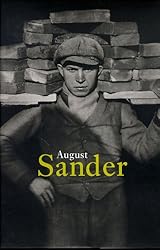
August Sander (1876-1964) photographed people in his native Germany from every walk of life between the World Wars. Because he saw how drastically his world changed after WWI, he realized that he wanted to preserve it in some way before it changed again. His photos include school teachers, butchers, children, artists and soldiers, rich, poor and middle class. He succeeded in encapsulating a period of time that no longer exists.

The book I own is titled, Emblems of the Passing World which not only has Sander's photos but poems by Adam Kirsch that he wrote based on the inspiration he received from each photo.
I personally did not find Kirsch's poetry that effective because I am more interested in who those people really were and not a reality that someone one hundred years later fabricated for them.
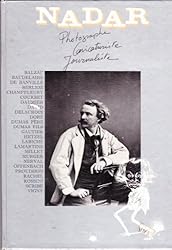
Nadar (Gaspard-Félix Tournachon, 1820-1910) was a French photographer as well as journalist and caricaturist of the 19th century. His photos are mostly portraits of the prominent people of his day: Victor Hugo, George Sanders, Gustave Dore, Eugene Delacroix as well as poets, artists, writers, inventors etc.. that were famous then but not so well-known now. Aside from the few people who I recognized, I didn't find his work as interesting.

The greatest number of books I own is by Andre Kertesz (1894-1980). Kertesz took many photographs of village people, soldiers and animals in his home country of Hungary before moving to Paris in 1925. There he documented not only people but buildings and public scenes. He became known for his unorthodox angles and subject matter.
Being Jewish, he left Europe with the onset of WWII and immigrated to the United States. He and his wife spent their remaining years in New York city where he photographed the buildings and city life.
When his wife died after forty years of marriage he sank into a depression but found his purpose again through a Polaroid camera that somehow became his grief therapy. Although his reputation had diminished over the years he had a final burst of creativity and success with his Polaroid works.

Naturally, my favorite book of his is a collection of his photos of people reading.
Is there a particular type of photography anyone else enjoys?


