Tuesday, June 8, 2021

Titanic: Legacy of the World's Greatest Ocean Liner by Susan Wels

 Still listening to Schumann.

Josh and I went to a nearby town to get our Cuckoo Clock fixed.  The only Clock shop this side of Dallas that fixed Cuckoo Clocks belonged to an ancient little man in Jefferson.   And he only took cash so it was with some trepidation that we handed over our clock to him.  Spoiler alert:  He fixed our clock but it took forever to find him and finally get our clock back. 

His store is like something out of a movie.  This is parked out front.  It is for sale if you're interested.


Back home and merrily cuckooing and playing The Happy Wanderer while the tiny couples dance.


I always like learning about a famous historical occasion and really getting into the point by point time line and detailed information.

This large book with its glossy photos and illustrations does not disappoint. Susan Wels provides contemporary photos of the Titanic on the bottom of the Atlantic, historical photos of the ship and passengers, and several of the artifacts that have been uncovered by the teams that have developed the technology to make it happen.

Wels first provides a history from the building of the ship to the landing of the survivors in New York.

The second section provides a detailed description of the the efforts to find the Titanic's resting place through the years and then the science, technology and scientists who made it finally happen.

Interesting to me are the people who think the Titanic should be left alone on the bottom of the ocean. Their argument is that way the ship and her possessions will belong to all and honor the memory of the dead.

Baloney. Such arrogant presumption to speak on behalf of people who have been gone for over a hundred years.

I'm glad that International Treaties have been created to make sure that individuals don't pirate the treasure of the Titanic, but I think it honors the memory of the passengers, both living and dead (although I doubt any are alive now) by preserving the artifacts in a public museum so we can all come into contact with the past.

I sincerely hope they are able to bring the three sections of the ship up before it finally dissolves into the ocean. 


Sunday, May 30, 2021

Trotsky: a Biography by Robert Service

Here's Bach's Cello Suite.


6334204


This is a thorough yet engaging biography of the man who might have been, but never was the leader of the Soviet Union.

I have heard pro-communists say that Communism would have worked under Trotsky and the Soviet Union would have achieved its Marxist goals if the crazy, paranoid Stalin hadn't made it to power.

Those people should read this book. Trotsky was every bit as ruthless and inhumane in his tactics in his tireless efforts to create a "Communist Utopia" as Stalin was. The difference was Stalin had more people on his side.

What fascinated me was Service's description of Trotsky's single-mindedness. His entire life was consumed in making a Soviet. He had no conscience about destroying a country, including starving out the people he claimed to be fighting for.

He wanted liberty from the aristocracy, but he did not want anyone to have freedom from him.

Due to his general lack of diplomacy, he succeeded in alienating even those who might have sided with him.

While in Mexico there were many artists and poets and philosophers from Europe, Mexico, and America who saw what they wanted to see in him and made him a poster boy for their cause.

These people were not enough to get him into power, primarily because they were armchair socialists, more concerned with mimicking the fashionable prattle of the day about socialism than actually doing anything to undermine their personal wealth.

Frida Kahlo became quickly bored with him, as she did with all her lovers, and she and her husband Diego Rivera, never practiced what they preached. They were contemporary virtue signalers.

In America H.L. Mencken wanted to donate much of his library to Trotsky, something Trotsky wasn't interested in. Other supporters were John Dewey, (of the decimal system fame, not to mention doing his best to integrate Marxist values into the American educational system-do you wonder why our young people voted for Bernie Sanders?)

In the end, Stalin got him, but I don't know if Trotsky cared. He was slowly disintegrating, bit by bit, anyway. I think the end, as gruesome as it was (why a pick ax, for peter's sake?) must have come as a relief. 


I've been preparing a slide show for my mother's memorial service.  This is a favorite.  A young mother trying to keep track of her three children.  I'm the oldest.


Monday, May 24, 2021

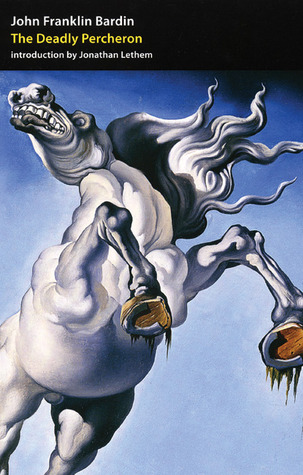
The Deadly Percheron by John Franklin Bardin

 Here are symphonic poems by one of my favorite composers:  Dvorak.


 https://thebedlamfiles.com/wp-content/uploads/2016/12/DeadlyPercheron.jpg


 This book was written by the author of The Last of Philip Banter, a book I reviewed earlier. This book actually precedes Philip Banter, but only one character connects the two books and he plays a minor role in the later novel.

A Psychologist, George Matthews, meets a young man named Jacob Blunt, who informs him that he performs certain bizarre duties in order to get paid by, wait for it....Leprechauns.

Now what Blunt wants to know is, are the Leprechauns real or is he crazy? Quite a conundrum, eh?

Matthews does not believe for a moment there are Leprechauns toddling about in the world, but does wonder if the man is hallucinating or is someone playing a strange hoax on him and if so, why?

Matthews and Blunt go to a bar where the Leprechaun is supposedly waiting for them and will assign the man his next task.

Indeed there is a dwarf there and he is dressed like a Leprechaun. In fact he insists he is a Leprechaun. He angrily hops up and down on his bar stool as he gives his geneology dating back to Old Ireland (the story takes place in New York City).

Then the Leprechaun tells Blunt that his next assignment is to deliver a Percheron to a famous Broadway actress who lives in Manhattan. In fact the Percheron is waiting outside.

Incidentally, for those of you who aren't horse people, Percherons are large draft horses.

Matthews thinks the whole thing is off and tries to persuade Blunt to refuse the task. The man laughs it off and, even though he is quite rich and has a trust fund, he enjoys making his own money. Apparently the Leprechaun pays him well.

Blunt delivers the horse only to find the actress dead. He is then arrested for the murder, even though he insists he didn't do it.

Matthews arrives at the jail to bail him out, but a different man comes out to meet him, claiming to be Jacob Blunt. Matthews insists this is not Jacob Blunt the man he was counseling and that is the last thing he remembers as something crashes over his head from behind.

When he comes to, Matthews is in a mental hospital and he discovers that it is nine months later. He cannot remember anything between the time he was knocked out and the time he wakes up in the hospital.

This story is a brilliant tale of psychological displacement. You question everything, not knowing what is real or not until the very end. Even then, things seem to fly apart. I only know that Matthews somehow survives because he has a brief role in the next novel.

I highly recommend this sort of story for those who love Psychological Crime Noir written during the Golden Age of Mysteries. 


 Am I the only one who finds piggy rumps adorable?


Wednesday, May 19, 2021

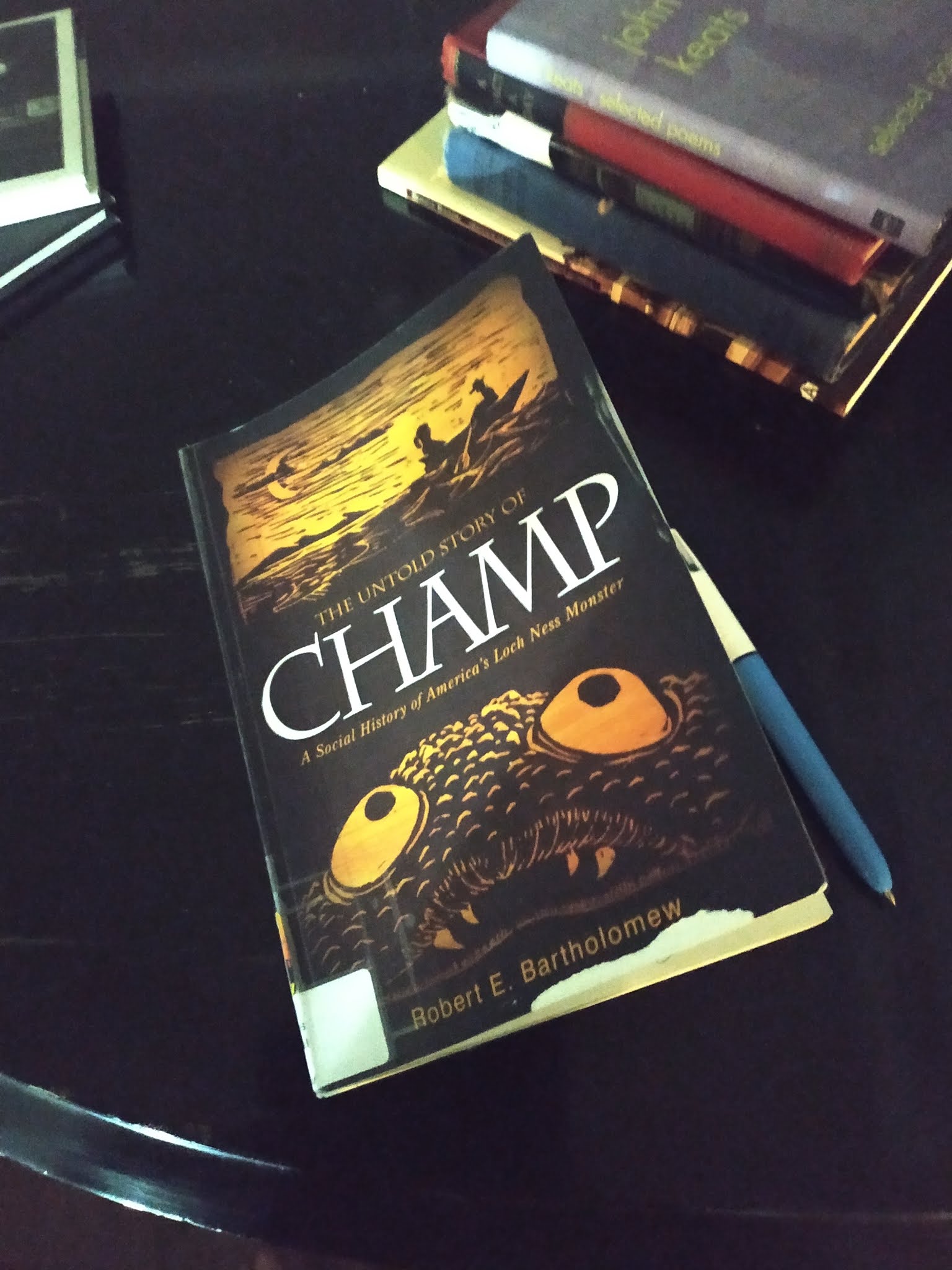
The Untold Story of Champ: A Social History of America's Loch Ness Monster by Robert E. Bartholomew

 Listening to Mendelssohn.

 How I get to look at the computer.


This book is written by someone who really wants to believe in a sea monster living on Lake Champlain, but doesn't want to be suckered.

The result is a book that thoroughly explores every legend connected to some sort of sea creature that has been reported in the Lake from Native American legends, the European discoverer of the Lake, Samuel Champlain to sightings in the 19th and 20th centuries.

It is also a book bent on debunking every eye witness report.

That's not a bad thing and I think that Bartholomew is honest in his accounts, because he doesn't out and out call anyone a liar, however, he does point out discrepancies in reports and contradictions between eye witnesses. He wants to believe, yet he can't.

Because of his skeptical approach the overall tone comes across as snarky. It would have been a more pleasant read if he simply treated the Lake Champlain monster as a legend and narrated all the stories as such. Maybe there's something there, maybe not. Who knows? The stories are still interesting to read.

The fact is, with all alleged monster sightings, eye witnesses aren't always trustworthy and with CGI these days, anything can be shown in a photo or footage.

Until someone provides a body or skeleton, sea monsters will remain mysterious and legendary.


Sunday, May 9, 2021

The Last of Philip Banter by John Franklin Bardin


I am listening to Bach's Short Preludes and Fuges for the organ on my record player.  You can listen to them here on Youtube.


 This was a rip roaring good story. The quality of the writing exceeds the average entertaining mystery. It was like a cross between The Lost Weekend and characters of Crime Noir with a dash of Girl on a Train, except the writing was far superior to the latter.

It was superior to most mysteries as far as writing style and plot development are concerned.

Without giving anything away here is the premise:

Philip Banter has a serious drinking problem. He knows this. He knows he's a louse to his wife and narcissistic enough to believe that every woman he winks at wants him.

The story starts with Banter waking up at his desk in the office where he works as an advertising executive. In front of him is his typewriter, uncovered and recently used. Who used his typewriter? Was it him or someone else? Where was he last night and how did he end up here?

His wrist is bandaged. It wasn't bandaged last night. On the desk is writing. Fifteen pages. He reads it. Written in the first person, he reads about events that happen from his point of view: According to the paper, he goes home to his wife, who surprises him with an old friend and his girlfriend coming over.

It speaks of him having an affair with the woman and then coming to his office. Is that what happened last night?

Except. The date on the writing is for the following night. How can he or anyone have written about the future. He forgets about it.

Then. That night, everything starts happening as the writing predicts. Sort of. Not exactly.

So what is happening? Is he crazy or is someone trying to persuade him that he's crazy?

This is a well written compelling psychological suspense mystery without any down time.

Unfortunately, John Franklin Bardin only wrote a couple of really good mysteries, but I am going to read them because he is now one of my favorite mystery authors. 


Monday, May 3, 2021

In The Shadow of the Dream Child: A New Understanding of Lewis Carroll by Karoline Leach

 I hope you'll listen to this collection of Lute pieces by J.S. Bach.


Do not expect a biography of Charles Dodgson, aka Lewis Carroll. Instead this is a dissertation on how Dodgson was not a pedophile because he was a Victorian playboy with older women.

She made her case when she said that it was common in Victorian times to take photos of children disrobed and provide several examples of other photographers that also took photos of naked children.

But apparently Leach wanted to write a whole book, so after thoroughly flogging that aspect of Victorian mores into the ground, she then goes into exhaustive, and exhausting, detail as to what the missing pages of Dodgson really mean as opposed to what previous biographers have claimed they mean.

She begins a lot of sentences with probably (Dodgson "probably" had an affair with Alice's mother).

While I agree with her premise that much too much has been made of the author's possible, yet essentially unknown, proclivities, she makes the same error. It gets to the point where one thinks she doth protest too much. As if Leach is frantically trying to save the reputation of Lewis Carroll.

Too much of her conclusions are based on surmises and that is what her book has in common with other biographies of the author of Alice in Wonderland, albeit she runs in the opposite direction.

Let's just settle for the fact that we know very little of the enigmatic Charles Dodgson and simply enjoy the genius of Lewis Carroll.


Sunday, April 25, 2021

David Golder by Irene Nemirovsky


I hope you enjoy listening to Russian Guitar. 


 61460


This is a profound novel. It details the lives of poverty stricken Jewish people escaping Eastern Europe and becoming adept at business and then extremely wealthy in Western Europe.

But does it make them happy? It seems to me that in order to avoid hearing the empty rattling in their own souls they fill themselves up with material goods, intrigues, cruises, travel, mistresses and toy boys.

It is very sad to witness a family in which each member so thoroughly hates the other. The protagonist, David Golder, is a brilliant businessman and has given his wife and daughter everything they want, but the stress and pressure is beating him down. He receives no sympathy from wife or daughter, who view him solely as a source to provide their gratifications.

Even when he has a heart attack, no one cares. But then, neither does he. A friend and business associate is failing financially for the same reason Golder is sinking: the extravagant lifestyle of their family. Golder refuses to help him and the man commits suicide.

I am astounded at just how extravagant Golder's family is. Money means absolutely nothing to them, except to buy obscenely expensive cars and jewelry. Their only concern is when it runs out.

If Golder dies, his wife and daughter are worried about the money supply drying up. But then again, if they can get their hands on his money, then it would be better if he died, or so they think.

The callousness of these people is shocking, but convincingly written. This is the first book I've read by Nemirovsky and I enjoyed her fluid, yet pungent style. She exposes her characters so their leathery hearts are absolutely naked.

This book was written in the 1920s before a decade that was going to see the destruction of many wealthy Jews (not to mention poor ones as well) but I wonder how shocking that must be for anyone to live in such glamour and luxury to suddenly find themselves stripped of everything, money, power, human dignity and even life itself.