Sunday, February 27, 2011

Black History Month: My Tribute to Langston Hughes


Selected Poems of Langston Hughes
Before Black History Month completely escapes me, I want to pay homage to one of my favorite poets, Langston Hughes.  I first learned about Hughes in the fourth grade when the best teacher I ever had, Ms. Rogers, divided us up in groups and assigned us different people to research and make a display for the school's "Black History" exhibit held in the cafeteria.  My group got Langston Hughes and our exhibit was comprised of  some of his poems written on poster board with illustrations that we drew and colored.  I never forgot the beauty of those poems. 
So on the last day of February in celebration of Black History month, I am posting a couple of my favorite poems by Langston Hughes.

Winter Moon
How thin and sharp is the moon tonght!
How thin and sharp and ghostly white
Is the slim curved crook of the moon tonight!

Dream Boogie
Good morning, daddy!
Ain't you heard
The boogie-woogie rumble
Of a dream deferred?

Listen closely:
You'll hear their feet
Beating out and beating out a-

You think
It's a happy beat?

Listen to it closely:
Ain't you heard
something underneath
like a-

What did I say?

Sure,
I'm happy!
Take it away!

hey, pop!
Re-bop!
Mop!

Y-e-a-h!

Hughes' semi-autobiographical book, Not Without Laughter, is also well worth reading.  In his actual biography, The Sea, Hughes explains where the story and his own life actually diverge:

I wanted to write about a typical Negro family in the Middle West, about people like those I had known in Kansas. But mine was not a typical Negro family. My grandmother never took in washing or worked in service or went much to church. She had lived in Oberlin and spoke perfect English, without a trace of dialect. She looked like an Indian. My mother was a newspaper woman and a stenographer then. My father lived in Mexico City. My granduncle had been a congressman. And there were heroic memories of John Brown's raid and the underground railroad in the family storehouse.


But I thought maybe I had been a typical Negro boy. I grew up with the other Negro children of Lawrence, sons and daughters of family friends. I had an uncle of sorts who ran a barber shop in Kansas City. And later I had a stepfather who was a wanderer. We were poor--but different. For purposes of the novel, however, I created around myself what seemed to me a family more typical of Negro life in Kansas than my own had been. I gave myself aunts that I didn't have, modeled after other children's aunts whom I had known. But I put in a real cyclone that had blown my grandmother's porch away. And I added dances and songs I remembered. I brought the boy to Chicago in his teens, as I had come to Chicago--but I did not leave behind a well-fixed aunt whose husband was a mail clerk.


The Life of Langston Hughes: Volume I: 1902-1941, I, Too, Sing America (Life of Langston Hughes, 1902-1941)The Short Stories (Collected Works of Langston Hughes, Vol 15)

Friday, February 25, 2011

Book Review for Changed by Faith by Luis Palau


Changed by Faith: Dare to Trust God with Your Broken Pieces . . . and Watch What Happens


A woman is left alone for two weeks with her husband's best friend. He flirts, she makes the wrong choice. She regrets, her husband doesn't forgive. She's finds herself divorced, alone, broken....

A man grows up in the slums of a Costa Rican city. He's abused by his father and drinks to forget ....


A wealthy business man has it all, drive for success, status, big house, every material possession he could ever desire, neglected family.....


An angry, bitter woman in Bolivia, decides she's going to change the social injustices and rampant inequality of educational and job opportunities in her country. She runs to Cuba and becomes one of Che Guevara's henchmen, committing murder and acts of terrorism...


A Marxist leader enjoys the power and privileges of belonging to the upper echelons of a totalitarian regime in another South American country...


What do all these people have in common?


I once read a Peanuts comic strip by Charles Schultz, the creator of Charlie Brown. In it Sally, Charlie Brown's sister, is jumping rope. Suddenly she stops and bursts into heart rending sobs. Linus comes running up to her and asks what's wrong, what happened? Sally looks at him and replies, “I don't know. Suddenly it all seemed so futile.”


And that's the answer to the question. Each of these people came to a point in their lives where they lost their raison d'etre. They could no longer see the point of what they were doing. Something was missing from their lives. It all seemed so futile.


In Changed by Faith, Luis Palau introduces us to several such people and also includes many personal stories about his own family. He describes being raised in Argentina by a workaholic father who finally came to faith only to die when Palau was ten. Even though Palau was raised in a Christian home, it took many years of grinding poverty as his mother attempted to singlehandedly raise seven children and some Bible teachers that didn't pull any punches for Palau to finally come to true Christian commitment and faith.


And that is the second group of people he addresses in the book. People who have grown up in church, consider themselves Christians but have arrived at the same sense of meaninglessness that the above-mentioned people had come to.  Palau tells us how sterile Christians can come to the joy-filled life of victory, purpose and meaning when they truly surrender their lives to Jesus Christ.


Much of the problem, Palau asserts, is that even many Christians don't read the Bible. Either they don't truly study the scriptures, or they pick and choose what they will believe and obey. This can only lead to the same hollow living that unbelievers endure.


The most interesting part of the book for me as a believer, is the personal stories of the people I described at the beginning of this essay and how each of them turned from a life ignoring God, rejecting God, or even raging against God- to a life devoted to Him.


For people who are in the same boat, this book contains solid scriptural teaching that can lead each “dry and thirsty” soul to the “Streams of water” that never run dry and eternally satisfy.

One negative:  At the end of the book Palau tags on, almost as an afterthought, constructive ways Christians can live victoriously by helping their community.  Of course that is a good thing, but when he went on to describe strategies to do so he started sounding like he was preaching the social gospel. When he sited good examples from the books, "Blue Like Jazz" by Donald Miller and "The Shack" by William P. Young I had to scratch my head.  Both of these books deviate from scripture in defining Christianity and even the Trinity.  Since Palau spends a good part of the middle section of his book discussing the need to become biblically literate and testing everything with scripture, I think he needs to practice what he preaches.
    However, it's possible that he didn't actually read either book but simply heard about them because the rest of his book is quite orthodox.

In conclusion,I recommend this book for people who are not Christians but are searching for “the thing” that is missing in their lives; for people who consider themselves Christians but suffer from a sense of emptiness; for new Christians; and finally, for believers who would like to understand how to counsel the aforementioned groups.

I received this complementary copy from Tyndale House Publishers in exchange for my honest review.


Weekend Bloggy Reading
Book Blogger Hop


Best Posts

Monday, February 21, 2011

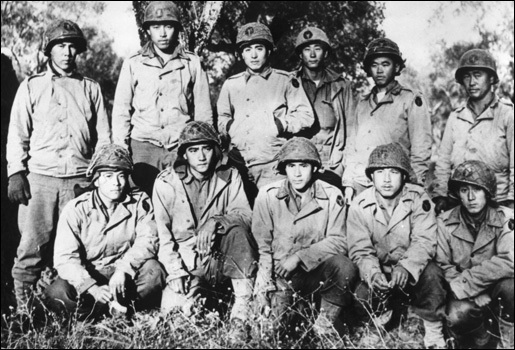
The Navajo Code Talkers by Doris A. Paul


http://www.dorrancepublishing.com/files/9813/8253/3982/Code_talkers_flat.jpg


I've always been interested in learning more about the group of Navajo Indians that were used to communicate in code during WWII. So when Dorrance Publishing CO. offered a complimentary copy of such a book in exchange for an honest review I eagerly requested a copy.


Doris A. Paul wrote The Navajo Code Talkers in 1973. The fact that it is currently in its fourth decade of publication is testimony to the fact that it is a well-written, well-researched and credible documentary of General Cates's Fighting Fourth Marine Division of Navajos and their significant contribution to the Allies' success in the Pacific Ocean Theater.

   Paul includes many interesting facts about the Navajos and how they came to play such an important role in WWII. Prior to the war, the Navajos led a primarily isolated existence. Few of them had ever left the reservations or could even speak English. What prompted the Navajo nation to serve in the War? According to the Navajo Tribal Council at Window Rock, a unanimous vote on June 3, 1940 took place passing the following resolution (which I quote in part):


  Whereas, the Navajo Tribal Council and the 50,000 people we represent, cannot fail to recognize the crisis now facing the world in the threat of foreign invasions and the destruction of the great liberties and benefits which we enjoy on the reservations....
…...we resolve that the Navajo Indians stand ready as they did in 1918, to aid and defend our government and its institutions against all subversive and armed conflict and pledge our loyalty to the system which recognizes minority rights and a way of life that has placed us among the greatest people of our race....(Chapter 1, pg. 2,3)


But it was Philip Johnston, a white missionary kid who had lived with the Navajos since the age of four and who himself spoke Navajo fluently, that came up with the idea to use the Navajo language as a code.

It was not the first time that Native Americans were used for communications in war. Many tribes, speaking their tribal tongue, were used with great success when communicating across enemy lines in both Europe, Africa and the South Pacific. This was the first time, however, that an Indian language was used as a code. Paul describes how this language was used and has comprised an exhastive catalogue of all the code words and alphabet letter codes.

Also included are many photos of these courageous men in action.

The Navajo Code Talkers not only provides a full account of the history and work of these First American Marines, but also combines many personal accounts that are both humorous stories as well as suspenseful. One of the biggest dangers for the Navajos was being mistaken for Japanese. More than one Navajo found themselves in danger of “friendly fire” until someone from their unit could verify their identity.

On a lighter note is the description of these “Native Marines'” reaction when they heard of the Japanese' surrender:


   The Navajos' innate imperturbability was thoroughly and completely shattered when early one night in August, 1945, news came over the division radio net that Emperor Hirohito had asked for “peace terms.” Naturally the Navajos were the first to learn this good news. The overjoyed Navajos decided that a celebration was in order. As tom-toms were not items of issue, they headed, au naturel for the bandsmen's tents. Grabbing drums, and later any instruments available, they Indian-danced their way toward the officers' tent country. The bandsmen, also au naturel, were in hot pursuit trying to retrieve their drums. (Chapter 7, pg. 96)


One thing that I found disturbing and caused me to rethink the heretofore one sided view we've been presented about the Japanese internment camps in America is the following quote:


   American forces were amazed to discover the ability of the Japanese to speak English without a trace of accent or Oriental inflection- but the mystery was partially solved when it was found that many of the dead Japanese wore American high school class rings, and that many of the officers were graduates of American universities. (Chapter 6, pg. 67)


Then there was Tokyo Rose. This was a name that the American troops gave her, she actually called herself “Orphan Annie”. Tokyo Rose was a Japanese American who was visiting relatives in Japan when the war broke out. During the war she served as a media propagandist, basically serving Japan by attempting to break the American soldiers morale and spirit with disheartening messages over the radio. I looked up Tokyo Rose on the internet and the first available sources try to white wash her work for the Japanese or even dismiss it as mostly urban legend. One source says that later this woman justified what she did, calling it “entertaining satire.” As I mentioned at the beginning of the review, this book was written when many eyewitnesses were still alive.  The following is a quote from one of the author's sources:


  This is what she (Tokyo Rose) said that morning over the radio before the men hit the beach: 'We know where you are.....about to try to take Gloucester. But back home the 4-F's are lying easy and having a good time with your sweethearts...your loved ones that you left at home. People are having a great time in the city of Los Angeles, Denver, Kansas City, YOUR city. They're praying and they're hoping and they're saying, 'Please, God, let this war go on four more years at least. We're getting rich; we're making good money; we're having such a good time.' Your very sweethearts that you trust-your wives- they're in bed in the state of Utah, Arizona, Ohio, Texas, Pennsylvania. Think about that, First Marine. Think about that. You're about to hit the beach. Think about that! (Chap. 6, pg. 69)


I don't know about you, but that doesn't sound like satire to me.


The book continues after the war to follow up on the Navajo marines, how they were honored and how their participation in the war opened up the world for the Navajo nation. Prior to the war most Navajos refused an education.

 Before 1946, officials of the Bureau of Indian Affairs had to round up Navajo children, practically kidnapping them, to force them to go to school. After the war, they couldn't hold back the tide. The whole educational system had to be revised to meet the demand. (Chapter 8,  pg. 108)


All in all, I found this book to be an enjoyable, interesting and informative read. If you like to read about history, war stories, linguistics, codes and Native American culture, then The Navajo Code Talkers is the book for you.
http://wwiiasff.weebly.com/uploads/1/0/6/0/10605798/914157107.jpg


Thursday, February 17, 2011

An Irresistably Sweet Award!!


I have won yet another award!! Yay!!  Thanks to Creations by Laurel for awarding me.  You can check out her blog at http://laurelrainsnowcreations.blogspot.com/2011/02/two-lovely-awards-my-guilty-secrets-my.html

Ok.  The rules for this one is to list five guilty pleasures.  Let's see:
1.  I spend way too much time on my blog.

2.  I also spend too much time checking out funny videos on youtube.

3. I cannot, I mean, CANNOT keep chocolate in the house.

4.  I like staying up late reading, no matter how early I have to get up.

5.  I really, really love sleeping in when I don't HAVE to get up.

Ok.  Now here are 5 bloggers whose sites I think are worth visiting. 

                                                      1.  http://saywhatmemoirs.blogspot.com/

Go and visit these sites.  They're worth viewing.

Book Review for Curiosities of the Civil War by Webb Garrison and other Civil War books


Curiosities of the Civil War: Strange Stories, Infamous Characters and Bizarre Events


Ever since I visited West Point, I have become a Civil War Buff. So when BookSneeze offered  Curiosities of the Civil War  by Webb Garrison, I eagerly requested a complimentary copy in exchange for my honest review (had to fit that in somehow).


Webb's intention in writing this book was to cite unknown and unusual tidbits of information regarding this tragic war between the states. The book is divided up into nine sections and each section lists brief anecdotes under different themes. For instance, Part one contains little known facts about Lincoln and Jefferson Davis (Davis lost his sight in one eye during the Mexican War, Lincoln may have had Marfan syndrome which would have accounted for his elongated features).

The section also provides brief facts about famous people at the time, apparently with the intention of debunking any myths that give credit to otherwise honored individuals. E.g. Walt Whitman was a nobody until after his death when Europeans first, then Americans recognized his poetry. Matthew Brady didn't really see any Civil War activity; his hired photographers took all the photos et al.

I found those parts to be a bit negative but other sections are rather interesting. There's a section that recounts different men who kept fighting even after they were severely wounded or even lost limbs.

Another section tells about women who followed their husbands into battle, providing support and home cooked meals. Some wives even stayed with their loved ones during imprisonment.

The section called, “No Two Military Events Were Identical” includes some graphic hand to hand combat scenes and includes a particularly memorable quote from a Federal officer:

 The shells shrieked and screamed over our heads, and each shell seemed to cry, 'It's you, it's you!' as if flew on its errand of death. (Chapter 11, pg. 123: "Sights and Sounds of Combat")

Webb includes facts on the machinery, artillery, boats ships, how black soldiers were treated and an informative chapter on different inventions that were produced as a result of the war. A couple examples of these are dehydrated food and an assembly line machine that rapidly produced shoes to replace foot gear that quickly wore out due to heavy use (this particular invention benefited Union soldiers, Confederates got to go barefoot throughout the war).

Garrison does not appear to like our 16th president. Lincoln is painted in none-too-flattering hues. If his book was your only source of information on the subject you'd think one of our most beloved presidents was a corrupt, politicking cronier who only served his own and his buddies' interests.

Nevertheless, if you enjoy collecting every source you can about this monumental time in our country's history, then this book is a good addition.


Here are some other books I've acquired about the Civil War:


                                                      A War to Petrify the Heart

This is a collection of 197 letters from Richard T. Van, a 24 year old Union soldier from Dutchess County New York. Van Wyck wrote these letters to his family and fiancee while fighting with the 150th New York Volunteer Infantry Regiment.

His first battle was at Gettysburg where he aptly describes the horrendous carnage:

  We did terrible execution, literally piling the Rebs up in masses....I never was on a battlefield before and the Lord preserve me from such a sight again.

That wasn't to be. The 150th were then packed on trains and sent west to join Sherman's armies as they “cut a swath” through Tennessee, Georgia and the Carolinas.

The letters are in an easy to read style with the plain-spoken Mid western tones of a northerner. There's no charm or manner to his mode of speech, as he honestly describes the battles, his comrades, southern women (whom he refers to as “tobacco chewing angels”-something he found almost as shocking as the war) and the southern soldiers (whom he considers more honorable then his drinking, gambling Union companions). He told his family that this was a “War to petrify the heart,” hence the title of this book. I bought this book at West Point and recommend it to all Civil War and American history buffs.


The Civil War by William C. Davis

This is a three book collection. One book is about the battles, one about the leaders and one on the fighting men. As the other book, it contains  a lot of written information,  photos and paintings.


Eyewitness History of the Civil War by Joe H. Krichberger

This book is a collection of stories and letters by people who witnessed the Civil War first hand. It's a favorite of mine because instead of a dry chronicle of what happened, it becomes a personal rendering as men and women from both sides of the Mason Dixon Line describe what they saw and heard in their own words.


Mathew Brady by Barry Pritzker

Finally, if you like documentary photography, you'll enjoy this book that is filled with Civil War photos taken by Brady and his troupe of photographers.

Monday, February 14, 2011

Review of When the Hurt Runs Deep

When the Hurt Runs Deep: Healing and Hope for Life's Desperate Moments


Kay Arthur's book, When the Hurt Runs Deep is for people who are suffering through past and/or present circumstances. Arthur attempts to point people to God through His word in the midst of their hurt. It is an honest evaluation of how and why we suffer and what we can do about it.


In the first section Arthur deals with suffering and hurt that a person is not responsible for. Maybe you were abused as a child or a loved one is terminably ill. Arthur provides a side by side analysis with real life scenarios and the Biblical accounts of Joseph and Job. She draws on what God has to say about these godly men's sufferings and what He has to say to us about our own struggles with trauma or hard circumstances in our own lives.

The second section explores the different ways a person can bring suffering on themselves, perhaps through drug or alcohol addiction or having an abortion. Arthur discusses the stories of Judah's disobedience to God and particularly King Manessah. Through scripture she shows that no matter what anyone has done, help and healing can come through confession and prayer. I appreciate that she doesn't gloss over the need to admit our wrongdoing and confess it as sin. She clearly and accurately asserts that no forgiveness and recovery can take place until this initial step is taken.

In the final section Arthur discusses why we, as Christians, must suffer at all. She tackles many of the fallacies that some Christians believe -such as feeling entitled to a trouble-free or prosperous life now that they have come to salvation. She shows scripture to reveal the cost of discipleship and the hardship that can be expected to come for Christians.

The end of the book has an individual or small group study guide. Kay Arthur's personal narrative style suffuses with compassion. God has used her own trials to allow her to be a comfort to others. Indeed, through this book Arthur demonstrates 2 Corinthians 1:4 (the God of all comfort) “who comforts us in all our troubles so we can comfort those in any trouble with the comfort that we ourselves have received from God.” (NIV)
I received this book as a complimentary copy in exchange for my honest review by Blogging for Books.


Best PostsWeekend Bloggy Reading


Please take the time to rate this review.Thanks!!


Sunday, February 13, 2011

Stylish Blogger award


I just received a Stylish Blogger Award.  I think that is very sweet.  Thanks to Books, Personally at http://bookspersonally.blogspot.com/2011/02/awww-shucks.html who has a very stylish blog with great reviews, if I say so myself.   Now I'm supposed to say seven random things about myself and pick 15 other bloggers for the award.  I've never done anything like this before so here goes:

7 Random Things About Myself:
1.  Ironically, I review books I wouldn't normally choose to  read, I'm a classic literature bluff.
2.  My middle name's "Paula" (this is supposed to be random, right?)
3.  I want my own horse.
4.  I've never been to China, but plan to travel there.
5.  I speak Spanish.
6.  I have a sister who's an architect.
7.  I have another sister who is married to a man from Cyprus.

  Well, I don't know how informative or interesting that is but those were truly random thoughts about myself.
Ok:  I am awarding the Stylish blogger award to:

1.http://www.thebookbuff.blogspot.com/
2.http://thephantomparagrapher.blogspot.com/
3.http://facing50withhumour.blogspot.com/
4.http://facing50withhumour.blogspot.com/
5.http://www.laughwithusblog.com/
6.http://cleanromancereviews.blogspot.com/
7.http://silly-bear.com/
8.http://becky-gracenotes.blogspot.com/
9. http://helloinspiration.blogspot.com/
10. http://homeiswheregodsendsyou.blogspot.com/
11.http://kidbookratings.blogspot.com/
12.  http://windridgetexas.blogspot.com/
13.  http://pullingmymaskoff.blogspot.com/
14.  http://www.woodstocklily.com/
15.   http://eclectic-indulgence.blogspot.com/

I don't know if theses bloggers consider themselves stylish but I think their blogs are worth visiting and I hope you do!  Take care and happy blogging!

Incidentally, those who were picked who would like to pass the award on, here are the rules:
1.Comment back to the person who awarded you. 
2. Thank them on your blog. 
3. List 7 random things about yourself.  
4. Pick 15 other blogs that you think deserve the award and notify them.