Showing posts with label Poetry. Show all posts

Tuesday, September 15, 2020

In the Dark, Soft Earth; poetry of love, nature, spirituality and dreams by Frank Watson

 These Bach Baroque Suites for guitar go perfectly with these sublime poems.


I would like to ask everyone to pray for all the people in the northwest who are experiencing the fires.  This includes personal family members and blogging friends and their families.


And while we're at it pray for the people on the Gulf Coast.  

Hopefully Hurricane Sally will become depressed, lose her will to survive and give up, like Marco did.


This is an embarrassingly late review.  I was given this collection of poetry months ago and time got away and then I flat out forgot.   I am actually not a fan of poetry, I don't know why.  Takes too much discipline to read. 

undefined 

 Poetry isn't meant to be gulped, but savored.  I feel so overwhelmed with Mount TBR that I find myself reading non fiction and mysteries just because they're easy to devour.


However.


I really enjoyed this book of poetry.  Maybe it is the minimalism.  One thing that does appeal to me in poetry is the painting of visual imagery through power of expressive words.  Frank Watson's words wash over me in rich, deep yet cool colors.  I am going to post a couple of the poems because they can speak well enough for themselves.


 origins 

 to the poet there

is a love for beauty

 in all its terrifying forms  


in the quiet 

 stirrings before 

 the world wakes

 when even the night  

creatures cease to speak  


with distant sands 

 turned white as flecks

 on wild black hair I follow the Northern Winds 

 to where the world begins


  before Creation

 cast in stone 

 we built this world 

 on what was sown 


 since all eternity is rest

 why not use this

 time to do our best? 


 adrift

pallid and hollow
we’ve drifted
through this town
for centuries
and no one’s home


her words
strung up
on stranded hair—
blown away
in the winter wind


smoke gun
thoughts in the air—
these words sit silent there


the naked despair
of a people
without courage
who wander
another’s land


walking
in breathless prayer
for centuries
without imagination


where flames drive me deep
into the song of sleep
and the narrow road
that carries me off somewhere


And finally, one short one:


spoken word
 
fit into a cube
and packed, as is,
into another dimension
where the spoken word
shall never leave
 
I had a hard time formatting this.  Google decided to become more sophisticated and I'm struggling to catch up.
 
The collection has ten section, each on a different theme, introduced with a famous poem and beautiful paintings from Europe and Asia, from the Middle Ages to modern.
 
Finally, this is my honest review in exchange for an Arc copy.  I think I am legally obligated to say that.
 
I wish Frank Watson all the best and that many, many people enjoy his beautiful word painting. 
 
Gulf Coast at a more peaceful time.


Sunday, February 12, 2017

Violets and Other Stories by Alice Dunbar-Nelson


I'm listening to Piano solo music by Manuel de Falla.  I'm not providing a link because I now realize how impermanent they can be.  But feel free to google in his name and "piano solos" and you'll find a link somewhere to listen to it.  

I thought for the week that holds Valentine's Day it would be appropriate to  review some poetry.

I read the following book on my Kindle:


Violets and Other TalesViolets and Other Tales by Alice Dunbar-Nelson

My rating: 5 of 5 stars


This was a book of poetry and short stories. It is not a hundred pages long. I liked the poetry better than the stories because the latter carried a tragical, Victorian-esque style.


What I did like was the vivid descriptions of New Orleans. It gives the reader a rich taste of the Creole and Anglo-French culture.

What I especially appreciate is that this book is not self-consciously ethnic or gender specific. I did not know the writer was black when I read these stories. I did not even know it was a woman who wrote them.

All I knew was that a brilliant writer wrote them.


Here is the poem of the title:


I had not thought of violets late,

The wild, shy kind that spring beneath your feet

In wistful April days, when lovers mate

And wander through the fields in raptures sweet.

The thought of violets meant florists' shops,

And bows and pins, and perfumed papers fine;

And garish lights, and mincing little fops

And cabarets and soaps, and deadening wines.

So far from sweet real things my thoughts had strayed,

I had forgot wide fields; and clear brown streams;

The perfect loveliness that God has made,—

Wild violets shy and Heaven-mounting dreams.

And now—unwittingly, you've made me dream

Of violets, and my soul's forgotten gleam.


Alice Ruth Moore Dunbar Nelson (July 19, 1875 - September 18, 1935) was an American poet, journalist and political activist. Among the first generation born free in the South after the Civil War, she was one of the prominent African Americans involved in the artistic flourishing of the Harlem Renaissance. Her first husband was the poet Paul Laurence Dunbar; she then married physician Henry A. Callis; and last married Robert J. Nelson, a poet and civil rights activist. From Poem Hunter.

View all my reviews

 
http://www.aaregistry.org/aareg_files/event_images/ADunbar.gif

Thursday, December 22, 2016

Finishing up the year with eleven books on my Kindle


Hello to all!  Miss me?  I have just returned from ten days traveling in Paris.  The journey was arduous, not on the scale of trekking to a mountain and fighting a dragon for jewels, but still very tiring.  

My journey started with my husband and I arising on December 11 at four a.m. We drove three hours to Dallas, deposited our car at a hotel and took the shuttle to the airport.  We flew three hours to JFK in New York,  and endured a four hour layover made worthwhile with good conversation over dinner with a very nice young man from San Fransisco on his way to scuba dive in the Canary Islands.  Eric and Josh and I disagreed on everything we talked about from religion to politics but developed a firm, if temporary friendship.  We hugged goodbye and I told him I was going to pray for him and he said, "Good!  I want you to!"

And I am.  Josh said that Eric fulfilled his man hug quota for the year, but I think he enjoyed the conversation as well.

The flight to Paris was eight hours.  I read several books on my Kindle.  I will be writing more on my adventures in Paris (the most magical week of my life-that's your teaser!) but suffice to say, that after walking over eight hours a day sight seeing, I fell asleep every evening around seven p.m., woke up wide awake at midnight, read for two or three hours before finally falling asleep around three a.m. then waking up again around six a.m. starving.  Unfortunately Paris does not wake up before nine.  More reading since I can't sleep with my stomach growling.

At the end of our trip we flew back, with all the hours of flying and driving in reverse.

In conclusion, I read eleven books in ten days on my Kindle.  None of them were very long, and my reviews here will be quite short as well.


http://static.lulu.com/browse/product_thumbnail.php?productId=22685829&resolution=320
Trivia by Logan Pearsall Smith

This is a collection of essays by Smith about his personal observations about his life, society in London, religion, and socio-political thought from the eyes of a Victorian/early Twentieth century man.

I thought his essays, were lucid, thought-provoking and charming.  I recommend this short book to anyone who likes to read the inner thoughts of a man who combines humor with realism.


http://s3.amazonaws.com/digilibraries.com/covers/121739.jpg

The Mouse and the Moonbeam by Eugene Field

This very short book is a Christmas story told by a mouse and then a moonbeam.  A good children's book that has a moral about the consequences of the lack of faith as well as the actual purpose of Christmas.

My one complaint:  I know that at one time (perhaps still is), it was popular to take some license with Bible stories. In this story the moonbeam shares something he saw many years ago.  Jesus as a child is friends with
another boy who winds up being the thief on the cross who finally remembers Jesus and surrenders his heart and soul to spend eternity with Him. 

This never happened, the author just thought it would make a nice story.

To me, reducing  profound Biblical history to a children's story trivializes it into some sort of sentimental tale and robs it of its true power.


https://pictures.abebooks.com/isbn/9781505541960-uk-300.jpg
The Story of My Heart:  an Autobiography by Richard Jefferies

I don't know much about Jefferies, I'm not sure how this book ended up on my Kindle.  Probably an impulse buy since it was public domain and free.

Apparently Jefferies is one of the transcendentalist writers.  His reflections basically consider our aesthetic reaction to nature as the ultimate experience.  The supernatural is only the ecstasy our senses receive as they drink in the wonder the sky, the stars, earth, trees, etc blah, blah blah...breath into us.

There is no God, no metaphysical.  Anything created by man...art, books, architecture, whatever... amount to nothing and living as a jungle beast alone in the forest is vastly to be preferred.

Whatever.  I read this in one setting, which is a good thing for the author because I wouldn't have bothered to pick the book up again.

Three stars for the quality of writing, not the substance.


http://thumbs2.picclick.com/d/l400/pict/302094610233_/NEW-Perpetual-Light-By-William-Rose-Ben-t.jpg

Perpetual Light:  a Memorial by William Rose Benet

Benet wrote the poems throughout his lifetime for his beloved wife whose life was cut tragically short.

Hence the evolution of these poems are wonderful to read, beginning with the ones he wrote in his youth, expressing the first giddy excitement of being in love, mellowing with a rich enjoyment of being married to the love of his life and ending finally with the stark and barren wilderness that he finds himself thrust into as he endures his loss and loneliness.

Even in his darkest moments, there are undercurrents of strength and hope.  I enjoyed these poems and yes, I also read these in one sitting, which allowed me to better appreciate the transition of his life journey.


http://ecx.images-amazon.com/images/I/41D4NK30c5L.jpg


Poems and Ballads of Heinrich Heine

Our first morning in Paris, which was very early because the sun hadn't risen and our hostel room wasn't available yet, we walked to Montmartre Cemetery.  It was peaceful, though cold, as the sun rose, slowly illuminating the gravestones and chapels.  
 
While we walked among the tombs looking for famous graves a French woman walked up to us and pointed to a grave we were standing near.

"That is Anrish Ann. He is a German poet."

We looked at the grave which had a bust of the poet on top. The poet's name was Heinrich Heine, which I would pronounce differently than the French woman, but who am I to correct others?

When I woke up the next morning around two a.m due to Jet Lag, I opened up my Kindle and discovered that I had a collection of Heine's poems.

This is a beautiful set of poems by a preeminent 19th century German poet. He writes of love, of longing, of spiritual fulfillment in excellent verse. Another book I refused to put down and read in one sitting. 


http://www.naxosaudiobooks.com/wp-content/uploads/2016/05/NA0244_cover-288x288.jpg

The Empty House and Other Ghost Stories by Algernon Blackwood
I started this collection earlier in the year but finished it one early Parisian morning.
This is a fine collection of scary, suspenseful short stories, reminding me of Lovecraft, Steam Punk and other mystery/supernatural stories of the turn of the last century.

https://images-na.ssl-images-amazon.com/images/I/51VPIq2BTXL._SY344_BO1,204,203,200_.jpg

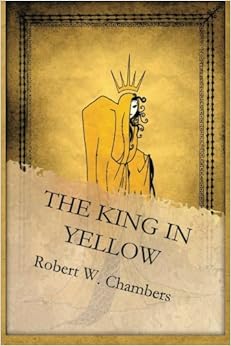
The King in Yellow by Robert W. Chambers

Another book I'd been reading for several months but finished in Paris.  

The King in Yellow is a series of short stories written in H.P. Lovecraft style.  The common thread is horror and a mysterious set of letters, documents, or other metaphysical phenomena that leads to the death or tragic conclusion involving the narrator.

The stories are in turn suspenseful, scary and sometimes funny as a few of them turn out to be merely dreams.

The writing is style can be a little archaic and after the fashion of a lot of Steam Punk or lesser known authors of the time period, which can be seen now as somewhat melodramatic and sentimental.

Women are described after the fashion of many late Victorian writers in poetical turns.  There are often depicted as goddesses, often unattainable or if attainable, not sustainable because of a tragic ending.  Oh, those Victorian writers.


https://pictures.abebooks.com/isbn/9781500215071-us-300.jpg 

Fables for Children, Stories for Children, Natural Science Stories, Popular Education, Decembrists, Moral Tales by Leo Tolstoy 

I don't know if Tolstoy wrote these stories or compiled them.  They are small moral tales like Aesop's Fables, each only a paragraph long.  Still they are interesting and worth reading.
http://www.loyalbooks.com/image/detail/water-babies.jpg

The Water Babies by Charles Kingsley
This book started out very interesting and written in a lively style.  It quickly turned into a story of imagination with a tremendous amount of detail.  I suppose for a child of the Victorian age who has not suffered the modern child's affliction of information overload, it would be a magical journey.

In a nutshell, a little chimney sweep who experiences nothing but abuse and neglect finally, in a panic, runs away but finally collapses at the edge of a spring.  There the Queen of the Fairies turns him into a Water Baby. 

When he wakes up, he finds himself only a few inches high with gills on the sides of his neck.  The rest of the story is filled with his new discoveries of his environment and the various animals and sea life.

There is also a moral tale of the wrongness of child abuse and also redemption for even the most hardened heart.

 
https://images-na.ssl-images-amazon.com/images/I/41SQvdeMfCL.jpg
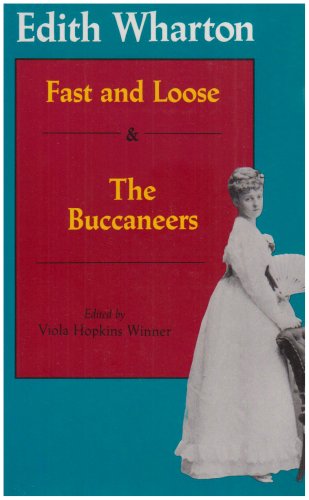
Fast and Loose by Edith Wharton
This is the first story in the Complete Edith Wharton I have on my Kindle.
It is very short and I read it in a few sittings shortly before I left Paris.  (I had quite a few early morning readings. 
It was written when Wharton was fourteen years old and though has much that is tragic about it, there is none of the cynical "modern realism" that readers expect from Wharton.  I was surprised to see how positive and even moralistic the story ended.
A young girl, Georgie, breaks off her engagement to her cousin Guy, because, even though she loves him, she would rather be the wife of a Baron.  
She marries the Baron and has a brilliant career among the rich and elite who find her brazen sauciness both shocking and irresistibly attractive.
As the story progresses we see how the jilted Guy lives under heartbreak and also how Georgie eventually comes to repent of her selfishness.
Overall, I thought the story transpired rather nicely even if it ended on a rather melodramatic, if not typically Victorian moralistic tone.
A worthy read for Wharton fans.
http://images.gr-assets.com/books/1348888558l/7784816.jpg
The Christmas Child by Hesba Stretton

Miss Priscilla Parry adopts a young girl Rhoda and later an even younger girl, Joan.  She has plans for the girls, none of which includes getting married.  She firmly believes that women should stay single, be strong and independent.  When Rhoda runs off and gets married, Priscilla can't forgive her.
Filled with rage and hatred, she shuts herself up and neglects  poor little Joan.
Every Christmas Eve Joan and Rhoda would go into the barn to look for the Christmas child.  After Rhoda is gone, Joan continues to look by herself.
One Christmas Eve, much to Joan's surprise and delight, there is a child in the manger!

This is a sweet Christmas story, very old fashioned and Victorian but also a timeless message of how hard-heartedness can impact the ones we should love the most, the need for forgiveness as well as to forgive.

On the flight home I was sitting next to a young woman from Tunisia.  She was staying in New Jersey for a couple of months with relatives.  She asked where we were going.

I told her how many hours we had before us.  I added that the day after we arrived, my in laws were coming in from North Carolina.  When they left, the day after Christmas, my parents would be arriving.

After New Year's my son and I will drive them back to Florida and stay with them a week.

So it is lively at the Wilfong home. 

 Which is how I like it!

I pray you all have a similarly blessed time.  Merry Christmas and Happy New Year! 


Sunday, February 8, 2015

Haiku Inspirations by Tom Lowenstein with Victoria James


This New Year's I went to the Gulf Coast to visit my parents and sister's family.  Needless to say we spent a lot of time on the beautiful beaches of Destin and Grayton Beach.  What can I say?  Miles of blinding white sand, sand pipers, sea gulls...no one but us because of the cold season-except a few crazy northerners braving the frigid water.  In the winter the sun takes an hour to set on the horizon and the colors are so brilliant.


I always like to go to Barnes and Noble afterward, which is on the way back home.

 
We arrive at the store. Derek, my son immediately loses himself in the aisle of graphic novels.  After I look at the bargain books, I treat my mother and myself to coffee where we visit.  This is our tradition every time I come home.  I tell her as I tell myself that, other than the half price Christmas cards, I'm not buying anything.  Nothing.  Nada.  I don't need any more books.  My mother laughed and sipped her coffee.  She knows me too well.

I almost made it.  I almost spent a pleasant couple of hours in a bookstore without buying any books. We were walking towards the exit when I saw it.   A beautiful hardback about one of my favorite forms of poetry:  Haiku Inspirations by Tom Lowenstein and Victoria James.  I left the store with it  (and a  hardback of Robert Frost's poems, but that's another post.)

On the way back to Texas I let Derek drive so I could read my treasure.  Even when we stopped at a Denny's for dinner, I brought the book in to read.  Haiku: Inspirations was even more than I originally thought it was.  Yes it is a book of Haiku but it contains even more.

 Lowenstein and  James divide into brief chapters the history of Haiku, the original authors of Haiku, and their different styles, the Buddhist and Shinto beliefs that inspired the art form, and the different reigning families  that supported and developed art and literature in Japan.


 From the Tale of Genji: Court Life

They also give a concise history of Japan, from their Chinese influences to where they eventually broke out into their own uniquely Japanese style.  We learn about Society and Court life, the symbols and different beliefs such as Zen, Koans, about suffering, transience pilgrimage and how these different beliefs affect Haiku writing.

They describe the development of arts and culture such as calligraphy, ink painting, Japanese gardens, tea ceremony and music, dance and theater.  


The chapters are accompanied by paintings and photos of Japan as well as Haiku.  The introduction gives a brief description of the structure and form.  For instance, Haiku can only use "essential words" and 17 syllables.  Classic haiku is three line long, with 5-7-5 "syllables".  Of course, some of the structure will necessarily be lost when Japanese is translated into English.  


http://japanesearts.synthasite.com/resources/fourseasons2.jpg 
Another attribute is "kigo".  This means "season word" which "suggests the mood and atmosphere governing the poem."    Sometimes the name of the season is included in the Haiku, other times it is implied when a seasonal attribute is mentioned, such as a flower that only blooms in summer or the rainy season, implying spring etc.
http://rlv.zcache.com.au/tale_of_genji_vintage_japanese_ukiyo_e_posters-r5c0b5e506da24368abfdc65870877e55_qz8_8byvr_512.jpg


Here are a couple of samples:

http://upload.wikimedia.org/wikipedia/commons/8/8d/Detail_of_%27K%C3%B4b%C3%B4_Daishi_gy%C3%B4j%C3%B4_emaki%27_%28Events_in_the_Life_of_K%C3%B4b%C3%B4_Daishi_-K%C3%BBkai-%29%2C_late_13th_or_early_14th_century.jpg


Hazy morning:
as in a painting of a dream
the people passing.
Buson

https://blogger.googleusercontent.com/img/b/R29vZ2xl/AVvXsEh9H3DJxQpk4nU23LgQQB8mIzVIVA2jBOmeEaolQdIKrX9v3kWah2KykkalOJQmYFSTEsWp6nvqFE0FF2RBMDe1ojQdBt7lpfQx9k7QmliDRPDr2jWQR64-02WNuEJ0vemkeUUGvtpoZU0/s1600/Japanese_Traditional_Art_16_MoonyKitten.jpg

Moon behind the grasses.
Wind blows through.
The cry of a cuckoo.
Shiki


http://farm4.static.flickr.com/3028/3024992874_0e20ac3eaa_m.jpg
Come to me:
let's play
little sparrow orphan!
Issa

The book is a delight both to the eyes with the paintings and photos and the ears and mind with its descriptions of Japanese history and culture and, of course, the Haiku which includes authors from different philosophies and time periods.

Monday, April 7, 2014

The Narrow Road to the Deep North and Other Travel Sketches by Matsuo Basho


I love Japanese Haiku and ordered this book thinking I was getting a collection of Haiku.  While there is no shortage of Haiku in the book, it is actually a travelogue that Matsuo Basho recorded through his companion secretary, Sora,  about his travels across Japan on a spiritual journey.

Matsuo Basho (1644-1694) is considered the greatest of the Japanese haiku poets.  Zen Buddhism was a leading influence in the school of poetry he founded. According to the back of the book, these travel sketches are his bid to "discover a vision of eternity in nature and the ephemeral world about him."

Basho's poetry is beautiful.  The imagery of nature it creates evokes a sense of peace.  His elegant writing enables the reader to vicariously experience his observations as he wanders through forests, up mountains, visiting Buddhist shrines and friends.


Stretching by force
The wrinkles of my coat, 
I started out on a walk
To a snow-viewing party.

Deep as the snow is, 
let me go as far as I can
Till I stumble and fall, 
Viewing the white land scape.

I am a visual person and it's hard for me to imagine what people write or say.  That is probably why I enjoy stories with character studies or that explore ideas with minimal descriptions.  The people in the books I read always are faceless.  That makes it all the more remarkable that Basho's writing communicates clear pictures in my head of what he himself saw and experienced.

Searching for the scent 
Of the early plum, 
I found it by the eaves
Of a proud storehouse.

Poems composed in a field: 

Dyed a gay colour
My trousers will be 
By the bush-clovers
In full bloom.

In mid-autumn
Horses are left to graze
Till they fall replete
In the flowering grass.

Bush clovers, 
Be kind enough to take in 
This pack of mountain dogs
At least for a night.

I have studied Buddhism, but my fiance, Joshua,  explored Buddhism before becoming a Christian.  I was curious about what attracted him first to Buddhism and how he later came to embrace Christianity. 

For Josh, Buddhism touched upon the truth that the world is  transitory and the desires of the world an illusion.

But when rockets were flying over his head in Afghanistan, Josh realized that Buddhism did not provide the answers looming death demands.  He came to the conclusion that Christianity provides answers not only to the meaning of life, but hope after death.

How Buddhism stands in stark contrast to Christianity struck me when reading two incidents recorded in Basho's book.  Towards the end of the book Basho attends a shrine before embarking on his return journey. There he meets two prostitutes.  They are also trying to find their way home.  Each night they sleep with different men in order to pay for their journey. The two women approach Basho and beg him to let them follow him.  With tears in their eyes they say to him:

If you are a priest as your black robe tells us, have mercy on us and help us to learn the great love of our Savior.

After a moment's thought Basho replies to them:

I am greatly touched by your words, but we have so many places to stop at on the way that we cannot help you.

After he leaves them, he thinks of a haiku and has Sora write it down.


Under the same roof
We all slept together,
Concubines and I-
Bush-clovers and the moon.

But the incident that upsets me every time I think about it is one on which he writes at the very beginning of his journey.  He comes across a small child, standing by himself on the road, crying.  He has been abandoned by his parents.  The wailing of this child moves Basho to share some of his food with him.  But he walks away, saying to the child, your cries must reach heaven.  Only heaven can hear you. 

And on he continues with his journey, leaving the child alone on the road. 

I know that Buddhism requires emotionally detaching oneself to this world, but I can only view such indifference to a helpless child's desperation as cold-heartedness on the lowest reptilian level.

It renders all his beautiful words and exquisite imagery hollow.  He enjoys nature and ponders eternity, but refuses to offer hope or assistance to desperate women or an abandoned child?
It calls to mind the final judgement in the last verses in the Gospel of Matthew, chapter  25:

43 I was a stranger and you did not welcome me, naked and you did not clothe me, sick and in prison and you did not visit me.’ 44 Then they also will answer, saying, ‘Lord, when did we see you hungry or thirsty or a stranger or naked or sick or in prison, and did not minister to you?’ 45 Then he will answer them, saying, ‘Truly, I say to you, as you did not do it to one of the least of these, you did not do it to me.’ 46 And these will go away into eternal punishment, but the righteous into eternal life.”  (From BibleGateway, ESV)

I hope to collect more books on haiku.  I can enjoy the poetry even if I can't accept the religion behind it.

 
Portrait of Matsuo Basho from the Osaka Museum


Sunday, December 16, 2012

Beowolf translated by Seamus Heaney photos edited by John D. Niles


   For twelve years King Hrogarth and his Danish warriors have been terrorized by the monster Grendel who has invaded their hall and attacked and eaten many of the men.  A hero comes across the sea who kills the monster-and later the monster's mother.  His name is Beowolf and his epic saga has been read for the last thousand years in the original Old English as well as various translations. 


  I won’t go into the entire story but it is one that shows the reader a culture of heroism, early medieval life and the transition from pagan beliefs to Christianity in Scandinavia.  What’s especially interesting is that Beowolf was written in England at a time when that country was still recovering from the scourge of Viking invasions that had started a couple hundred years previously.  One wonders why someone from England would want to write a heroic saga about Scandinavians.  If you know the answer to that, please tell me in the comments box.

   The purpose of this review is to comment on the recent edition that has come out with Seamus Heaney’s translation.

   I had read the translation of Beowolf by J.R.R. Tolkien many years ago but frankly had a hard time understanding it.  I attribute that more to my youth than Tolkien’s translation.       Nevertheless, when I saw Heaney’s translation in the book store, I couldn’t resist buying a copy for myself.  It’s a beautiful book. 

     There are actually two editions.  One has the original old English on one page with Heaney’s translation on the other.  I can’t read old English so I didn’t need that version, although I’m sure it would be a great resource for English Literature students.

     The edition I bought has the poem on one page and a photo of Viking artifacts and Scandanavian scenery on the adjoining page.  The translation is beautifully rendered and easy to understand.  I read through the epic poem in a short amount of time.  What makes this book worth buying, however, is the photos. 

     This edition is a photo illustrated version of the saga.  Each photo depicts some part of the poem.  If the poem on the adjoining page is about the bogs of Norway, the accompanying photo is of a bog.  If the poem is talking about the boat, clothes, weapons or housing the Vikings used, the photo will illustrate that.  The pictures provided a wonderful visual companion to the poetry.


    Bottom line:  I found the poetry beautiful, the story as interesting as ever and the photos a great enhancement.  I would recommend this edition to anyone interested in this famous epic poem.

I bought this book.

Bilingual Edition:


Kindle Edition for $8.52:

Illustrated Edition:


For further links on Beowolf:

http://www.newworldencyclopedia.org/entry/Beowulf

http://historymedren.about.com/od/beowulf/p/beowulf.htm

http://homes.chass.utoronto.ca/~cpercy/courses/1001Purnis.htm