Showing posts with label Horror. Show all posts

Thursday, December 22, 2016

Finishing up the year with eleven books on my Kindle


Hello to all!  Miss me?  I have just returned from ten days traveling in Paris.  The journey was arduous, not on the scale of trekking to a mountain and fighting a dragon for jewels, but still very tiring.  

My journey started with my husband and I arising on December 11 at four a.m. We drove three hours to Dallas, deposited our car at a hotel and took the shuttle to the airport.  We flew three hours to JFK in New York,  and endured a four hour layover made worthwhile with good conversation over dinner with a very nice young man from San Fransisco on his way to scuba dive in the Canary Islands.  Eric and Josh and I disagreed on everything we talked about from religion to politics but developed a firm, if temporary friendship.  We hugged goodbye and I told him I was going to pray for him and he said, "Good!  I want you to!"

And I am.  Josh said that Eric fulfilled his man hug quota for the year, but I think he enjoyed the conversation as well.

The flight to Paris was eight hours.  I read several books on my Kindle.  I will be writing more on my adventures in Paris (the most magical week of my life-that's your teaser!) but suffice to say, that after walking over eight hours a day sight seeing, I fell asleep every evening around seven p.m., woke up wide awake at midnight, read for two or three hours before finally falling asleep around three a.m. then waking up again around six a.m. starving.  Unfortunately Paris does not wake up before nine.  More reading since I can't sleep with my stomach growling.

At the end of our trip we flew back, with all the hours of flying and driving in reverse.

In conclusion, I read eleven books in ten days on my Kindle.  None of them were very long, and my reviews here will be quite short as well.


http://static.lulu.com/browse/product_thumbnail.php?productId=22685829&resolution=320
Trivia by Logan Pearsall Smith

This is a collection of essays by Smith about his personal observations about his life, society in London, religion, and socio-political thought from the eyes of a Victorian/early Twentieth century man.

I thought his essays, were lucid, thought-provoking and charming.  I recommend this short book to anyone who likes to read the inner thoughts of a man who combines humor with realism.


http://s3.amazonaws.com/digilibraries.com/covers/121739.jpg

The Mouse and the Moonbeam by Eugene Field

This very short book is a Christmas story told by a mouse and then a moonbeam.  A good children's book that has a moral about the consequences of the lack of faith as well as the actual purpose of Christmas.

My one complaint:  I know that at one time (perhaps still is), it was popular to take some license with Bible stories. In this story the moonbeam shares something he saw many years ago.  Jesus as a child is friends with
another boy who winds up being the thief on the cross who finally remembers Jesus and surrenders his heart and soul to spend eternity with Him. 

This never happened, the author just thought it would make a nice story.

To me, reducing  profound Biblical history to a children's story trivializes it into some sort of sentimental tale and robs it of its true power.


https://pictures.abebooks.com/isbn/9781505541960-uk-300.jpg
The Story of My Heart:  an Autobiography by Richard Jefferies

I don't know much about Jefferies, I'm not sure how this book ended up on my Kindle.  Probably an impulse buy since it was public domain and free.

Apparently Jefferies is one of the transcendentalist writers.  His reflections basically consider our aesthetic reaction to nature as the ultimate experience.  The supernatural is only the ecstasy our senses receive as they drink in the wonder the sky, the stars, earth, trees, etc blah, blah blah...breath into us.

There is no God, no metaphysical.  Anything created by man...art, books, architecture, whatever... amount to nothing and living as a jungle beast alone in the forest is vastly to be preferred.

Whatever.  I read this in one setting, which is a good thing for the author because I wouldn't have bothered to pick the book up again.

Three stars for the quality of writing, not the substance.


http://thumbs2.picclick.com/d/l400/pict/302094610233_/NEW-Perpetual-Light-By-William-Rose-Ben-t.jpg

Perpetual Light:  a Memorial by William Rose Benet

Benet wrote the poems throughout his lifetime for his beloved wife whose life was cut tragically short.

Hence the evolution of these poems are wonderful to read, beginning with the ones he wrote in his youth, expressing the first giddy excitement of being in love, mellowing with a rich enjoyment of being married to the love of his life and ending finally with the stark and barren wilderness that he finds himself thrust into as he endures his loss and loneliness.

Even in his darkest moments, there are undercurrents of strength and hope.  I enjoyed these poems and yes, I also read these in one sitting, which allowed me to better appreciate the transition of his life journey.


http://ecx.images-amazon.com/images/I/41D4NK30c5L.jpg


Poems and Ballads of Heinrich Heine

Our first morning in Paris, which was very early because the sun hadn't risen and our hostel room wasn't available yet, we walked to Montmartre Cemetery.  It was peaceful, though cold, as the sun rose, slowly illuminating the gravestones and chapels.  
 
While we walked among the tombs looking for famous graves a French woman walked up to us and pointed to a grave we were standing near.

"That is Anrish Ann. He is a German poet."

We looked at the grave which had a bust of the poet on top. The poet's name was Heinrich Heine, which I would pronounce differently than the French woman, but who am I to correct others?

When I woke up the next morning around two a.m due to Jet Lag, I opened up my Kindle and discovered that I had a collection of Heine's poems.

This is a beautiful set of poems by a preeminent 19th century German poet. He writes of love, of longing, of spiritual fulfillment in excellent verse. Another book I refused to put down and read in one sitting. 


http://www.naxosaudiobooks.com/wp-content/uploads/2016/05/NA0244_cover-288x288.jpg

The Empty House and Other Ghost Stories by Algernon Blackwood
I started this collection earlier in the year but finished it one early Parisian morning.
This is a fine collection of scary, suspenseful short stories, reminding me of Lovecraft, Steam Punk and other mystery/supernatural stories of the turn of the last century.
https://images-na.ssl-images-amazon.com/images/I/51VPIq2BTXL._SY344_BO1,204,203,200_.jpg

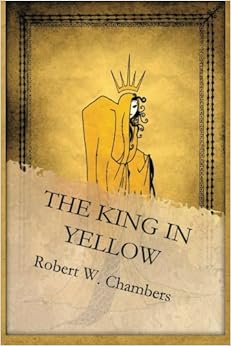
The King in Yellow by Robert W. Chambers

Another book I'd been reading for several months but finished in Paris.  

The King in Yellow is a series of short stories written in H.P. Lovecraft style.  The common thread is horror and a mysterious set of letters, documents, or other metaphysical phenomena that leads to the death or tragic conclusion involving the narrator.

The stories are in turn suspenseful, scary and sometimes funny as a few of them turn out to be merely dreams.

The writing is style can be a little archaic and after the fashion of a lot of Steam Punk or lesser known authors of the time period, which can be seen now as somewhat melodramatic and sentimental.

Women are described after the fashion of many late Victorian writers in poetical turns.  There are often depicted as goddesses, often unattainable or if attainable, not sustainable because of a tragic ending.  Oh, those Victorian writers.

https://pictures.abebooks.com/isbn/9781500215071-us-300.jpg 

Fables for Children, Stories for Children, Natural Science Stories, Popular Education, Decembrists, Moral Tales by Leo Tolstoy 

I don't know if Tolstoy wrote these stories or compiled them.  They are small moral tales like Aesop's Fables, each only a paragraph long.  Still they are interesting and worth reading.
http://www.loyalbooks.com/image/detail/water-babies.jpg

The Water Babies by Charles Kingsley
This book started out very interesting and written in a lively style.  It quickly turned into a story of imagination with a tremendous amount of detail.  I suppose for a child of the Victorian age who has not suffered the modern child's affliction of information overload, it would be a magical journey.

In a nutshell, a little chimney sweep who experiences nothing but abuse and neglect finally, in a panic, runs away but finally collapses at the edge of a spring.  There the Queen of the Fairies turns him into a Water Baby. 

When he wakes up, he finds himself only a few inches high with gills on the sides of his neck.  The rest of the story is filled with his new discoveries of his environment and the various animals and sea life.

There is also a moral tale of the wrongness of child abuse and also redemption for even the most hardened heart.
 
https://images-na.ssl-images-amazon.com/images/I/41SQvdeMfCL.jpg
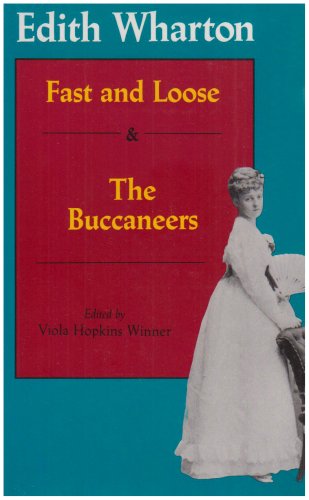
Fast and Loose by Edith Wharton
This is the first story in the Complete Edith Wharton I have on my Kindle.
It is very short and I read it in a few sittings shortly before I left Paris.  (I had quite a few early morning readings. 
It was written when Wharton was fourteen years old and though has much that is tragic about it, there is none of the cynical "modern realism" that readers expect from Wharton.  I was surprised to see how positive and even moralistic the story ended.
A young girl, Georgie, breaks off her engagement to her cousin Guy, because, even though she loves him, she would rather be the wife of a Baron.  
She marries the Baron and has a brilliant career among the rich and elite who find her brazen sauciness both shocking and irresistibly attractive.
As the story progresses we see how the jilted Guy lives under heartbreak and also how Georgie eventually comes to repent of her selfishness.
Overall, I thought the story transpired rather nicely even if it ended on a rather melodramatic, if not typically Victorian moralistic tone.
A worthy read for Wharton fans.
http://images.gr-assets.com/books/1348888558l/7784816.jpg
The Christmas Child by Hesba Stretton

Miss Priscilla Parry adopts a young girl Rhoda and later an even younger girl, Joan.  She has plans for the girls, none of which includes getting married.  She firmly believes that women should stay single, be strong and independent.  When Rhoda runs off and gets married, Priscilla can't forgive her.
Filled with rage and hatred, she shuts herself up and neglects  poor little Joan.
Every Christmas Eve Joan and Rhoda would go into the barn to look for the Christmas child.  After Rhoda is gone, Joan continues to look by herself.
One Christmas Eve, much to Joan's surprise and delight, there is a child in the manger!

This is a sweet Christmas story, very old fashioned and Victorian but also a timeless message of how hard-heartedness can impact the ones we should love the most, the need for forgiveness as well as to forgive.

On the flight home I was sitting next to a young woman from Tunisia.  She was staying in New Jersey for a couple of months with relatives.  She asked where we were going.

I told her how many hours we had before us.  I added that the day after we arrived, my in laws were coming in from North Carolina.  When they left, the day after Christmas, my parents would be arriving.

After New Year's my son and I will drive them back to Florida and stay with them a week.

So it is lively at the Wilfong home. 

 Which is how I like it!

I pray you all have a similarly blessed time.  Merry Christmas and Happy New Year! 


Thursday, October 27, 2016

The Edge of the Chair edited by Joan Kahn


Happy Halloween (slightly early)!  Here is Night on Bald Mountain by Modest Mussorgsky to listen to (but play it softly!) while reading today's post!  

Of course I must write at least one review about a scary book I have read, although in fact I am reading three concurrently.  I'll write reviews of those when I have finished reading them.

I can't remember where I found The Edge of the Chair.  Either east of me at a book fair in Marshall, Texas (where the public library there has several fairs where they sell thousands of books throughout the year.  It is the best type of fair I've come across and for a dollar a book, you really can't beat it!) or west of me at an Independent bookstore in Gladewater, (the Capital of antique stores, at least in East Texas) called, crazily enough, Gladewater Bookstore.

The Edge of the Chair is an anthology of both fact and fiction.  

The fiction stories are by authors such as Alexander Pushkin (The Queen of Spades); Ambrose Bierce (A Watcher by the Dead); and others such as Graham Green, Harold Pinter, Jack London, Agatha Christie, Rudyard Kipling, and William Faulkner.  John Buchan, G.K. Chesterton, Guy de Maupassant and Dorthy L. Sayers also contribute to this section.  There are more but I list the ones who have not since disappeared into obscurity.  (The book was published in 1967.)

The above writers do not always write of the supernatural but also mystery and suspense.  Some, like Pushkin's Queen of Spades offer a combination of the supernatural and the psychological.  The stories range from thrilling to entertaining but all were fun to read.

Bierce's A Watcher of the Dead also combines the psychological with the supernatural or so we are lead to think.  Two men bet a third man that he won't spend the night in the room with a dead body because our primitive psyche will project supernatural conclusions, over riding what our senses tell us.  The third man decries any notion that man cannot reason himself out of any situation and accepts the bet.  The conclusion arrives with unforeseen consequences that inflict everyone involved.  

Dry September by William Faulkner is horrible not because of its suspense but because of its all too accurate and harrowing picture of the South in Jim Crow times. A woman, for no other reason than loneliness and a desire for attention and importance, falsely accuses a black man.  This offers certain citizens of the town, one thug in particular, to act out his own criminal proclivities with the contemporary culture on his side.  Not even because most of the people in the town like him or agree with his intent, but because it's easier to stand by and do nothing.  

Other stories by Agatha Christie, G.K. Chesterton and Dorothy Sayers are fun mysteries.  Christie, is the usual whodunit.  Chesterton's is always more than a whodunit, but rather a why did he do it?  The reasons are always comments on the inner motives of man and the truths they cling to and follow to their logical end, even if it means murdering someone to maintain the illusion. 

 But the anthology ends with a a story by Sayers that is as suspenseful as the ending is unexpected and, if I may say so, hilarious.  I give no titles so as not to ruin the opportunity for any reader out there who may run across any of these stories in other collections.

These are only a couple of the fiction stories I offer as a sample.  The remaining stories are non fiction.

These stories include descriptions of murder trials, some where the narrator is obviously sympathetic with the victim(s) and others where the narrator clearly defends the murderer(s).  The latter, as in the case of Rattenbury and Stoner by F. Tennyson Jesse, the author justifies the murderers, if not the crime, and roundly condemns society for judging these poor oversexed lovers who felt compelled to kill the one lover's husband.  His argument was they lacked the intelligence to do otherwise and therefore should not have been found guilty.  I was not convinced. 

A particularly fascinating non fiction is by William Seabrook who describes a personal experience in Haiti with zombies in Dead Men Working in the Cane Fields.  His graphic descriptions and personal conclusions left me thinking about the possibility  Zombies and a desire to read more of his writing.

Another non fiction was Shattering the Myth of John Wilkes Booth's Escape.  I did not know this but back when this account was written, a family had in their garage a coffin with what they avowed was the corpse of John Wilkes Booth.  The author, William G. Shepherd traces the history of the man behind the corpse through documents and letters to prove who the body actually belonged to.

There are many non fiction stories some interesting, some less so but hands down the best was an excerpt from Antoine de Saint-Exupery.  Most people recognize Saint-Exupery as the author of La Petit Prince (The Little Prince).  He was also a pilot and wrote several books both fact and fiction about the adventures of flying during the thirties and forties.  Prisoner of the Sand comes from his novel, Wind, Sand and Stars.  This particular excerpt is about a time he and his co pilot crashed his plane in the desert of Saudi Arabia.  Their ordeal and final deliverance is one of the most nail biting stories I've ever come across and, as a result, I bought the book.

The Edge of the Chair was a gem of a find, and I encourage you to scour your local bookstores and library fairs (or ebay or Amazon, which is easier if less fun) for a copy.


Wednesday, September 14, 2016

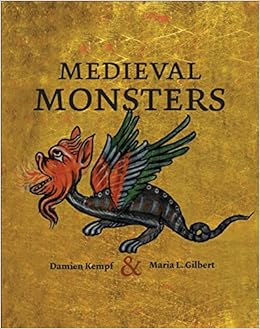
The Poetic Wonder of Isaac Watts by Doughlas Bond, Medieval Monsters by Damien Kempf and Maria L. Gilbert; A Night on the Moor and Other Tales of Dread by R. Murray Gilchrist

Listening to Beethoven Symphony Opus 21, Symphony no. 1. Beethoven wasn't 28 years old when he wrote it.  You can listen here.

As usual the books are piling up so I will attempt to give you a drive by review on three of them. 

 Here we go:

http://www.bondbooks.net/POE01BH.jpg

The Poetic Wonder of Isaac Watts by Douglas Bond

 I read this book out loud to my parents while they were visiting here in August much to everyone's delight.  We all grew up attending traditional church and singing hymns.  So learning about one of Christianity's major hymn writers was a treat.

Isaac Watts is considered the creator of the English hymn and perhaps second only to Martin Luther to constructing Protestant hymnody. 

Like Beethoven, Watts was a child prodigy, writing poems at the age of eleven.  Watts grew up in a Puritan family and as such was not allowed into the Anglican Universities like Oxford or Cambridge but studied at what was then called a "non conformist" or "dissenting" university, Newington Green Academy.

Watt's never married, but wanted to, once.  He wrote extensively with a young lady who fell in love with him through his letters.  Upon meeting the very short, homely-faced man, she fell out of love with him but remained friends.  Watts spent most of his life with the wealthy Hartopp family, teaching their children and writing hymns.

Watts introduced the radical notion that one could create their own poetry put to music and sing it in the context of formal worship.  This seems normal to us, but back then only Psalms from the Bible was deemed appropriate for church service.

Watts wrote other things besides hymns.  He was also a powerful preacher and put many essays in book form.  Some of his books are definitely going on my to be read pile.  Being alive during the Enlightenment, Isaac believed that it was every Christian's duty to use their intellect.  One of his books is titled:  Logic:  or the Right Use of Reason in the 
inquiry after Truth with a Variety of Rules to guard against error in the Affairs of Religion and Human Life, as well as in the Science.  Quite a title.  Not pithy back then, were they?

Other books include:  An essay towards the Encouragement of Charity- Schools, for teaching the Children of the Poor to read and write;  The Doctrines of the Passions Explained,  Discourse of the Love of God and the Use and Abuse of the Passions in Religion etc..

This book adequately conveys the beauty and eloquence of Watts' thought and how he expressed his great love for God in the form of poetry.  It also gives a history as to how Watts came up with some of the more famous hymns he wrote.  After reading the book, I flipped through a hymn book to look at the hymns by Watts included.

Even more briefly:

https://images-na.ssl-images-amazon.com/images/I/61mTZE0GS1L._SX258_BO1,204,203,200_.jpg
Medieval Monsters by Damien Kempf and Maria L. Gilbert

I simply adore Medieval art and this short volume gives pithy, if not always accurate, explanations of monsters painted in art.  It gives the legends, Biblical stories and histories to different mythical beasts.  The best part of the book is the colorful photos of the art it discusses.

And finally:

http://d2arxad8u2l0g7.cloudfront.net/books/1348345479l/1496306.jpg

A Night on the Moor and Other Tales of Dread by R. Murray Gilchrist.

I bought this book at a used bookstore thinking I had stumbled across a new author of scary and suspenseful stories of the 19th century, along the lines of M.R. James and E.G. Swain.  Well, yes and no.

Gilchrist, never married but lived with his mother and a male companion his whole life.  Perhaps that explains the misogynistic overtones of his stories.

The positive:  Gilchrist paints a lovely picture.  I can see the mists across the moors of England, the valleys, woods with dark verdure, and the unearthly beauty of the women who star in every tale.

Then there's this:  Every woman dies in a gruesome way. Oh sure, not in the same way and it's quite suspenseful. Occasionally the man dies at the hands of the woman.  In fact, most of the stories make you think that it is the man who is walking into a trap.   If that's your cup of tea, by all means get the book.  I'll mail you my copy.

The book did raise an interesting question.  Stories that take place on the Moors of England often refer to the supernatural or the residuals of past pagan beliefs of fairies, imps, and "little people".  We see this in books by the Bronte sisters, even Virginia Woolf as well as other writers.  Perhaps it is a part of the cultural heritage and make up of the people who were raised there.  As the American South is known for its Gothic tales and Ghost stories, maybe it's in the native north Englander's blood.

Certainly a topic worth exploring.

Well, that helped me catch up a little.  I think the next review can be about just one book.  Have a wonderful week.


Sunday, February 7, 2016

Great Tales of Horror by H.P. Lovecraft


As I write, I have Mexican radio playing from my bathroom as an excellent renovator of bathrooms gives our guest bathroom a face lift. 

 Outside are several men in yellow, glow-in-the-dark  t-shirts that say "All About Trees" carving up a giant oak's branches-the reason I bought this house-after telling me only a fool would buy a house with a monstrosity like that only thirty feet from the foundation. No, they didn't use the words, "monstrosity" or "fool", but I can read between the lines. 

There's a lot of noise on my roof and I hope I won't be calling a roof repairman to fix any damage falling branches the size of logs may be incurring up there. Please, God, don't let a branch go through a window.  Like that one almost did.

And here I am about to write on a favorite author.  My husband's favorite, that is.  Still, I enjoyed the collection of twenty horror stories I read.  

At first I wasn't quite sure how to take Lovecraft.  I had always read good old fashioned vampire and ghost stories or science fiction.  The former being about evil beings in the metaphysical world, mostly from countries with a early pagan/Christian heritage and the latter about man's ability to conquer his environment with the invention of machines.

Lovecraft's stories are about neither, yet also both.  Kind of.  Lovecraft takes the traditional scary elements from the past but applies a humanistic, naturalistic cause to them.  Scary things that go bump in the night are no longer spirits or undead but rather, something from another planet, another dimension, or life forms previously unknown-often higher up on the evolutionary scale.

His goal is to create tension and suspense but provide no relief.  He wants the reader to leave the story still hanging on the cliff. Any relief I felt was to put the book down and remind myself that I was reading a work of fiction.

This is not to say his writing is not very good and he expertly pulls the reader into the surreal world he has created.  His descriptions are effective without being getting bogged down in detail and I could clearly see the environment and creatures he invented.  

He has a particular writing technique in common with another writer of horror:  Edgar Allan Poe.  Neither Poe nor Lovecraft will clarify what is going on until practically the final paragraph, preferably the final sentence if they can manage it.

It amazes and frustrates me how an author can string the reader along, telling you how dreadful something is ("I'm writing this from an insane asylum because no one believes me!") without telling you what is happening. They add bits of detail like strewing breadcrumbs along a trail in a forest, luring you deeper and deeper into the darkest part of the woods before jumping out from behind a tree and going, "BOO!"

Some of the better known tales in this collection are:

The Call of Cthulhu, At the Mountains of Madness, The Case of Charles Dexter Ward, Herbert West Re-animator, and the Haunter of the Dark.  These stories involve creatures of great size and power from other planets, people from the Salem Witch trials possessing their descendants' bodies, bringing the dead back to life and transferring brains into metal canisters to take people's entities back to home planets.  How did Lovecraft go to sleep at night?  What a tormented soul he must have had.

The men outside just plowed through a fence and tore down a power line.  Now we're out of power.  Maybe I don't need to read about horror.  I seem to be living it right now.  Maybe they're not really men?  Are those lizard tails I see peeking out of those yellow shirts?  What if....?

What mutant life form is creeping out from under my pillow?!!


Friday, October 30, 2015

Vampire Stories by Sir Arthur Conan Doyle, The Deluxe Transitive Vampire by Karen Elizabeth Gordon, Great Tales of Horror by H.P. Lovecraft


Happy Halloween!  I am currently attending a Writer's Conference being held at the University where I work.  I attended a good workshop tonight about creating effective dialogue.  Tomorrow I give up most of my Saturday to attend a full day of workshops.  I hate to let Halloween pass me by, so here are three brief reviews of books that I am currently reading.


http://ecx.images-amazon.com/images/I/51cyXF1Km4L._SX331_BO1,204,203,200_.jpg


The first book is by a master of the detective novel.  Before Arthur Conan Doyle wrote about Sherlock Holmes he wrote a number of vampire short stories for magazines.  These vampires do not much resemble Dracula but what they do have in common is animals, people and even plants that devour people.  Not always physically, often times it is spiritually.   From giant Venus Flytraps, evil, hypnotic women who destroy desperate men, to ancient Egyptian mummies who cannot die, the stories are different in plot and character but carry an equal amount of suspense that keep you turning the pages to see how it all works out.


http://ecx.images-amazon.com/images/I/51wScmghclL._SX258_BO1,204,203,200_.jpg 

The Deluxe Transitive Vampire  is not very scary but is an  amusing attempt to make grammar more interesting.  The book is filled with gothic Victorian images while explaining punctuation, participles and parts of speech (and alliteration).  The examples are in keeping with the book's spooky theme.  For example, sentences demonstrating "complements":

A vampire has supple limbs
Cronopios have many quirks.

Gargoyles spout.  Spout what?
Gargoyles spout nonsense. or rain. or syllogisms. 


http://d.gr-assets.com/books/1335214448l/13446612.jpg


And last but not least, one of this century's master of horror, H.P. Lovecraft.  

Lovecraft's writing style resembles Edgar Allan Poe's in that the narrator is usually writing from an insane asylum, or going insane, or still tormented by his experience or about to give in to his experience.  It takes them the entire story describing harrowing scene after harrowing scene, never quite revealing what is happening or about to happen until the end.  The story quickly culminates on the last page, usually the last paragraph, with a huge, horrifying whollop.  Then the reader often has to reread the rest of the story to make sense of what was going on all along. 


 Little Bear (next to the pumpkin) and Marcus Hambone (sitting on Lovecraft) were delighted with my selection of Halloween reviews but Percival Piggybottom was disappointed I didn't include his favorites: Poe and a collection of Penny Dreadfuls.  I had to promise him that a review was coming in the future.  He was satisfied with that (and a carrot).

Thursday, November 6, 2014

The Penguin Book of Vampire Stories edited by Alan Ryan

As I said in the previous post, even though these book reviews are being published in November, these are the stories I read throughout the month of October.  Autumn is the perfect season for scary stories, although I suppose the dark wintry days and nights in January would also suffice.

The Penguin Book of Vampire Stories is another anthology of stories dating from 1816 (The Fragment of a Novel by Lord Byron) to 1984 (Bite Me Not by Tanith Lee).  If one starts reading at the beginning and works his way to the end, he can see a transformation of the idea of Vampirism and the stories change accordingly.

Lord Byron wrote his fragment as a part of the contest that also included Mary Shelly's Frankenstein.  Whether Byron's story would have ultimately beat Shelly's will never be known because he quickly lost interest in writing it and took off for Europe with his companion, John Polidori.  This friendship deteriorated as well and Polideri and Byron parted ways on such acrimonious terms that Polideri wrote a Vampire story to its completion and to anyone who has read it, it's obvious who the Vampire is.  Hint:  Mysterious aristocrat appears at all the wealthy parties, seduces woman, and destroys their lives.  Not because he's a playboy, but because he's a Vampire(!) and sucks their blood for a living.

This collection also includes Good Lady Ducayne, Carmella, For the Blood is the Life as well as M.R. James An Episode of Cathedral History.  All of which deservedly have their place in the Hall of Greatest Vampire Stories Ever Told and been reviewed in my previous post.  That is the difficulty with anthologies.  One tends to come across the same tight circle of stories by the same authors.

 M.R. James' in 1919.  After that there is a jump of some years to 1931 and the stories develop into Science Fiction.  No longer is the Vampire simply evil.  He now is a predator, perhaps from another planet or a spiritual predator.  This last type is in perfect keeping with the older ones that were allegories of good vs. evil or the Christian being attacked by Satan.

The best example of the latter is The Mindworm (1950) by C. M. Kornbluth.  His vampire feeds off people's thoughts but is waylaid by a surprisingly old fashioned method. An example of the former would be Shambleau.  It takes place on another planet where a spaceman Spiff type character meets a strange woman creature who turns out to have her roots in the legend of Medusa.

I must confess the last few stories didn't interest me at all.  They were written after 1950 and have a definite modernist viewpoint.  By that I mean that the vampire is no longer a bad person.  Oh, he or she still preys on people, sucks their blood and all that but now it is an expression of their love. Or simply their nature and since right and wrong doesn't exist anymore, who are we to judge? The straw characters who are set up to judge in these stories are very stupid, narrow minded people indeed.  At least that's how they're made to look in these stories.

  I think one of the best stories is Carl Jacobi's Revelations in Black.  A man finds an old book in a bookstore, brings it back to his apartment to read it but finds that by reading it, he has unbound the "people" that were imprisoned by it.  I like the gradual revelations the story produces and the imagery it provides.  The man's escape is very narrow and exciting for the reader.

The editor provides a brief biography of each author and other works they wrote.  As a result I've enlarged my library-especially my Kindle- with more collections by these same writers.  The good news is because of the age of these writers most of their works are in public domain.


Thursday, October 30, 2014

The Dracula Book of Great Vampire Stories edited by Leslie Shepard


It's that time of the year again when I looooove to read spooky stories.  Even though most of these stories will be posted after Halloween, I read them during the month of October.  Anyway, I think cold wintry months are the perfect time to read scary stories. 

The Dracula Book of Great Vampire Stories does not have a large selection but they were well chosen.  These stories are mostly of the traditional: vampires symbolize evil that attempts to seduce humans to damnation.  Each story is developed along the lines of a predator, the vampire, stalking their prey in order to maintain their own earthly existence while dooming others to the same fate.

The vampire myth provokes a lot of questions.  In the Bible Satan is described as a "raging lion seeking whom he may devour." (1 Peter 5:8)  His own eternal destruction is pending and he rages against it by attempting to turn as many people away from God before that time comes.  The epitome of railing against hopelessness and striving to destroy.

The legends of vampirism, however they originated, came to become metaphors of this spiritual battle.  That's one of the reasons why I enjoy them.  The other is because a well written spooky story is just plain exciting.

Authors include Sheridan Le Fanu.  His Carmella is here.  Carmella is probably one of the best written vampire stories ever.  It is not long but very creepy.  It is told in first person narration by a young, lonely girl who develops a friendship with another girl.  Le Fanu uses the writing strategy called first person narrator, audience omniscience.  This is where the narrator is unreliable but the reader can see what's going on.  You want to dive in the book and save the person from what you can see is about to destroy them.  


This is true for the narrator in Carmella.  She informs the reader of facts that allow them to form conclusions even though she seems unable to form those same conclusions.  I don't want to give the story away.  Just know it is a tale of high suspense.

Good Lady Ducayne is different from the others because it takes place in the 19th century in New England.  Mary Elizabeth Braddon writes using colloquial dialect, giving the story an "Americana" feel. It's hard to believe it is a vampire story.  In fact the word "vampire" is never used.  A woman, Lady Ducayne, lives in a house alone, does absolutely nothing for herself, yet manages to get men to marry her and women of the village to do all her cooking and cleaning.  Every last person who helps her gets sick and dies.  It takes way too many incidents of this type to happen before finally no one in the village will help her. 


Other stories are F. Marion Crawford's For the Blood is the Life.  It takes place in Italy and involves a poor gypsy girl who is murdered but comes back as a vampire.  She waits for a young man who passes by on a certain road each day.  He has just lost all his money and friends and must now work hard all day and return to his lonely house each night.  The young man knows this woman is evil but the temptation is too strong.  I think in this case the temptation is that he has been utterly rejected by everyone else and a person will accept evil love if wholesome love is not available.


A couple of the stories are very Victorian, in that they are more melodramatic than scary, but E.F. Benson's The Room in the Tower is one of my favorites.  The first person narrator, a man, has a recurring dream throughout his life that finally comes to terrifying fruition.


The only one I didn't really care for was Guy de Maupassant's story, The Horla.  The Horla was more in line with the science fiction approach to the supernatural.  Which is to say, they write stories explaining how what we take to be supernatural has a natural explanation: like, say, aliens.  (That was sarcasm, by the way.) The Horla is a superpowerful being that is higher up on the food chain than humans.  Therefore it is not immoral for them to prey on us.  Well, according to Maupassant.  If one believes humans are made in the image of God and therefore precious to him, it's called murder.

The final story is a narration about a supposedly authenticated vampire occurrence.  This I found not too interesting either.  While I enjoy the metaphor of good vs evil, I'm not going to lose sleep over the possibility that vampires exist.  

This is the first of several "spooky" books I am going to review.  I hope I entice you to read some of them.


Tuesday, November 12, 2013

Frankenstein or the Modern Prometheus by Mary Shelley


Halloween is over but who says I can't write another review on a scary book.  Besides, Frankenstein can't be said to be a "Halloween" book in the sense that those kinds of books involve the supernatural.  Frankenstein is not a horror book in that sense, but it is a deeply psychological, disturbing account of one woman's idea of humanity.

A young scientist, Victor Frankenstein, becomes obsessed with the idea of creating life.  He neglects his family, friends and himself for over a year until he finally achieves what he has devoted every waking hour to accomplish.

The moment his creature comes to life, Frankenstein is immediately horrified at what he has done.  He deserts his creation and tries to forget about him.  As time goes by, he becomes hopeful that his horrible creation has simply gone away.  He soon discovers his mistake when the creature murders his younger brother and frames the nanny, who hangs for the crime.

The creature eventually  approaches Frankenstein and fills him in on all that he's been doing since Frankenstein abandoned him.  What follows is the thrust of the entire novel.  The monster pours out his heart to Frankenstein.  The reader discovers that the monster is intelligent, articulate, eloquent and desperately lonely.  His yearnings and desires are the same as humans.  He longs to be loved and to belong to people.

But his looks make him an outcast.  All who see him are repelled by him.  Not only repulsed but develop an absolute hatred for him and try to kill him.  No one asks questions first.  They all believe he should be destroyed based purely on his exterior appearance.  This point is clear  when the monster meets a blind man with whom he has a conversation and who shows him kindness and compassion.  So it's not his personality or any primitive thinking or behavior on the monster's part that turns people against him.

The rejection and murderous antipathy against him enrages the monster and makes him desperate.  He demands that Frankenstein make him a mate so he will not be desolate.  This at first Frankenstein agrees to do but later destroys the woman creature before he brings her to life.  The reason is because he fears that together they would create a race of fearsome "uber creatures"  that could potentially take over the world.

In revenge, the monster kills directly or inadvertently, every family member and friend of Frankenstein's, including his bride on their wedding night.

What I find interesting is that it is not considered wrong by Frankenstein or anyone else to try to murder the monster (or "creature" or "daemon" or "fiend" as he is also called-but never "Frankenstein") based solely on the fact that he is grotesque looking.  But Frankenstein asserts that the reason his creation deserves to be destroyed is because of the crimes he has committed.  The monster did not commit any of these crimes until after his isolation and alienation drove him to it.  I'm not justifying what the monster did but only trying to point out the double standard.

Now that he is equally alone and desperate, Frankenstein's one purpose in life is to destroy what he made.  He hunts the monster all over the world.  The monster stays just out of reach, but not so far that Frankenstein gives up.

Both the monster and Frankenstein end up in the arctic regions of the world where they are discovered by the captain of an ice bound ship.  By this time, Frankenstein has driven himself beyond his strength and health.  He collapses and is taken aboard the ship where, dying,  he relates the entire story to the Captain, who is the original narrator of the book.

When he dies, the monster appears in the Cabin and confronts the captain.  Upon learning that Frankenstein's vengeful obsession has finally killed him, the monster bounds out of the window of the cabin and disappears...to end his own life?  Who knows.

Mary Shelley started writing this book when she was nineteen and it was published when she was twenty-one.  Her husband, Percy Blythe Shelley heavily edited the novel but an edition came out in 2008 that removed Percy's additions and contains only Mary's original story.  It would be interesting to compare.

I looked up the origins of Prometheus.  In Greek mythology he was a titan who brought fire to the human race.  For doing so he was punished by being chained to a rock where an eagle would come and devour his liver every day.  Prometheus also came to symbolize the human quest for scientific knowledge when it over reaches itself.

I am not sure what Shelley's point was in writing the story (other than her dream and the writing contest she participated in one night in Geneva with her husband and other writers).  She was not a Christian but she seems to implicate God in some respects.  Is she saying that man's fall from Eden was due to their Creator's rejection of them? Is she saying man shouldn't try to play God?  

Does she believe in the human soul or that life can be created without it?  Did the monster have a soul?   If there is no soul, then what makes murder wrong?  You've simply turned an animate life form into an inanimate one.  What makes life valuable?  Surely more than the need to simply preserve the human race.

What she does successfully portray, either intentionally or not, is humanity without mercy or compassion for the desperate or the fallen.  Frankenstein's abhorrence of his creation seems to be based on the presumption that he himself is not fallen.  The Bible says all are desperately wicked. Romans 3:23

I compare this to the life of Jesus who forgave even the most sinful when they fell at his feet in repentance. 

If Mary Shelley's book typifies secular philosophy then even though it maintains a certain moral code,  it certainly provides no hope for those who can't keep to that code.


.99 on Kindle


Friday, October 25, 2013

Count Dracula by Bram Stoker


Well, Halloween is almost upon us and it only seems right to post a few reviews about scary stories.

I personally love a scary story but I usually have to go back a hundred years or so to find a truly scary story.  Disembowelments don't scare, only disgust.  In fact they devalue life.  One of the things I enjoy about the Victorian ghost story is that part of the horror was its emphasis on how precious life is.


So it is with Bram Stoker's Count Dracula.


I had read this book years ago in college but I caught a number of things during this second reading that didn't register before.


Firstly, whether intentionally or not, Stoker weaves in barbaric paganism with prim and proper Victorian culture.  I don't know that I would have noticed it before except I had read another book, Vampires, Burial and Death by Paul Barber (which I'll review later) about the actual practices of destroying vampires.


At first I thought the book, Vampires, Burial and Death, was going to be about the traditions associated with vampires but it is actually a non fiction account of the belief in vampires that existed in past centuries through out Europe and the methodical ways people dismembered, mangled and otherwise defiled corpses that were believed to be "undead".   Reading the book exposed how pagan beliefs persisted even during the Christian era of Europe and how barbaric they were.


Bram Stoker combines these grotesque practices but takes them out of the primitive eastern European village and places them in a sophisticated 19th century English culture.  The dichotomy creates a dramatic chiaroscuro.


 Stoker's writing style is dated and flowery, but normal for the era.  The woman is held up to be a beautiful, but fragile lily in need of masculine protection.  The language would probably make the modern feminist cringe.


The storyline, simply put, is Count Dracula from Romania makes his way across to England for what reason I'm not entirely certain of.  I think it is for power and dominion.  He starts by attacking a newly married young woman, Lucy.


At first  Lucy behaves mysteriously, sleep walking and becoming langerous.  She keeps losing blood but no one understands why.  Five men are involved in her life.  Lord Godalming, Johnathon Harker, who was the unwitting solicitor for Dracula, John Seward a doctor from an insane asylum, Quincy Morris an American from Texas and Professor Van Helsing, a Dutch Doctor who mentored the other men.  Van Helsing and Johnathon Harker are the only men among them that were not suiters for Lucy's hand in marriage. (Lord Godalming is the winner and marries her.)


Each man donates his own blood but to no avail.  Eventually Lucy dies.  Then strange reports appear around London of a lady who roams the streets at night befriending children who all have the same affliction afterwards:  two puncture wounds on their necks.


Van Helsing is the one to explain the phenomena of vampirism to the others and after much persuading, convinces the men that they must kill the undead Lucy, not only to save the children but her own soul.  They do so by opening her tomb, driving a stake through her heart, cutting off her head and filling the mouth with garlic.  Lucy's husband is the one to perform the ritual.  It is viewed as an act of heroism because in doing so he frees Lucy's soul to go to heaven.


The men then find Dracula's coffins and place Communion wafers in them, thus making it impossible for him to return to them.  Realizing he is being hunted, Dracula returns to Romania but not before getting revenge on the men by attacking Johnathon Harker's wife, Mina.


The rest of the story is basically a race to Transylvania to destroy Dracula before Mina completely transforms into a vampire.  If she were to do that, it would be too late to save her life and they would have to destroy her the same way they did Lucy.


What impresses me is how skillfully Stoker is able to convince me, the reader, that it is perfectly acceptable and even heroic for men to take a stake and drive it through the heart of a woman and decapitate her.  The reason is that he is not really murdering her because she's already dead, but what a horrible thing to do.


Yet, these men truly adored Lucy.  And they care so much for Mina they are willing to risk their own lives (even lose it in the case of one of them) by confronting a monster with superhuman demonic power in order to free her from living an existence of damnation.


I know there are a lot of modern women out there that would spit on this book.  What chauvinism!  A woman doesn't need a man to "save" her.


I wonder how many of these women enjoyed "Fifty Shades of Grey"?  A lot, according to the New York Times best seller lists.  What are we "too modern" for?  Books that show men concerning themselves with the welfare of women?  But we don't mind books that describe (in graphic detail) a man dominating and degrading a woman?


Furthermore, Mina is the brains of the outfit.  She's the one who figures out where Dracula stays in England and what mode of travel he used to return to Transylvania.  The men show her great respect and acknowledge her indispensable help.


Not only does Stoker contrast contemporary English culture with paganism, he sharply contrasts the behavior, language and mind of a refined, intelligent Victorian woman and what it becomes when she turns into something evil.


While alive, Lucy is articulate, refined and very correct in her behavior.  Afterwards, she becomes like an animal, seeking only to hunt and devour for the maintenance of her own existence.  The contrast must have been shocking to contemporary readers.


Another factor that is woven in is Christianity. Victorians didn't talk of their faith as openly as many Christians today.   It was so much a part of the fabric of their life it was taken for granted.  It would have been like pointing out to others that the sky is blue.


But Stoker  uses Christian symbols in a pagan context. Holy Water, Communion wafers and the Crucifixes are used as some sort of magical amulet to ward off the vampires.  Perhaps he is simply trying to insert a moral dynamic to show good vs evil.


One of the most interesting things about Dracula is how little he shows up in the story.  Probably the most intense and consequently enjoyable section of the book is the very first part when we read Johnathon Harker's diary which chronicles his initial journey to Transylvania and subsequent imprisonment in Dracula's castle.


Dracula is written in first person through the diaries, letters and journals of some of the main characters.  This provides different voices to describe the same story.


I think it must be terrifically difficult to create that many voices in a single text, especially the women's. He succeeds in all except Van Helsing's whose broken English came across as artificial.  


I don't know why Bram Stoker wrote Dracula.  Maybe he was trying to shake up his fellow Victorians.  Letting them see that for all their sophistication, barbarianism is not as far away as they think.


I also am surprised at his theology, which in my opinion is skewed. At the end of the story, when the Count is finally vanquished, in her diary, Mina notices that the vampires face expresses peace before the body turns to dust.

What is the message here?  That evil begets evil but no one is really responsible for their own actions?  Each person is turned into a vampire against their will and has no choice but to act demonically?  If that is so, then why would they be damned even while a vampire?  

Whatever Stoker's reason for writing his story or his worldview, Count Dracula is just a plain scary story well told and its endurance is testimony to its value and place in the archives of Western classical literature.


Vlad the Impaler, Stoker's real life inspiration for Count Dracula


Hardcover with illustrations and annotated fro $19.95


.99 on Kindle


For a different kind of review go to:
Still A Demon