Showing posts with label Victorian Literature. Show all posts

Sunday, October 25, 2015

The Surprising Imagination of C.S. Lewis, The Arabian Nights, Steampunk

Book-buying fast update:  I have so far read thirty-one books and have sixty-nine to go before I can buy another book. As I have said before, I read several books concurrently.  The following reviews are on three books I finished this week.

http://ecx.images-amazon.com/images/I/61tHC9QbnQL._SY344_BO1,204,203,200_.jpg 
I received a complimentary copy of this book from Handlebar Publishing in exchange for my honest opinion.  

Authors Jerry Root and Mark Neal wrote a book that provides an analysis of C.S. Lewis' works and how the imagination is a crucial element in his writing, particularly his fantasy novels.

On the one hand, stating that the imagination is a crucial element of fantasy is unnecessary, but Root and Neal break down how the imagination functions, how fantasy captures that imagination and, in Lewis' work, how the imagination is ultimately a yearning and journey toward God.

I felt at times that the authors devoted too much time retelling Lewis' stories and then explaining to us what Lewis was saying in those stories.  But they also delved into different categories of imagination and how these different types of imagination are sparked in his various works.  Root and Neals' analysis of the human imagination is the most valuable aspect of their book.

Overall the book is a good introduction to Lewis' writings and would be an enjoyable addition to the library of any fan of Lewis.


https://03fcd67fd51850d3ba6b-6cb392df11a341bce8c76b1898d0c030.ssl.cf3.rackcdn.com/large/9781/4351/9781435114883.jpg

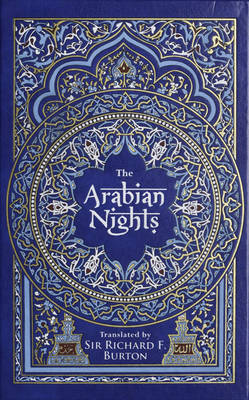
This edition of Scherezade's thousand and one tales (it only includes twenty-one of the more well-known stories) is Sir Richard Burton's famous translation which is quite flowery and formal in its language, which I found at times burdensome to trudge through. 

While many of us (myself included) consider The Arabian Nights as fun adventure tales for the children, the content of this edition is quite adult. It omits none of the sex, racism-especially against African races- or pejorative cultural attitudes towards women that are lacking in kid-friendly adaptations.   

They still contain adventure, Middle Eastern folklore with jinn, magic carpets, rings, wily men and women who meet Allah's judgement, as well as heroes and heroines who, after much hardship and trial win in the end.

The illustrations are what set this particular book apart from other editions.  My Barnes and Noble edition is laced with rich, colorful pictures painted by Czech artists Renata Fucikova and Jindra Capek.  These two artists took meticulous care to render authentic looking Persian paintings that are beautiful and make this book a prize for any personal library. 

 
http://prodimage.images-bn.com/pimages/9781435141933_p0_v1_s192x300.jpg

And speaking of Barnes and Noble, I was browsing through a local branch when I came across the above book.  "What's Steampunk?" I asked my then fiance, Josh.  He explained the whole movement to me from it's origins in the 19th century to the fantasy style costumery worn by some young (and old) people today.
 http://photos.costume-works.com/preview/steampunk1.jpg

For those of you wondering (that would be people my age or older) Steampunk is Victorian science fiction.  With the arrival of the steam engine, 19th century writers' imagination went off in a direction that had their stories soaring to the moon, into the future, and into all kinds of weird and wonderful possibilities in science labs.  But these stories are pre-World Wars.  The women wear petticoats and the men dress for dinner, wear top hats, are gallant and chivalrous. They also happen to be (sometimes mad) scientists.

Strictly speaking, H.G. Wells, Bram Stoker, Robert Louis Stevenson, of course Jules Verne, and even Arthur Conan Doyle could be said to be contributors of Steampunk.
 
This book is a collection of  now mostly obscure writers who wrote for late 19th and early 20th century science fiction, fantasy and penny dreadful magazines.  While the writing is not as brilliant as the better known contemporaries listed in the previous paragraph, they are still interesting and I'm sure provoked  their audience's interest with their animal cyborgs, inventions gone awry and other dystopian possibilities that came with the industrial age and the steam engine.

Next week is Halloween and I am reading some new scary stories by the likes of Arthur Conan Doyle (no-nothing to do with Sherlock) and even a Vampire grammar book.  I hope to have a couple of reviews ready in time for the Holiday.

Monday, June 9, 2014

The Eustace Diamonds by Anthony Trollope


This is the first book I've ever read by Anthony Trollope and I thank Brian Joseph at Babbling Books for his interesting reviews of other Trollope novels which propelled me to download many of his works from Kindle (they're free!)

The Eustace Jewels is my kind of story in that it is not propelled by any profound plot but rather by the characters and the psychology behind what makes them tick.

The story starts out with a young girl, Lizzie, who is both neglected and spoiled by her dissipated father who dies greatly in debt,  in no little part to the jewels and clothes he bought for her.  He spent money but no time with Lizzie and when he dies, she is left alone while still a teenager.

An aunt takes her in, not out of pity or affection, but out of a sense of duty.  At least that is what the third party narrator of the story clearly states.  As I came to discover, the narrator misdirects.  He says one thing but shows another.  As I got to know the aunt through out the story, I came to the conclusion that the elderly woman was not so mean as hardened by the rough hand life had dealt her.

That is a common theme in The Eustace Diamonds:  how people survive when their prospects are bleak.  Trollope, through his third person narrator, shows how different people handle the cards they've been dealt.

First, Lizzie who, as I mentioned, has been orphaned and taken in by her crusty old aunt.  Lizzie's feelings toward her father are never described, but she hardly knew him.  She has nothing but contempt for the woman who keeps her from being a penniless orphan, calling her "the vulturess."

It should be mentioned that Lizzie is very beautiful and she does not reach twenty before marrying a rich baronet by the name of Florian Eustace.  He is young but sick with tuberculosis, a condition which is exacerbated by his wild and reckless lifestyle.  The reader finds him in the grave not a year after his marriage to Lizzie.

What Lizzie felt about Sir Florian isn't made known either, although the Sir Florian discovers on his sick bed that Lizzie lied about her feelings for him and just about everything else about herself.   Even though, Lizzie's attachment to the count appears largely to be mercenary, through out the book she exerts a lot of energy sentimentalizing her marriage and her late husband's adoration for her.  But what the reader is made to understand is that Lizzie is a great liar.  We also know that her motives are ulterior.  I believe today psychologists would label her with a narcissistic personality disorder.

When her husband dies, Lizzie is left property in Scotland, four thousand pounds a year (over $500,000 today), and a necklace made up of diamonds worth 10,000 pounds (you do the math).  

Or so Lizzie, now Lady Eustace, claims. The lawyer representing the Eustace family, is of the opinion that the diamonds cannot leave the estate, therefore while they are hers to wear during her lifetime, she may not sell them.

This is a problem for Lizzie because she did not learn the virtue of good financial stewardship from either her father or her husband.  The story's backbone is this contention between Lizzie and Mr. Camperdown, the Eustace attorney.  All sorts of things happen to the diamonds as Lizzie travels with them on her person, not trusting them to a bank or a jeweler.  Each episode makes Lizzie's character clearer to the reader.

Lizzie is a young widow and doesn't really need to marry for money, but she is a great romantic and also opportunistic.  A young man, Lord Fawn, comes to court her.  Lord Fawn, we are made to understand, is not the brightest of bulbs in the room, nor does he have much of a spine.  He is a man with a title but no money.  He must marry money to make a living.  Lady Eustace is rich and pretty to boot.  When he proposes, she accepts, not out of love, mind you.  She wants the title she would acquire by marrying a Lord.

Unfortunately for Lord Fawn, he soon finds he has engaged himself to a woman he didn't really know.  He afterwards is informed of Lady Eustace's shady character through one of his sisters.  When he learns of the necklace scandal he repents of wanting to marry her.  He tells her so.  Enraged, Lizzie refuses to release him of his promise.  

To make things more uncomfortable for Fawn, Lizzie's cousin, Frank Greystock, has taken her side and helps blacken Fawn's character about town (both are lawyers in Parliment.)

Frank Greystock is an intelligent young man who decides to marry for love rather than for money and, even though his family is against it, engages himself to a penniless governess, Lucy Morris who lives with Lord Fawn's mother and sisters.

But this is where things become complicated.  Fawn made a mindless blunder and he doesn't know how to honorably, or even legally get himself out of it. The engagement remains in limbo for most of the novel.

Frank Greystock, on the other hand, clear-sightedly obligates himself to Lucy, a young woman, as we shall see has all the strength of character and honesty and dumb love as any virtuous woman of the 19th century.

Frank, in his noble efforts to defend his cousin ends up spending a lot of time with her.  A naive thing to do on his part, because Lizzie doesn't just want a title, she wants an adventure.    That Frank really has no money, doesn't matter to her, neither does the fact that she is still engaged, at least tenuously, to Lord Fawn.  She brazenly flirts with and manipulates Frank and gets him in all sorts of incriminating situations, some of which, if they were found out, would give Fawn more than enough grounds to break off the engagement.

One would think that Frank would be revolted at his cousin's intentions.  Not only is he not, but he ends up spending most of his time with his cousin and doesn't see his Lucy for months.

This is what I find fascinating.  We're made to understand that Frank is a good man, with a strong and noble character.  He certainly views himself that way.  Fawn is a weak man, though of good moral character.  Frank despises Fawn for how he believes Fawn is treating his cousin.  Yet he doesn't seem to be aware of how he is treating Lucy.

What strikes me the most about Lizzie is that she has no friends.  She has companions, all of whom need her to financially support them.  She has a live in companion, Miss Macnulty, who puts up with all sorts of verbal abuse because she would be living on the streets if not with Lizzie.

There is also a Mrs. Carbuncle and her niece, Lucinda.  They have no money either, but because they are a part of society, they make the rounds of rich people's houses and attend all the best parties and look the part of rich Americans.  Mrs. Carbuncle is a strong, determined and heartless expert at extracting money from people, helping to increase her friends' debts while never diminishing her own.

Her primary objective in the novel is to marry her niece off to a rich man and rid herself the financial burden she causes, as well attaining a secure income for herself.  Mrs. Carbuncle treats Lizzie the way she treats everyone else and when they finally part ways, Lizzie is several hundred pounds the poorer.

There are many aspects to this novel and the commentary on Victorian life that I noticed.  First, there seemed to be a class in English society during the 19th century that was rich, but had no money.  Trollope never explains how they got rich or became poor, except that some of them got there by extravagant lifestyles they could not afford. There were people that were actually rich and stable such as Lizzie's brother-in-law, John, but their part in the novel is peripheral.  

Another observation is on the corrupted and ungodly reasons just about everyone had for marrying.  I know this is not a new theme and one that has been elaborated on from Jane Austin to Downton Abbey.  Still, it is amazing to me how the church was an established part of English culture as the Hindu religion is part of the Indian identity.  Nevertheless, it seems to be delegated largely as a cultural practice rather than a personal one.  

Everyone was a member of the church of England.  No doubt it would be shocking if one wasn't.  But Trollope shows what an empty ritual it is for most of his characters.  On the one hand, Lord Fawn is a cad if he breaks his promise to Lizzie, but no one questions taking vows before God and man with someone you couldn't care less about.  Marriage is reduced to a business transaction.  The fact the Frank's family and all of Lucy's friends find their engagement unrealistic and impractical because all they have is love to recommend it, highlights this point.

On the one hand, I ask myself is Trollope trying to convey an accurate or holistic picture of Victorian society or is he merely accentuating the worst of it?  If so, why?  Do bad characters create more interesting plots?  Or is this all he saw of the culture he lived in?  That would say more about the social circles he associated with than Victorian culture as a whole.

If, in fact, Christianity had become largely a cultural practice rather than a personal, meaningful belief and practice, I can understand how this paved the ground for Nietzsche, Freud, and other secular humanists.  When Nietzsche had the mad man in Thus Spoke Zarathustra say, "God is dead,"  he was not commenting so much on reality as he was saying how Christianity in Europe had deteriorated to the point of meaninglessness.  I think this is what the mad man means when he says, "We have killed Him."

The final thing I noticed is how the British leisure class not only disobeys Biblical truth in spirit but also in practice.  St. Paul said, "If one doesn't work, he doesn't eat." (2 Thessalonians 3:10) England and all of Europe had created a whole society where a group of people had all the money without earning any of it.  They inherited it and, as is usual in such cases when one doesn't work for what they get, they squandered it.

Hence there developed a class of "poor rich" people.  These people were in dire straits because their particular class didn't allow them to work (except maybe in Parliment) and furthermore, they were expected to maintain their place in society by spending money they didn't have to keep up appearances.  I would very much like to know how this class system developed and how it led up to the current socialized states that now exist in Europe.  A state which, ironically, has produced a leisure class at the other end of the class spectrum.  The end result is the same:  people living off the earnings of others. 

The end of the story sees Lizzie finally abandoned by all her friends and relatives.  Her reputation becomes so infamous that Lord Fawn unequivocally withdraws his attachment.  Frank comes to his senses and returns to Lucy, begging her forgiveness, and we already know about Mrs. Carbuncle.  There's more characters and sub plots but I don't want to give everything away.

Lizzie finally meets a man who has absolutely nothing to recommend him and she knows it.  She knows he is shady, greedy, mean, out for her money, and a liar.  He's a clergyman no less, but I guess that is consistent with the social commentary Trollope is making about the church. 

Lizzie sees this man clearly, but she doesn't think clearly.  She has lived in a fantasy world and plans to stay there.  In this man, she tells herself, she has finally found her corsair.  Here the story ends and we will have to imagine the rest.


Friday, October 25, 2013

Count Dracula by Bram Stoker


Well, Halloween is almost upon us and it only seems right to post a few reviews about scary stories.

I personally love a scary story but I usually have to go back a hundred years or so to find a truly scary story.  Disembowelments don't scare, only disgust.  In fact they devalue life.  One of the things I enjoy about the Victorian ghost story is that part of the horror was its emphasis on how precious life is.


So it is with Bram Stoker's Count Dracula.


I had read this book years ago in college but I caught a number of things during this second reading that didn't register before.


Firstly, whether intentionally or not, Stoker weaves in barbaric paganism with prim and proper Victorian culture.  I don't know that I would have noticed it before except I had read another book, Vampires, Burial and Death by Paul Barber (which I'll review later) about the actual practices of destroying vampires.


At first I thought the book, Vampires, Burial and Death, was going to be about the traditions associated with vampires but it is actually a non fiction account of the belief in vampires that existed in past centuries through out Europe and the methodical ways people dismembered, mangled and otherwise defiled corpses that were believed to be "undead".   Reading the book exposed how pagan beliefs persisted even during the Christian era of Europe and how barbaric they were.


Bram Stoker combines these grotesque practices but takes them out of the primitive eastern European village and places them in a sophisticated 19th century English culture.  The dichotomy creates a dramatic chiaroscuro.


 Stoker's writing style is dated and flowery, but normal for the era.  The woman is held up to be a beautiful, but fragile lily in need of masculine protection.  The language would probably make the modern feminist cringe.


The storyline, simply put, is Count Dracula from Romania makes his way across to England for what reason I'm not entirely certain of.  I think it is for power and dominion.  He starts by attacking a newly married young woman, Lucy.


At first  Lucy behaves mysteriously, sleep walking and becoming langerous.  She keeps losing blood but no one understands why.  Five men are involved in her life.  Lord Godalming, Johnathon Harker, who was the unwitting solicitor for Dracula, John Seward a doctor from an insane asylum, Quincy Morris an American from Texas and Professor Van Helsing, a Dutch Doctor who mentored the other men.  Van Helsing and Johnathon Harker are the only men among them that were not suiters for Lucy's hand in marriage. (Lord Godalming is the winner and marries her.)


Each man donates his own blood but to no avail.  Eventually Lucy dies.  Then strange reports appear around London of a lady who roams the streets at night befriending children who all have the same affliction afterwards:  two puncture wounds on their necks.


Van Helsing is the one to explain the phenomena of vampirism to the others and after much persuading, convinces the men that they must kill the undead Lucy, not only to save the children but her own soul.  They do so by opening her tomb, driving a stake through her heart, cutting off her head and filling the mouth with garlic.  Lucy's husband is the one to perform the ritual.  It is viewed as an act of heroism because in doing so he frees Lucy's soul to go to heaven.


The men then find Dracula's coffins and place Communion wafers in them, thus making it impossible for him to return to them.  Realizing he is being hunted, Dracula returns to Romania but not before getting revenge on the men by attacking Johnathon Harker's wife, Mina.


The rest of the story is basically a race to Transylvania to destroy Dracula before Mina completely transforms into a vampire.  If she were to do that, it would be too late to save her life and they would have to destroy her the same way they did Lucy.


What impresses me is how skillfully Stoker is able to convince me, the reader, that it is perfectly acceptable and even heroic for men to take a stake and drive it through the heart of a woman and decapitate her.  The reason is that he is not really murdering her because she's already dead, but what a horrible thing to do.


Yet, these men truly adored Lucy.  And they care so much for Mina they are willing to risk their own lives (even lose it in the case of one of them) by confronting a monster with superhuman demonic power in order to free her from living an existence of damnation.


I know there are a lot of modern women out there that would spit on this book.  What chauvinism!  A woman doesn't need a man to "save" her.


I wonder how many of these women enjoyed "Fifty Shades of Grey"?  A lot, according to the New York Times best seller lists.  What are we "too modern" for?  Books that show men concerning themselves with the welfare of women?  But we don't mind books that describe (in graphic detail) a man dominating and degrading a woman?


Furthermore, Mina is the brains of the outfit.  She's the one who figures out where Dracula stays in England and what mode of travel he used to return to Transylvania.  The men show her great respect and acknowledge her indispensable help.


Not only does Stoker contrast contemporary English culture with paganism, he sharply contrasts the behavior, language and mind of a refined, intelligent Victorian woman and what it becomes when she turns into something evil.


While alive, Lucy is articulate, refined and very correct in her behavior.  Afterwards, she becomes like an animal, seeking only to hunt and devour for the maintenance of her own existence.  The contrast must have been shocking to contemporary readers.


Another factor that is woven in is Christianity. Victorians didn't talk of their faith as openly as many Christians today.   It was so much a part of the fabric of their life it was taken for granted.  It would have been like pointing out to others that the sky is blue.


But Stoker  uses Christian symbols in a pagan context. Holy Water, Communion wafers and the Crucifixes are used as some sort of magical amulet to ward off the vampires.  Perhaps he is simply trying to insert a moral dynamic to show good vs evil.


One of the most interesting things about Dracula is how little he shows up in the story.  Probably the most intense and consequently enjoyable section of the book is the very first part when we read Johnathon Harker's diary which chronicles his initial journey to Transylvania and subsequent imprisonment in Dracula's castle.


Dracula is written in first person through the diaries, letters and journals of some of the main characters.  This provides different voices to describe the same story.


I think it must be terrifically difficult to create that many voices in a single text, especially the women's. He succeeds in all except Van Helsing's whose broken English came across as artificial.  


I don't know why Bram Stoker wrote Dracula.  Maybe he was trying to shake up his fellow Victorians.  Letting them see that for all their sophistication, barbarianism is not as far away as they think.


I also am surprised at his theology, which in my opinion is skewed. At the end of the story, when the Count is finally vanquished, in her diary, Mina notices that the vampires face expresses peace before the body turns to dust.

What is the message here?  That evil begets evil but no one is really responsible for their own actions?  Each person is turned into a vampire against their will and has no choice but to act demonically?  If that is so, then why would they be damned even while a vampire?  

Whatever Stoker's reason for writing his story or his worldview, Count Dracula is just a plain scary story well told and its endurance is testimony to its value and place in the archives of Western classical literature.


Vlad the Impaler, Stoker's real life inspiration for Count Dracula


Hardcover with illustrations and annotated fro $19.95


.99 on Kindle


For a different kind of review go to:
Still A Demon