Showing posts with label 19th century. Show all posts

Sunday, May 24, 2015

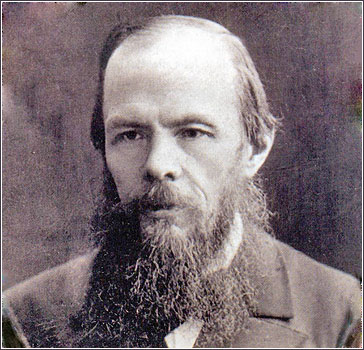
The Idiot by Fyodor Dostoevsky


Sir Percival Piggybottom shared his thoughts and insights with me on The Idiot by Fyodor Dostoevsky.  Amazingly, his opinions exactly reflected my own.  What can I say?  Great minds think alike.  Here's what we have to say.


I've said it before and I'll say it again.  Reading a novel by Dostoevsky is like stepping into a world wind.  There's no down time.  Just when you think a certain scene or situation is coming to an end, someone else shows up and away we go again with nary a pause for breath.  No character possesses neutral emotions either.  Everyone is either turning white with rage or red with...with...even more rage.

The story starts on a train where we meet our hero Prince Lev Nikolaevich Myshkin.  He is returning to Russia after many years in Switzerland.  On the train he meets Parfyon Semyonovich Rogozhin.  Little do these two men know but they are going to play profound roles in each other's lives.

While riding Prince Myshkin relates his background.  Some years past he suffered a mental break down and was sent to a hospital in Switzerland until he recovered.  Now, though still a young man, the Prince is returning to Russia.  He knows no one but hopes to make a few contacts.

Rogozhin immediately brings up the topic of a woman he is obsessed with, Nastasya Filipovna Barashkova.  He is going to propose to her.  He has raised an insane sum of money, which she has demanded, in order to achieve his desire: her hand in marriage.

Insane is an appropriate word here.  Because all the major players in this novel are insane.  Or desperate.  Or angry.  Or emotionally out of control.  Hence the unalleviated excitement that relentlessly rides the entire novel.

Nastasya is a fascinating character study in her own right.  One doesn't know whether to hate or pity her.  Born into a poverty-stricken family, she was orphaned very young but being very beautiful was soon taken up by Afanasy Ivanovich Totsky, a wealthy man of high society, who took her and basically kept her for himself.  No need to spell that out.

Being orphaned and helpless, Nastasya had no choice but to submit to Totsky's..let's call it what it is... sexual abuse.  But a time comes when Nastasya is no longer the helpless one.  She realizes that she holds Totsky's reputation in her hands, especially since he now wishes to marry into an important family.  Totsky understands that he is no longer the one in control of their relationship and his one objective is to get rid of her.  He attempts to acheive this by marrying Nastasya off to a clerk of General Epanchin who also happens to be the father of the woman he wishes to marry.

Totsky offers this clerk, Ganya Ivolgin, 70,000 rubles to marry Natasha. Ganya was pursuing General Epanchin's youngest daughter Aglaya but he breaks his relationship with her and everything looks settled.  Nastasya holds an evening party at her apartment to seal the deal.  

Why Ganya would want to marry Nastasya, other than for the money is beyond me. She lets her contempt for him be known at every opportunity.  She delights in making a fool of him.  And she has one last trick up her sleeve.  

Late in the evening Nastasya's party is crashed by Rogozhin and a bunch of rowdies.  He has come with the money Nastasya has demanded to marry him.  Nastasya grabs the money, throws it in the fire, and tells Ganya he can have it if he'll pull it out.  Then she runs off with Rogozhin.

  Where does the Prince fit in?  He loves Nastasya.  But not the way the other men do.  He feels compassion for her and he wants to save her.  He also proposes to Nastasya.  She understands his pure love but doesn't feel worthy of it so repels him.

Meantime there's Agláya Ivánovna.  Aglaya is a nut case in her own right.  She loves the Prince and wants to marry him.

Then she doesn't.

Then she does.

No she doesn't.  She hates him.

She's madly in love with him!

No, never!

That pretty much describes Aglaya. Strangely enough, the Prince also loves her and in a real romantic sense, but instead of doing the common sense thing and blow her off, his emotions corresponds to her mood swings.

I'm in ecstasy, she loves me!

I'm crushed, she hates me!

Yay!

Aaaaaa!

I really cannot figure the Prince out.  It's interesting how the other characters respond to him.  They all consider him a fool, even calling him an idiot to his face.  Yet, one by one, they each develop an attachment to him and soon find that they need him to turn to, confide in, be listened to.  He's the only one that genuinely loves and believes in the goodness in each person.

Dostoevsky digs deep into the human soul and bares the desperate sin that lurks there.  By doing so he reveals the light of God that shines on that darkness and disperses it.

There are no tidy endings in real life and Dostoevsky certainly doesn't provide any in his writing.  This book probably has the least satisfying ending of any of the books I've read, with maybe the exception of Demons (also titled, The Possessed).

Spoiler alert!  Don't continue reading if you don't want to know how the story ends.

As much as the Prince loves people, his belief in their inner goodness is finally shattered.  He finally breaks it off with Aglaya (or she breaks it off, who can tell?) and proposes marriage to Nastasya who, after living with Rogozhin, accepts.  

Everything proceeds as planned.  Nastasya, adorned as a princess, approaches the church where the Prince is waiting for her.  In the crowd she sees Rogozhin.  She screams and jumps into his arms.  They run off together.

After searching all over town and St Petersburg, the town where Rogozhin lives, he finally finds them.  Rogozhin, after hiding out in his family apartments, comes to the Prince and brings him home.  

The final part is surreal.  Rogozhin talks about all sorts of nonsense with the Prince but we finally become aware of Nastasya lying under a sheet on a bed in the corner of his room.   Both he and the Prince spend the night together discussing what to do because the body will soon begin to smell.

Eventually they are found out.  Rogozhin is sent to Siberia and the Prince truly becomes an idiot.  Relapsed into madness he is sent back to the hospital in Switzerland.


There is ever so much more to this story than can be related here.  I cannot begin to count the number of characters in the cast.  As my husband, Josh, said.  "How many people can fit into one room? Can you imagine a stage production of this story?"

Every character is a story all by him or herself.  But if you want those stories, you'll simply have to read the novel for yourself.

Percy says, "I would not have tried to love two women at once.  Wait.  Yes I would.  I'm a Guinea Pig.  That's how we reproduce."


https://rickrozoff.files.wordpress.com/2011/05/dostoevsky.jpg


Kindle .99


Sunday, April 5, 2015

A Treasury of the Great Children's Book Illustrators by Susan E. Meyer


Any of us who have had children have collected at least a superficial amount of books illustrating fairy tales and other fantastical stories written for children. This wonderful book  devotes a chapter each to twelve illustrators whose careers span from the Civil War to post WWII.

The author uses a formula for each biography:  where the illustrator was born, how they were raised, where they got their education, how their careers got launched and their unique style of illustrating.  Most of them are British but a few are from other countries.  Also described is the special relationship that some of them had with the authors.


http://www.carlemuseum.org/sites/default/files/554813436_shepard_01_web.jpg
 E.H. Shepard (1879-1976)

Such is the case with E.H. Shepherd and A.A. Milne.  Shepherd is best known for his Winnie the Pooh illustrations which made him hugely popular in America more so than in England.  He patterned Winnie the Pooh after a beloved bear of his own rather than the original.  This is obvious to anyone who has seen the original Winnie in the Children's branch of the New York City library.  Shepherd also illustrated The Wind in the Willows by Kenneth Graham.  Shepherd developed close friendships with both authors which may indicate why his illustrations are so endearing.


http://www.kismetgirls.com/arabian_tents/arabian_tents_images/alice_in_wonderland_mad_hatters_tea_party.png
 John Tenniel (1820-1914)

Not all illustrators and authors got along, however.  This is true for Lewis Carroll and his illustrator, John Tenniel.  At first Carroll wanted nothing to do with Tenniel's illustrations but the success of Alice in Wonderland forced him to admit that Tenniel's illustrations contributed to the book's popularity.  It took some persuading for Tenniel to illustrate the "abrasive" Carroll's Alice Through the Looking Glass


 Arthur Rackham (1867-1939)
Rackham's Mad Hatter bears a remarkable resemble to himself.
While Tenniel's illustrations for the Alice books are the most famous they are not the only ones, nor the most beautiful.  That award would go to Arthur Rackham.  At least the female characters are lovely.  His other characters are surreal and grotesque.  However, Rackham is most famous for his fairy tale illustrations with which he adorned many books, Grimm's, Aesop's, not to mention international collections.  He enjoyed inserting himself in the pictures as a goblin or some other creature.  In the above illustration for Alice in Wonderland, Rackham has drawn himself as the Mad Hatter.
                                                                   
http://spiritoftheages.com/AR%20AFB%20C3.jpg
The King's son demands the giant's youngest daughter to wed from The Battle of the Birds
   
https://roomcandy.files.wordpress.com/2008/08/beatrix-potter-illustration.jpg
The Tale of Jeremy Fisher
http://i.ytimg.com/i/IdtrAVeAyhgbqqC5Zl71ig/mq1.jpg?v=505049e4
Beatrix Potter (1866-1943)
      
Some of the illustrators wrote their own stories.  Beatrix Potter did this.  She wrote stories in letters to a young boy who was sick in bed for a period of time.  Years later, she asked for the stories back and luckily (!) the boy and his siblings had kept the letters and were able to give them to her.  She published these stories along with her own illustrations.  Thanks to a family that didn't throw letters away, Peter Rabbit and company were saved from oblivion.


http://www.artisallwehave.com/wp-content/uploads/2011/08/edward-lear-owl-pussycat.jpg
Edward Lear (1812-1888)

The Owl and the Pussy-cat went to sea

   In a beautiful pea-green boat,

They took some honey, and plenty of money,

   Wrapped up in a five-pound note. 

Edward Lear didn't illustrate his own stories but he did illustrate poems he made up.  His limericks are probably more famous than the drawings he created to accompany them.  The book of limericks that I own aren't even illustrated by him but by another famous illustrator, Edmund Dulac.


http://www.capuletart.com/wp-content/uploads/2011/11/firebird.jpg
Edmund Dulac (1882-1953)  from The Firebird

Dulac, a Frenchman, was a contemporary of Rackham.  He was influenced by middle eastern and oriental art and illustrated Arabian Nights, Russian Fairy Tales as well as traditional western fairy tales by Hans Christian Anderson.  The colors he uses in all his illustrations are filled with rich, vibrant color.


http://www.dorsetlife.co.uk/wp-content/uploads/710-ed-Wimborne-1.jpg
 Kate Greenaway (1846-1901)


 Another female illustrator is Kate Greenaway.  Her illustrations are a little dated looking now, but were loved for their idyllic settings filled with charming children.  Although, it has been remarked that "for all their playfulness and charm, Greenaway's girls are actually melancholy, dispirited, and strangely detached from period or place."

  Kate never married but she held a fairly intense relationship with her "lover in writing" John Ruskin.  He was her closest confidant and- even though they rarely met in person- her most faithful critic and biggest influence on her painting.


http://www.brainpickings.org/wp-content/uploads/2012/08/nielsen_eastofthesun7.jpg
Kay Nielson (1886-1957)

My favorite illustrator after Rackham is someone I had not known about before, Kay (pronounced "Kye") Nielson.  Nielson was a Dane who unfortunately died in obscurity but whose art has since made a comeback.  His illustrations reflect his Nordic background and are, in my opinion, exquisite.


http://artinsightsmagazine.com/wp-content/uploads/2013/02/48213.jpg
Howard Pyle (1853-1911)

The last three illustrators in the book are American:  Howard Pyle, N.C. Wyeth and W.W. Denslow.

https://eavice.files.wordpress.com/2010/01/pirates.jpg

Pyle, a strict Puritan, relegated himself to historical legends and adventure novels about pirates, Indians, cowboys, Robin Hood and Arthurian legends by authors such as Robert Louis Stevenson, Daniel Defoe, and James Fenimore Cooper- as did his pupil N.C. Wyeth.  Denslow is famous for his Wizard of Oz paintings.
http://homeschoolcommons.com/wp-content/uploads/2012/06/wonderfulwizardo00baumiala_0081.jpg
 W.W. Denslow (1856-1915)


I found this book in the library but shortly after diving into it I ordered a good used copy online.  Of course what money I saved from buying the book for a couple of dollars has probably been countermanded by all the collections of fairy tales and the like that I've bought filled with the illustrations of these wonderful artists.


Sunday, March 29, 2015

Twelve Years a Slave by Solomon Northup


I heard the movie was horribly violent, something I'm extremely sensitive to, so I never saw Twelve Years a Slave.  I happened to come across the book at a  bargain table in Walmart.  The price, an alluring $2.97, motivated me to pick the book up and glance through it.  When I realized that it was a non fiction book written by a former slave of the 19th century, I bought the book and read it in a couple of days.

Solomon Northup was a free black man born, educated and raised in the north until in 1841, around the age of thirty, he was kidnapped and sold into slavery in Washington DC.  He was married at the time and had children but none of them knew how or why he disappeared until twelve years later.

Perhaps most of you have seen the movie so I don't need to retell the story. Instead I will touch upon those things which most impressed me.

First, Northup is an eloquent story teller.  His writing skills attest to the type of education he received and the ability of black people to become well educated and cultivate their God given intelligence like any other race.  That seems an obvious thing to say today, but it must have been surprising, even amazing at the time the story was written.  One of the justifications used to enslave black people was that they weren't as "evolved" as white people.

Another thing that impressed me was the even handed story telling.  Northup could have demonized every white person in his story but he chose to speak honestly of his experience.  He speaks of his first owner, William Ford, as a God-fearing, kind and merciful man.  He treated his slaves with justice, never forcing them to work more than they could bear and as a result received far more work out of them than any tyrant would have.  Northup observes that if all slave masters were as Mr. Ford slavery would never have died out because men and women under such care would have been content to serve all their lives.

Ford was the exception rather than the rule, however.  Northup makes an acute commentary of the dastardly effects slavery has upon the human soul.  Not only does it rob the slave of dignity and humanity, it brutalizes the slave owner as well.  People who could have been kind, caring, and edifying citizens were reduced to brutish thinking, robbing themselves of any dignity or respect they might otherwise have possessed had they not been slave owners.

And unfortunately for Northup, the next owners he served under certainly vied for the prize of being the most despicable, hateful, animalistic monsters ever to plague the planet.  Northup describes in heart breaking terms the savage treatment under the hands of people who suffered no accountability for their actions.  At least not while alive.

The final thing which impressed me, and I don't know if the movie brought this out, was Northup's Christian faith that gave him the strength and hope to press on through his trials, knowing that one day there would be a deliverance and a reckoning, even if at the time he didn't know if it would happen during his lifetime.  I believe that is why there is no trace of bitterness in his account of his ordeal.

Another interesting point to the story was Northup's meticulous descriptions of life on plantations.  He details the daily routine of slave life, cotton harvesting and also of corn.  These descriptions make his book a valuable record of history.

I'm glad that instead of spending the rest of his days shaking his fist at God and asking "why?"  Northup instead used his twelve years to expose the evils of an accepted practice and contributed to its eventual elimination.

http://www.comicbookreligion.com/img/s/o/Solomon_Northup.jpg
Solomon Northup


Fully illustrated 1853 Edition:


Sunday, February 22, 2015

Vanity Fair by William Makepeace Thackeray


When I was in high school I saw a drawing of a beautiful young girl looking innocently out at the viewer.  The sub title read, "Rebecca of Vanity Fair with her claws sheathed."  That little comment kept me from reading Vanity Fair by William Makepeace Thackeray for the next thirty years.  I thought, "Oh, another story about some femme fatale who leaves a score of victims in her wake.  Blah."

The photo of Rebecca that accompanied the article that discouraged me from reading Thackeray


So why did I pick up the book now?  I was at a book fair and a copy of the book was available for a quarter.  It wasn't just the cheap price, although that always carries a seductive charm for me, it was something even less profound:  the book cover and the shape and feel of the book.  I cannot explain why I am tempted to buy books solely for their looks and texture but I am.  Usually I can successfully overcome the urge- especially if the book is by an unknown.  But I did know about Thackeray and something in me said, it is time to read this book.

I do believe that we read types of books in different seasons.  Probably I would not have understood or enjoyed Thackeray as a teenager.  I do now.

Vanity Fair is Thackeray's social commentary on British society.  He's not the only British author to do so.  The British upper class is a common theme among many if not most writers of the United Kingdom, especially during the 19th and early 20th centuries.  What is interesting is how each good writer is able to stamp the same theme with their own imprint.

Thackeray achieves this.  Rebecca isn't much different than Lizzy Eustace in Trollope's novel, The Eustace Diamonds.  But yet the stories and the characters are still very different.  The only commonality is the stories' foundation.

In Vanity Fair, two young girls, Amelia Sedley and Rebecca Sharp leave school to begin their lives as adult women.  For Amelia this is to return to the home of her well- to- do parents and wait for her fiance, George Osbourne-also from a wealthy family- to marry her.  For Rebecca, who is the daughter of a poor artist and French dance hall girl-both now dead, it is to become a governess to a family of aristocrats.

Before heading off to her job as a governess, Amelia insists that "her dear friend" stay for a while with her and her family.  Rebecca agrees to this and while there sets herself to the task of seducing Amelia's older brother and marrying him before her time to leave.

She almost succeeds because Amelia's brother, Joseph, home from India is a chubby buffoon with very little sense.  What saves him is Amelia's fiance, George Osbourne, who makes it clear that Joseph can't marry a girl, no matter how pretty and charming, who is low class.

So eventually Rebecca moves on to her aristocratic family, the Crawleys.  Here she absolutely charms everyone and succeeds in getting a nephew, Rawden Crawley, to marry her.

It's interesting because, on the one hand, everyone seems to be at Rebecca's mercy.  She's so mean and nasty and cunning and yet is able to win everyone over, often through backstabbing the others.  Yet she also fails so miserably because as much as the rich people enjoy her company, they never  forget that she is beneath them socially.

For instance, all the Crawleys spend a great deal of energy fawning and pandering to an elderly spinister aunt because she has all the money and they don't. Another point of interest:  being an aristocrat doesn't mean you have any money.

Rebecca completely ingratiates herself to this aunt who keeps her as a constant companion.  Rebecca amuses her by mocking all the other members of the Crawley family, whom the aunt detests. She only loves Rawdon Crawley, a hedonistic young soldier because he is a hedonist, and she plans to bequeath all her money to him.

This Rebecca knows, so she wins Rawdon over and they marry in secret.  Rebecca hopes to keep this a secret but is unable to when an elderly decrepit  Crawley, Sir Pitt, proposes to her after the death of his wife.  As much as the aunt enjoyed Rebecca's company she is outraged that she would presume to marry into her family and disinherits Rawdon.

And that is pretty much how the whole story goes.  Rebecca flirts and charms and seduces men, usually married men, of rank and importance, falls, gets back up and continues on.  On the one hand you'd like to see her get her just desserts, but on the other hand, one figures she's punished enough by having to live with herself.  There's nothing about Rebecca that would induce anyone to envy her.  Her whole life is consumed with being the center of attention, getting money, and hurting other women.

Thackery shows human weakness on every level but he is not devoid of humor or compassion which saves the plot from becoming drab.  Rebecca never changes, she never repents, who knows what'll happen when she grows too old to attract anyone.  Probably she'll have to settle on being a Madam at a house of ill repute.

The other characters that surround Rebecca, however, do change.  And they change for the better.  Rebecca seems to be the refining fire that burns off the slough.

Amelia turns from being a simple-minded naive girl to one who finally understands true love and devotion.  But not through her husband who gambled away his fortune plus lost it after his father disinherited him for marrying Amelia.  

What, you say?  Wasn't Amelia part of the privileged class?  She most certainly was, until her father lost his money through a series of bad investments.  Amelia's family lost their wealth, their social standing, their friends, everyone.  

George's father was in favor of the marriage until Amelia became poor.  The sad part is that Mr. Osbourne's investments caused Mr. Sedley's misfortune. This is doubly sad as Mr. Osbourne's wealth is due to Amelia's father's initial financial help.  Because Mr. Osbourne knows this, he runs from his guilt  by demonizing Amelia's father.

The story shows how fickle life is when one's identity is wrapped up in how much money you make or your aristocratic name.  There are many other plots of this nature throughout the novel.

The biggest change comes from Rawdon who, after being falsely imprisoned by the Marquis Steyne, is able to free himself and return home to find Rebecca dancing and flirting with the Marquis.  His eyes are finally opened and he leaves and returns home to his family.  Rebecca is left with nothing.  No money, because she and Rawdon had none.  They were living on credit, much to the disadvantage of their creditors, which cause at least two of them to go bankrupt.

That was another interesting point.  How, if one has a name,  can one live as a rich person without any money?  Who gets the shaft?  The people renting to you, supplying you with groceries, and everyone else you hire.

Rebecca finds herself alone, penniless, in a house owned by someone she financially destroyed.  The house servants now mock her and refuse to help her.  Why should they?  She owes them over a years' salary.

Rebecca disappears for awhile from the story and we get to witness the transformation of the other characters who all have fairly happy endings.

Except for Joseph, Amelia's brother.  He ends up on the continent where he discovers Rebecca again.  This time he is completely seduced, financially destroyed and possibly even murdered by her through poison.

I have not mentioned our hero, William Dobbin (even though Thackeray insists there is no hero).  He is the backbone to the whole story.  He is the strength, the moral hero, the one man who always sees through Rebecca, the only man not tempted by her.  The one who truly loves Amelia and cares for her and her son after George is killed in the war.  

It would take too long to portray him.  Know that he weaves in and out of the whole story and touches each character in a way that causes them to rise above themselves.  I won't call him a Christ character, but certainly one with Christ like attributes.

At 753 pages, Vanity Fair is not a short read, but definitely a worthwhile one.  I can only sum up the story line.  I can't imitate Thackeray's wit and insight.  You have to read his story for that.  I especially enjoyed how Thackeray would insert himself into the story.  His characters are so strong that they become real from the first page.  You forget that they are fictitious.  Thackeray knows this so he playfully makes little comments throughout the novel to remind you that he is only making the story up ("For novelists have the great privilege of knowing everything.")

And Thackeray is very playful and funny.  My outline makes it look a pathetic story indeed and one really can't help hating Rebecca, but Thackeray takes a light-hearted approach while making serious observations about a society that can be merciless to its citizens. This allows the reader to enjoy the book without becoming depressed.

I'll end with the final words on page 753:

ah! Vanitas Vanitatum!  Which of us is happy in this world?  Which of us has his desire? or, having it, is satisfied?-Come children, let us shut up the box and the puppets, for our play is played out.


Thursday, February 27, 2014

Dwellers in the Hills by Melville Davisson Post


Artist: Thomas Moran of the Hudson School, 19th century

I can’t remember how I came to learn about Melville Davisson Post, but something I read somewhere intrigued me (is that vague or what?).  A writer from the early twentieth century, Post is known for preserving the culture of West Virginia at the turn of the last century in his mystery novels. 

His writing has a definite archaic style to it and at first I wasn’t sure I was going to bother finish reading the story.  He is of the “only show never tell” school, which can make it hard at times to figure out what is going on.  Also, I’m really not a fan of writers who think that have to paint every detail of a picture for me.  At one point the first person narrator describes his descent from a mountain on the back of a horse at break neck speed.  I really could not care less how fast the trees whizzed by or how each blade of grass looked, how your horse frothed, or how you felt.  Just tell me that you rode a horse as it galloped down the mountain. That’s good enough for me. I can imagine the rest for myself.

But, at one point near the beginning of the story (I believe it was after the narrator arrived at his destination from the mountain) the characters and the plot provoked my interest.

Quiller, the younger brother of Ward, a cattleman, arrives home to discover that Woodford, a rival of his brother’s is there to claim some cattle that his brother had agreed in a contract to sell to him.  Prices had dropped and Woodford, was demanding the cattle immediately.

With Woodford is Cynthia, a woman who possessed beauty and charm enough to have almost magical powers over Quiller simply because his brother, whom he idolized, adored her.  But here she was, sitting and laughing with his brother’s rival.  Feeling his brother betrayed, Quiller’s admiration for Cynthia is instantly turned to hatred.

Ward is laid up from being thrown from his horse so he is unable to round up the cattle, which are a day’s journey away.  This leaves the job up to Quiller and two ranch hands:  Jud, a giant of a man, and Ump, an old bewizened man with a hunch back. 

Quiller speaks often of his youth and inexperience and at first I imagined him to be a youth of no more than ten or eleven.  As the story progressed I began to gather that he must be a teenager.  This confusion is a result of aforementioned “showing only” strategy.  Since the entire story is told from Quiller’s point of view, the reader has to figure out as best he can what’s really going on from different comments he makes.

Yet, it is not an entirely ineffective strategy because Post does not make Quiller omniscient or objective.  The reader becomes persuaded to believe certain things due to Quiller’s personal prejudices and limited understanding of the bigger picture.  This allows the reader to become as shocked or surprised as the narrator when certain truths are discovered.


After this initial set up begins the story, which is basically a race to get one hundred head of cattle back home in order to sell them before the prices drop, which is why Woodford wants the cattle now.

As challenging as rounding up a hundred cows would be, it is made even harder when Quiller, Jud, and Ump realize that two of Woodford’s men, Lem Marks and Parson Peppers, are ahead of them sabatoging their efforts.  This is the basic outline of the story.  On the way to the cattle and on bringing them back, Quiller, Jud, and Ump have to overcome the hurdles Marks and Peppers throw in their way. 

Even though the formula is transparent, it creates a level of suspense in wanting to know just how the three men are going to get to their cattle and back.  As the story transpires, the reader discovers, through Quiller, that Ward’s accident was due to someone shooting at his horse while he was riding it.  Then the black smith purposely nails corrupt nails into the shoes of their horses to impede their ride and finally, the ferry boat, which is cut loose overnight requires Quiller and the others to force the cattle to swim across a rough river and risk their drowning.

It doesn’t sound very interesting the way I write it, but Post’s descriptive powers do help create a vicarious experience that allows the reader to enter into the story.

The ending is a little strange in that Post seems to randomly throw in the fact that the Civil War is going on, something not revealed until the last paragraph of the book. But then again maybe it wasn’t random.  Maybe it’s supposed to pack a punch and throw the whole story in a new context.  It certainly left me wondering what was really going on after all.

Another aspect of the book is the insertion of old Celtic mythology.  Quiller informs the reader of the lore of the dwarfs, the “dwellers in the hills.”  They made the bridge that the ranch men have to cross at one point.  He gives a little history as to the relationship these hill dwellers had with the people who settled the land.  I’m not sure how the dwarfs fit into the story.  It made me wonder if I was mistaken about the location of the story and if it was not in fact in Scotland.  I suppose the dwarfs made it across the ocean with the Scots who colonized the Appalachian mountains. Perhaps this was a part of Southern culture that I am not familiar with.  I know Southern culture has its roots in English and Celtic traditions from singing to story telling to art.  I just had never heard stories about dwarves. 

Considering the time period Post wrote his stories  I believe that there was more to Southern culture than I realized and can learn a lot from reading his stories.


 Melville Davisson Post
1869-1930

$6.74


Further information on Melville Davisson Post:

Clerical Detectives

http://en.wikipedia.org/wiki/Melville_Davisson_Post

America's Greatest Mystery Writer 

Monday, February 17, 2014

One of Life's Slaves by Jonas Lauritz Idemil Lie


Edward Munch, The Storm 1893


First, I apologize to my readers who have commented that they have not received new posts from me.  I’m a free lance pianist/organist and I am currently working four jobs:  twenty singers and twenty-four instrumentalists I play with, an opera, and pipe organ for church.  Just a leetle busy. 

And…I’ve recently become engaged so time I usually reserve for reading has been otherwise occupied.  (Insert huge smile here). 

I have managed to read one book finally.  Thanks to Zohar over at Man of laBook, I have become aware of a Norwegian author whose books, at least some of them, are free downloads at Amazon.  The first one I’ve read is called, One of Life’s Slaves.  It is a rather grim story and I’m not sure what the author’s reasons were for writing it, but I’ll speculate on this after the review.

A young woman, Barbara, gets pregnant out of wedlock.  Since in the 19th century, this is considered a scandalous condition, Barbara is hard put to find work.  She finally procures a job as a wet nurse and nanny at a well-to-do household on the condition that she get rid of her own child.  This she does by paying a local village family, the Holmans, to care for her son, Nikolai.

Barbara’s life takes a turn for the better where she becomes a pampered, spoiled and imperious “servant” of the family that hired her.  She raises the two children as if they were her own, while rarely visiting her own blood child.

Nikolai’s fortunes go from bad to worse.  He is exploited, neglected and abused at the hands of his foster mother, Mrs. Holman.  He is treated like a slave and any minor infraction is severely punished with prolonged beatings and being made to spend terrifying nights in a coal cellar.

Still, Nikolai manages to grow up, run away from his foster family and get work as a black smith.  He returns to the Holman household in secret, however, because he has formed an attachment to their daughter, Silla, who grew up with him. They meet in secret for as long as they are able.  Though his life takes many adverse turns, Nikolai manages to earn enough money to ask for Silla’s hand in marriage. 

Mrs. Holman tries to intimidate Nikolai with her usual imperious, demanding and sanctimonious manner and speech but he has become hardened to them.  Furthermore he is determined to marry Silla.  Doing her best not to show Nikolai, Mrs. Holman is secretly hopeful of the prospective marriage.  Her own husband has since drunk himself to death and she has had to rely on doing the washing of town folk.  Because of her caustic attitude she loses as much work as she gains.  She begins to think that if Silla and Nikolai were to marry, she’d have a source of financial security by moving in with them.

The fly in that ointment is that Nikolai’s mother, Barbara, who has by this time moved in with him.  The family she worked for finally developed enough of a back bone to throw her out and her attitude of entitlement has successfully ostracized her from any other employers.

Demanding that Nikolai cannot abandon his very own mother, she persuades him to let her move in.  Plus he gives her his hard earned savings to buy a store.  This forces him to postpone his marriage plans. 

Barbara eats more of her products than she sells and the store goes under.  Oblivious as to the reasons her store is going bankrupt, she demands more money from Nikolai.  He refuses to give her more and the reader, with a sigh of relief, hopes that finally Nikolai has wised up and will boot his parasitical mother out.

This is not to be, however.  After blaming Nikolai for all her life’s misfortunes, Barbara threatens to seek help from Veyergang, the boy she wet nursed.  Nikolai cannot tolerate this so he gives her the money.  He understands that this ruins his chances of ever marrying Silla.

Things finally come to a head when Nikolai reviews the hardships he’s had to endure his entire life.  Who made his life hard?  Mrs. Holman who abused and neglected him through out his childhood?  His mother, Barbara, who abandoned him and, literally, ate up all his money?

Common sense would dictate that this was the case.  Nikolai, as tragic as he is, is made even more so by an amazing lack of common sense.  After reviewing all his misfortunes he arrives at the conclusion that it is Veyergang who is the cause of them all.

Part of his prejudice could perhaps be explained by the fact that this rich young man has enjoyed everything Nikolai lacked:  a wealthy, privileged home, the love of Nikolai’s own mother, and finally he has begun wooing Silla.

Silla is a young, silly girl.  She loves Nikolai but also loves fun and dancing.  Nikolai provides the former without any of the latter.  Who does?  Young Veyergang.  It is at a dance where Nikolai find Silla and Veyergang together.

Nikolai hurls a large stone at Veyergang’s head and kills him.  What is the conclusion to Nikolai’s life?  A life time of hard prison labor.  The final words of the novel are uttered by Nikolai as he swings his pick:

“If I got out (of prison), it would only be to come in again.  For either the world ought to go to prison or I ought, and I suppose it may as well be the last!”


I have wondered what the point to this dismal tale could be.  Is Lie hoping to show people their pious hypocrisy?  Is he trying to awaken their compassion for the misfortunate?  Is he hoping to strike their consciences by recognizing their own pharisaical and heartless attitude?

It’s possible.  The characters certainly weren’t meant to portray the complexities of actual people.  They all seem to represent types.  Two types, really:  the selfish and the innocent victim whose life suffers as a result of others’ selfishness. In this sense the story reminds me of the short stories of the Indian writer, Rabindranath Tagore.

There were not any compassionate people in this story to counterbalance the bad.  All of them were the worst of any bad guy Charles Dickens could conjure up without any of his good characters to provide relief and ultimately hope.  Dickens always gave us the ending we wanted.  Lie feels no need to provide the reader with any sense of good triumphing over evil, rather the opposite.

Reading a biography of Lie, he is known for creating characters and story that colorfully depict the folk life of the Norwegian people in the 19th century.  That he certainly does.  The writing is impeccable and the characters are vivid.  And I must say that the story, for all its sordidness, drew me into the time period and culture quite effectively.

And for that reason alone, One of Life’s Slaves are worth reading.