Showing posts with label British Literature. Show all posts

Wednesday, January 31, 2018

Howards End by E.M. Forster


It is a practically balmy day today.  I have the house open and letting fresh air in.  I took this photo back when it was a grey day.  It's in front of my church.  I could not resist the criss cross design of the various branches.

I am listening to piano music by a Danish composer and musician. The song is called Mary and the composer's name is Agnes Obel.  I first heard this work at night while I was in bed.  Josh has to play a little music before going to bed.  In the dark it took on an especially dream like quality.  This is not classical, just an indie musician but her playing takes me to ethereal places.  Let me know if you like it.


Howards EndHowards End by E.M. Forster

My rating: 5 of 5 stars


Howards End lacks nothing that Forster's other books possess, which is to say it flows with the same fluidity, eloquence and contains the same sort of interesting characters as his other books. At least the ones I have read. The only books by Forster I have not read are Maurice and the Longest Journey. Maybe a one or two others, but Forster wrote a lamentably small amount of books, and it would be interesting to know why. I do not believe much is known about the author. I know there are a couple of biographies out but they seem to spend a great deal salaciously spelling out his sexual proclivities rather than analyzing his work.

Howards End seems to contain the same characters as Room With a View. We have the naive, artsy, independent, free thinking women only in Howards End they are sisters rather than mother and daughter. There is the moderately interfering spinster aunt, only Aunt Juley is not nearly so overbearing as the aunt in Room With a View. And we have the smug, elistist, prim and proper wealthy English family, the Wilcoxes.

Meg and Helen Schlegel with their brother Tibby are raising themselves since the death of their parents with Aunt Juley coming in occasionally to steer them in the correct direction without much success. Since the Schlegels have been left financially independent, they are not at anyone's mercy. This is significant as it allows the sisters and brother a lot of freedom in acting according to their will without considering the censure it might otherwise bring from "respectable" society. It also allows them to freely express themselves to the Wilcoxes without much concern as to offending their "proper" sensibilities.

The Wealthy English family, the Wilcoxes' lives intertwine with the Schlegels' when Helen has a brief and entirely imaginary affair with the Wilcoxes' youngest son, Paul. This takes place, or rather, doesn't take place at the Wilcox country home called Howards End. I think it is charming how English families name their residences. I think I should name my home. Maybe The Bestiary since it seems to be my animals who own the place.

Later, the Wilcoxes stay in town at an apartment opposite the Schlegels house called "6 Wickham Place" (which may merely be the address). Meg and Mrs. Wilcox strike up an interesting acquaintance. Mrs. Wilcox is an ethereal and mysterious person and in some ways, Meg and she have Spirits in common.

Without telling anyone that she is very sick, Mrs. Wilcoxes death comes across as a surprise to everyone, including her husband, Henry and her children, Paul, Charles, and Evie. Even more shocking is a note by her stating a wish that Howards End, which actually belongs to her, should go to Meg. The family decided to keep this note to themselves.

However, a variety of things transpire that cause everyone's life to take unexpected turns. For one, Henry, now widowed, falls in love with Meg. They eventually marry.

These are not two people one would connect to each other, the one being concrete and staid, the other being idealistic and philosophical but they do genuinely love each other and coexist with each other's differences well.

This is an attribute of the book, that I also found in Room With a View that I appreciated. No one's a toad. Each have their failings, but are drawn with sympathy. And the characters have sympathy for each other as well. I find I cannot hate anyone. Not even Charles who seems to go a little bit off his rocker at the end of the story.

Also, the married couples all seem to genuinely love each other, faults and differences not withstanding.

I think the genius in Forster's work is how he causes people of different worlds to collide and allow their differences to show off each other in a sharp relief. This makes each character all the more colorful. However, this affection and sympathy does not exist in Forster's final work, A Passage to India, which was written after a writing fast of almost fifteen years. One wonders what happened in the interim to cause a cynical turn in this last work of Forster.

There are more complications in this story which I would not like to give away so I'm giving only my brief sketch as to why I liked the book.


View all my reviews


Wednesday, April 26, 2017

A Room With a View by E.M. Forster


I have driven by this scene for the last couple of weeks.  It is in a field next to HWY 80 right as I leave Marshall heading toward Longview.  I finally remembered before passing to pull over and take a photo.  I'd say this "room" has a view, wouldn't you? 


 I am enjoying Rameau's Trio and Sonata for Strings no. 5 and Harpsichord as I write. I'm not sure it best conveys the mood of the book I'm about to review but it was what was on my classical station.

A Room with a ViewA Room with a View by E.M. Forster

My rating: 5 of 5 stars


So far this is my favorite story by E.M. Forster. He wrote it in 1910 before WWI which may explain its optimistic attitude compared to the more pessimistic view that shadows Passage to India which was written in 1927.

Lucy Honeychurch has gone on a trip to Italy with her cousin, Charlotte Bartlett. The story opens with Charlotte and Lucy in Florence at their hotel seated in the dining room.

Charlotte is complaining that the owner of the hotel promised them rooms with a view but they have no view. Not only that, but the hotel is filled with English people. Even the proprietor is a "cockney".

We might be in London, Lucy laments.

Their conversation is interrupted by a man at a nearby table crying, "We have a view, we have a view!"

Charlotte is too shocked to reply to such an obvious display of vulgar gloating, something a little child would do and entirely unbecoming in a grown man.

The man clarifies. He and his son, would be more than happy to exchange rooms because the view means nothing to them and so much to the ladies.

Instead of appreciating the generosity of the man's offer, Charlotte is disgusted at his lack of social propriety. Who is this stranger, breaking social boundaries and making an offer that would put her and Lucy under "obligation"?

Later, Charlotte and Lucy do take the rooms because another man, Mr. Beebe, who is rector to their church back home and who is also touring Florence encourages them to take up the offer and shows his displeasure with Charlotte's airs. Noticing Mr. Beebe's displeasure motivates Charlotte to accept the offer.

This sets the tone for the book. We realize that Forster is lampooning artificial social constructs that pass as manners but in reality keep people alienated from each other.

Charlotte and Lucy are quickly informed by the other hotel lodgers that the elderly man, Mr. Emerson and his son, George are not "one of us" and should be snubbed accordingly.

Charlotte, a penniless relative who is only in Florence because Lucy's mother is paying for her trip, is only too eager to stand on her dignity and turn her back to the Emersons. Lucy is not so eager.

Reading the first part of the book it is easy to conclude that we are going to have the usual stick figures, each representing a "type" of "good guys" and "bad guys".

Charlotte is a "bad guy" representing the snobbish Englishwoman. Mr. Emerson and George are the "good guys" because they are the underdogs and free spirits who won't conform to social norms. Their being snubbed commands our sympathy.

But it isn't so cut and dry as that.

Charlotte is tiresome, but everyone else, with the exception of a few people, possess an assortment of angles that allow us to see their shortcomings but also to perceive their humanness and sympathize accordingly.

Lucy gets to know the Emersons and finds she likes them very much but is disturbed by the fact that she likes them because she feels she shouldn't. When George impulsively kisses her, she is even more confused.

Charlotte, who witnessed this affront immediately removes Lucy and herself to Rome. This enrages Lucy because she has grown to an age where she wants to make her own decisions.

If it were merely a battle of the wills where she and Charlotte confronted each other from opposite hills and started firing, the war would soon be over and the case closed. But Charlotte is one of those characters that doesn't operate that way. She is a master manipulator.

She gets her way with Lucy every single time because her weapon is insisting on doing everything that Lucy wants to do, even if she, Charlotte, is "too tired to walk, but if you insist..." and the reason Charlotte took the larger room with a view is because it had belonged to the son, George, and if Lucy slept in it, she would be "under obligation" to him. Charlotte was all about doing things "Lucy's way" and thus ensured for herself getting her own way.

If Lucy put up any kind of fight, Charlotte was quick to announce, "Oh, of course, we must do everything Lucy's way because after all, I am a penniless relation who is only here because of your mother's generosity...of course I must sacrifice...."

Charlotte gets her way but at a price. Lucy loathes her and so do most people who come into contact with her. Charlotte knows this and uses it as another weapon in her arsenal. "I know I'm unwanted..."

One wonders if Charlotte, a spinster, is not serving as a warning to Lucy: "This is what you could become one day if you don't break away and follow your heart." I won't say what that desire is in case a reader hasn't read the book.

Yet, Charlotte knows the "right way to do things" and it is the lash she cracks over everyone if they protest because English people must behave "correctly".

Things could be suffocatingly heavy if that's all there were to the story. If E.M. Forester's intention was only to point out the hypocrisy of English custom, the story would quickly devolve into tiresome sermonizing.

But he balances Charlotte out with most of the other characters who are likeable and very human. Yes, they may act the snob and be a little overly concerned with who is acceptable and unacceptable but mostly they forget about it and enjoy each other's company.

Lucy's trip ends and she goes back home to her mother and brother who are simply charming individuals. They are easy going, easy to accept others and quick to include them in their circle without much ado. When Mr. Emerson and George move into their neighborhood, Lucy's family invites them over without ceremony.

George, Freddie and Mr. Beebe sun bathe together and are soon running around stark naked like a group of school boys.

When Lucy and her mother accidentally come across them, one supposes Forster plans to use the incident to expose the English woman's "unnatural aversion" to nudity but not so. Later when Lucy endeavors to introduce her to George her mother asks if it is necessary, or perhaps they could consider themselves already introduced.

Even Lucy's fiance, who spends a good deal of the book looking down his nose at everyone comes to himself in the end and turns out pretty decently, even if it does take a momentary crisis to provoke that decency.

The rich, pleasant color that Forster paints most of his characters (there are a few ugly ones) is a pleasure to read, but the best part of the book is his writing style. Here's an example:

Mr. Beebe and his twelve year old niece Minnie are visiting Lucy's family. Lucy's brother Freddy and Minnie are playing some kind of game involving tennis rackets and broken balls.

"Freddie possessed to a high degree the power of lashing little girls to fury, and in half a minute he had transformed Minnie from a well-mannered child into a howling wilderness."

That is a sentence I enjoy repeating to myself. It's descriptive powers are brilliant. And most of his sentences are similarly fluid and descriptive. Especially the inner thoughts of each character from which the third person limited narrator bounces between.

Ironically, the most boring characters are Mr. Emerson and his son, George. They are hardly developed as people and seem to serve only as tools to point to the archaic character of Edwardian society. If any preaching is done it is when Mr. Emerson pontificates in a Thoreau-esque fashion about the meaning of life in some sort of transcendental fashion which I found as meaningless as it is devoid of joy. If George is supposed to attract us as he did Lucy, he fails. He's not around enough or says anything worth reading to make him very interesting.

Nevertheless, the overall tone of the book is one of affection and the lucid writing makes it a treat to read.


View all my reviews


https://a248.e.akamai.net/secure.meetupstatic.com/photos/event/1/4/8/c/600_458285260.jpeg
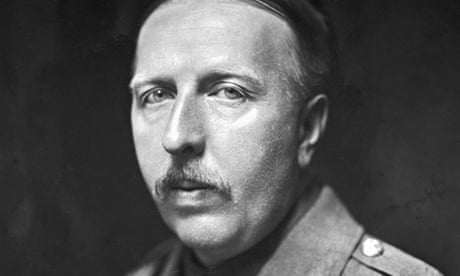
E.M. Forster 1879-1970

Wednesday, December 7, 2016

Coming Up For Air by George Orwell


While I found Coming Up for Air interesting and also rather funny, I did not enjoy it as much as Keep the Apisdistra Flying and Burmese Days.

http://images.gr-assets.com/books/1348489395l/509080.jpg
Possibly because, unlike the other two, this book was written from a first person view point rather than third person as the other two were.

Not that first person narration can't be successful, but Orwell's strength seems to lie in describing the inner thoughts of the protagonist by a third person narrator.

Also, there is no real story line or character development.  Largely it is a man's, George Bowling's, attempts to return to the England of his youth.

It starts with Bowling's present status which is a typical middle class working man, married with children.  He should be happy with what he has, but he is not.  He doesn't mind his children, his wife is a bit of a shrew, but then what wife wouldn't be if married to him.

Bowling does not make this conclusion and I'm not altogether sure Orwell is implying it.  It is what I conclude based on the loutish character of Bowling.

Bowling isn't a lout in that he's cruel or abusive.  But he's not faithful and he is selfish.  He lies to his wife by keeping money squirreled away from her and telling her he's off on business when he's actually returning to his home town, Lower Binfield, which he hasn't been to since he left it for the war (WWI).

What he wants is a vacation all to himself and return to the town of his youth.  In order for us to fully appreciate his visit he hearkens back to his childhood and describes life with his parents, his older brother and friends and schools and everyone in the town.

He particularly remembers a place near the River Thames where gigantic carp swam in a water hole.  He never got the chance to fish there.  He is determined to do so when he arrives.

He recalls his first love, who he leaves for the war.  He describes his experience in the war which is not at all remarkable.  Or rather it is remarkable for a complete lack of action.  He did, however, get quite a bit or reading done.

The first problem when Bowling arrives is figuring out exactly where the town is.  It has developed so much that it takes him some time to find the original section where he grew up.  I'm sure today it would be called the "historic district". 

He checks into a hotel.  Considers mildly flirting with local women, perhaps enjoy a brief encounter, but nothing develops.
 Bowling buys fishing tackle but upon finding, after a lot of effort and directions by people who "think they know" he finds the site of the carp pool.  It no longer exists because a new housing development has supplanted it.

In a nutshell, Bowling finds he can't go home again. His home is now a tea shop, and his family's furniture is the antique decor, including family photos, which still fills the rooms.  What a strange feeling that must be.

 He did accidentally run into his first love.  Or rather recognized her and followed her into a store.  She is no longer the slim, attractive girl he was attracted to, but heavy and square and judging from the mundane gossip she is engaged in with the store owner, not educated.

Finally, he gives up and returns home, deflated and depressed.  But, alas, his trials are not over.  His wife checked up on him and found that he was not at the town he purported to be in because the hotel he claimed to be staying in was now defunct.

Her natural assumption is that he was having an affair (there had already been a precedent set).  This time he was not but how can he persuade her that he was just visiting his childhood home.  He can't and the story ends with an indication that poor George has quite a few weeks of scolding and sleeping on the couch in store for him.

Returning to childhood is always a failed experiment.  At least for George Bowling.


Political language...is designed to make lies sound truthful and murder respectable, and to give an appearance of solidity to pure wind.  George Orwell

https://www.ucl.ac.uk/news/orwellimages/beach


Thursday, November 17, 2016

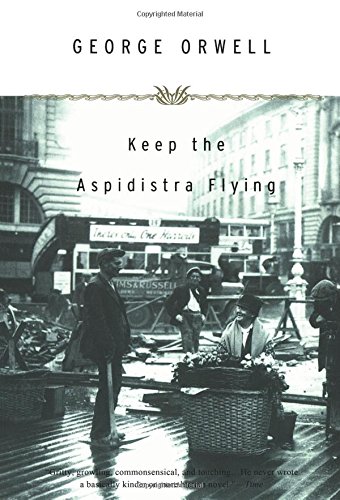
Keep the Aspidistra Flying by George Orwell


I have finally finished this book containing three novels by George Orwell.  The first, Burmese Days, I reviewed last year and you can read the post here.  

I set the book aside but last month read the remaining two stories.

https://images-na.ssl-images-amazon.com/images/I/51qc9J03-DL.jpg 

Keep the Aspidistra Flying comes largely from the viewpoint of Gordon Comstock, a poet, working at a bookstore while trying to launch his career as a writer.  He is poor, lives in a lower income-but not the lowest as we later see- tenement house run by a persnickety landlady who  exacerbates Gordon's already hard life with rules such as no smoking or making tea in his room.  Not that Gordon observes any of her rules, it's just annoying to have to cover up his "crimes".

He wants to live solely as a poet but he's not rich.  The money he makes at the bookstore is barely enough to pay his bills and keep him from starving, hence his is a grinding existence.  He has a girlfriend but he can't afford to marry her.  He shakes his fist at his lot.  Yet it is his choice to live like this.

Gordon worked at a business where he wrote jingly sort of slogans for advertisement posters.  He made a decent salary and met Rosemary there.  But he felt this sort of work beneath his artistic soul, as if he were prostituting his talents.  So he quit and began working at a bookstore for dirt wages where presumably he was able to keep his philosophical integrity intact.  He smirks at the "riff raff" who came in to read best sellers and popular romances, since he himself only read literature.

Yet he despises a lot of the classic authors as well.  Why are these "literary" authors considered so high brow when they write dreck, he moans to himself. Gordon leads a frustrated existence.

He has a girlfriend, as already mentioned, her name is Rosemary, but he can't afford to take her anywhere or do anything with her, least of all marry her.  He absolutely refuses to take any money she offers although he's not above receiving funds from his sister, even though he knows she is sacrificing financially in order to help keep him out of dire straits.

His friend, Ravelston, is an ardent socialist or communist, and a firm believer in a social revolution that would equally disperse the income of the rich and spread it around to the poor.  Since he himself is rich and on some level either doesn't make the connection that he would stand to lose a portion of his own money or, more realistically, he understands all too well that such "equal distribution" doesn't impact the rich as it does the middle class who, under such a system, are punished for earning wages by having a good chunk of their income taxed away, he can afford to be so "broad minded".

This has nothing to do with anything, but I imagine Ravelston looking like Russell Brand.

Ravelston does understand this, sort of; enough to make him feel guilty.  He attempts to exorcise this guilt by befriending Gordon.  It's his "see I'm mingling with the unfortunate" statement.  Nevertheless, Ravelston enjoys life, lives in a comfortable apartment, and has a girlfriend with whom he enjoys everything that Gordon cannot.  

Interestingly, Ravelston's girlfriend, also a member of his communist group, refuses to associate with Gordon or any of the lower classes, since they dress so poorly and stink.  I think this reflects perfectly the Armchair Socialist in our day.  They feel virtuous and fashionable espousing a theory that creates "equality" while enjoying their exclusive, elitist life; which is why they live in Aspen and not Harlem.

One could sympathize with Gordon if he wasn't so arrogant or so foolish.  An American magazine pays him handsomely for a set of poems. Oh, what Gordon could do with it!  Pay his rent, groceries, a couple of pack of cigarettes!  What does he do?  Blow it all away in one extravagent night.  

He invites Ravelston and Rosemary on an evening at a restaurant but succeeds in making it a painful experience for everyone by being so wasteful with his money, refusing contributions from either his friend or girlfriend, that what could have been a nice month's salary is gone before the next day.

As if that isn't bad enough, Gordon has gotten himself so drunk that he ends up with a prostitute, assaults a police officer during a raid and wakes up to find himself in jail.  Ravelston posts bail and, because the book store owner fires him for his conduct, allows Gordon to live with him.

What has any of this got to do with an Aspidistra?  If, like me, you didn't know what an Aspisdistra is, it is a type of plant that  people keep for decorative purposes.  Gordon's apartment has one that he purposely neglects and abuses but the poor thing refuses to die.

When Gordon eventually leaves Ravelston and lives in an even grimier apartment, behold! another Aspisdistra is placed there by his current landlady.  The plant seems to signify a middle class existence.

I say this, because in the end, Gordon at rock bottom, admits defeat.  Not only has his life sunk to a Sartre-esque existence, Rosemary is pregnant.  They must marry as far as Gordon is concerned.  A strong pro-life statement produces this conclusion, which raises Orwell in my esteem.

Rosemary suggests she abort the baby.  His response:

Though they were feet part he felt as thought they were joined together-as though some invisible living cord stretched from her entrails to his.  He knew then that it was a dreadful thing they were contemplating- a blasphemy, if that word had any meaning. 

'No fear!' he said.  'Whatever happens we're not going to do that.  It's disgusting.'

He returns to the advertising company, receives his old job and enters into a middle class existence. He marries Rosemary and they move into a nice apartment, nothing upscale but appropriate for a middle income family.

One thing is lacking and Gordon goes out to buy it, but not without a row with Rosemary.  He wants an Aspisdistra.  Rosemary doesn't want such an ugly plant in her apartment but in the end Gordon gets his way.  

The story doesn't end there.  As they walk down the stairs to the florist, Rosemary stops suddenly.

'Oh Gordon!'

'What?'

'I felt it move!'

'Felt what move?'

'The baby.  I felt it move inside me.'

'But it did really move?  You're sure?  You really felt it move?'

'Oh, yes.  It moved.'

For a long time he remained kneeling there, his head pressed against the softness of her belly.  She clasped her hands behind his head and pulled it closer...Somewhere in there, in the safe, warm, cushioned darkness, it was alive and stirring.

For all the dark and dreariness of Gordon's life, the story ends on a hopeful note. 

https://s-media-cache-ak0.pinimg.com/236x/bc/4d/46/bc4d46abe7f526be8050fb8629f6f098.jpg

Thursday, October 6, 2016

The Good Soldier by Ford Madox Ford


I'm listening to the Wind Quintet Op. 43 by Carl Neilson as I write.  You can listen here.

I bought this book on a whim.  I had not heard positive things about Ford but then again, my only source was Ernest Hemingway who despised Ford.  But then Hemingway despised a lot of people, especially those that helped him get his start.  As my husband said, "You can afford to be mean when you're good (at what you do)."

I'm not sure Hemingway could afford it, considering his own ultimate ending.  At any rate, I wasn't inclined to read The Good Soldier.  I allowed an unreliable source to prejudice me.  Furthermore, when I read the reviews on Amazon, the only thing anyone could say about the book was how very sad it was.  This inclined me even less.

But there it was in the Indie bookshop in Shreveport, in such an appealing edition and at such an appealing price that I whipped it off the shelf and handed it to Josh who brought it to the cashier.  (After thirteen years of living off of a single mom's income, I can't tell you how much I enjoy doing that.)

The book is not long.  I read it in a couple of days.  For a short book, it has a powerful impact.

 Before continuing let met say that I was reading the blog by a literary agent who decried people who wrote "spoiler alerts" because they were going to give away key elements of a story.  I understand her point if one is writing a review of a contemporary author and the point of the review is to give potential readers (and buyers) the ability to make informed decisions.

However, this book has been around for a hundred and one years and even if you don't know the story already,  the first person narrator does not tell the story as the events occurred; he tells you the ending of his sad tale at the front.  

Also, I want to be free to analyze the story without avoiding important points.  There is no plot to speak of, just the musings of a dazed and confused man trying to make sense of the tragedy of his life and the others in his sad tale.

http://pictures.abebooks.com/isbn/9780486419213-us-300.jpg

The protagonist,  John Dowell, is telling us the story.  Later in the book he explains that he sat down in his English country manor and wrote the story down over eighteen months.  He explains to the "silent reader" that he knew nothing of what was happening as it happened and only discovered the reality after two of the people involved were dead.

Dowell elopes with his wife, Florence via a ladder at the window from her aunts' house.  The aunts try to warn Dowell about marrying her but he replies that he doesn't care if she "robbed a bank", he was going to marry her.

So they do marry and sail for Europe.  Florence had sailed once before with her Uncle and a young man, Jimmy, some years previously.  We are made to understand that perhaps Florence's relationship with Jimmy was not respectable but back then Dowell was blind to subtle hints.

After they land in Europe, Florence informs John through several doctors that her heart is so delicate that she will not survive a return trip to America so must stay in Europe. 

They meet a British couple, Leonora and Edward Ashburnham.  The four become friends and see each other over the next nine years.  

For nine years, Dowell gives us to understand that his life was serene.  He does not reveal any passion he shared with his wife but apparently things sailed along smoothly.  None of his life looks serene to us because he is informing us of how things really were after he discovered it through a blunt, thoughtless comment from Leonora who assumed he knew as much as she did.

Dowell has given the previous nine years a lot of thought and is trying to piece together the reasons and motives each player had for acting as they did.  He is attempting to explain to the reader and to himself how and why everything came about.

He comes to understand that Florence had it in her mind to return to the country of her ancestors, England, and acquire an English manor.  Dowell was simply a vehicle of means. 

Ford relates this story from the perspective of an American, even though he is English, and he explains that Americans of old aristocratic ancestry valued their lineage and it was important to them to maintain a class distinction even though they lived in America.  Florence wanted more than that.  She wanted to be the English Lady.  This is all the more ironic as we learn how "classy" she really was.

She gets Dowell to bring her to Europe immediately after eloping.  As soon as they get to Europe she devises a reason to stay in Europe.  As it turns out her heart ailment is a fabrication and a manipulating tool to ensure a permanent home in Europe.

We later find out, through Dowell, that Jimmy soon enters the picture and right under his nose, Jimmy and Florence continue their previous affair.  Jimmy, we are made to understand, is a sleaze ball of the highest order.  As if someone who would sleep with another man's wife would be anything but.  This also allows us to appreciate the true quality of Florence's character.

Dowell, believes that Florence tired of Jimmy fairly soon and got rid of him by having an affair with Edward Ashburnham who no doubt gave ol' Jimmy his walking papers in no uncertain terms.  Florence also saw in Edward the means to achieving her object of becoming the Lady of an old English manor and all the status that would accompany it.  Of course, Leonora, his wife was an impediment but Florence figures she can manage that.  

She does this by flaunting her relationship with Edward  in front of Leonora, hoping to push the envelope ever farther until Leonora admits defeat, but Leonora is made of sterner stuff.  She lets Florence know what kind of whore she thinks her and that she is never going to divorce her husband.  This discourages Florence but slightly. 

But here Florence's fictitious heart ailment backfires on her.  Because if she is too ill to travel abroad, she cannot cross the English Channel.

Edward Ashburnham is a weak, tepid individual who tries to break out of his own iced over shell by engaging in passionate affairs.  This only gets him into trouble and bankrupt.  One of his affairs that almost financially broke him was with a Spanish woman called "La Dolciquita".  He falls passionately in love with her but discovers that, after the first night, her love was to be had at a price.  A very expensive price.

By the time Leonora discovers everything, he has wasted a fortune.  But Leonora is up to the task.  She puts herself in control of his finances and puts a tight rein on him.  She is unable to keep him faithful, but she puts herself in control of his love affairs as well.

Ashburnham's last affair is with a young charge, Nancy Rufford.  She is staying with them fresh out of convent school because her parents are unstable and abusive.  She is too naive to understand his overtures even when he passionately declares his love for her on a bench outside a casino.

Florence, who has followed them and overhears everything, understands perfectly.  She realizes she's never going to have that English Manor (she even tried to persuade Leonora of a kind of polygamous relationship).  She rushes back to the hotel where she finds her husband in the lobby with a  man who recognizes her from her days traveling with her uncle and Jimmy.  She realizes that her husband is going to find out everything so she goes up to her room and commits suicide.

Dowell, is still clueless, he finds her body and believes that her heart finally failed her in the end.  It is not until after the funeral of Ashburnham that he discovers the truth about everything when Leonora informs him.  

"That's how I got it.  Full in the face."

That is the point in time when he realizes that he has been the most clueless cuckold in the history of mankind.  So here he is at his desk writing everything out trying to make sense of it.

I read one commentary that suggests that Dowell is really the evil one, playing the passive voyeur refusing to interfere with his wife or Edward's suicides but I didn't gather that myself.

What I saw was a man who married a woman for passionless reasons and a woman who married him to meet her ambitions.  Her character was that of a degraded reprobate who didn't even have the courage to live after seeing her desires come to futility.

I saw Leonora who lived a life tormented by her husband's lack of passion for her and forced to witness his own attempts at passionate experiences through a series of adulterous affairs.  Trying to gain some control of her life she managed his finances and even his affairs.  

Leonora, although acutely aware of the plays transacting around her is in denial in her own way.  She has in her mind that her husband will finally return to her and love her with the passion he seeks from others.

After seeing him fall in love with Nancy she wakes up and in despair drives her husband to despair as well.  She offers to divorce him so he can have Nancy.

Edward, according to Dowell, had by this time begun to develop a sense of self-loathing.  He edges toward despair as he realizes that he can never find meaning or passion in the relationships he seeks and his wife's final offer seems to put a cap on it.

That seems to be what the entire story is about.  A group of people trying to achieve some kind of significance or meaning in their lives and failing.  Every one of them seems to be groping blindly about, snatching whatever their hands touch but dropping it as soon as they realize that what they are clutching fails to satisfy.

Ford's writing technique is effective.  He tells you the basic story, then he tells it too you again from another character's perspective.  He brings you forward and then backward as he re tells the story several times from each person's vantage point. 

 Or rather from Dowell's perspective of their vantage point.  Again, the question arises as to Dowell's reliability as a narrator.

As Dowell finishes his story but he has not achieved any kind of resolution.  

The ending is filled with ironies. 

 Dowell, who did not want the English Manor, buys the Ashburnham's after Edward's death.  He does so with Florence's money, which he has inherited.  So he acquires what Florence spent so many years conniving for.

Leonora marries a neighbor who loves her deeply so she receives the passion that her husband never gave her and what he never received from any of his affairs.  Dowell is somewhat denigrating about Leonora and her new husband but I think that is sour grapes on his part.  He admits that he is jealous and wished that perhaps he had acted a little more quickly.

A final irony is that he also gets Nancy, someone Edward wanted but never got.  But in an irony within an irony, Dowell cannot marry her because she has become insane so instead he serves as her caregiver in his nice, big English Manor.

When reading the story one realizes that John Dowell, changes his opinion about the incidents as he retells the story.  One wonders: is he changing his mind as he gives the matter more thought or does he not know what he thinks or is he, in fact, being manipulative?

Sometimes he describes Edward, Florence, Leonora and even Nancy as innocent, trying to act nobly without any intentions to cause harm.

Then he turns around and insists that all of them are evil, selfish or at the least, willfully stupid.

One thing he certainly achieves is showing how adultery destroys the mental health and emotional stability of everyone involved.

Ford wrote this story based on his own real life circumstances.  I think this is fairly clear because I don't believe anyone could write with such perspicuity on a topic like this from the outside. 

I'm not sure why Ford titled the book "The Good Soldier."  Edward is a soldier but that hardly comes into the story.  Perhaps because he tries to be (sort of) honorable in the end?  Or is John Dowell considering himself to be a kind of "good soldier" because he "stiff upper lips" his tragedy and carries on with endurance?

In The Good Soldier, Ford introduced writing techniques that influenced later writers, like Graham Greene.  He is credited with pioneering Literary Impressionism with his non-chronological story line, and also employing the "unreliable narrator".

If anyone has read this book I would be interested in their opinions as to how reliable they think Dowell is.


https://i.guim.co.uk/img/static/sys-images/Guardian/Pix/pictures/2014/6/26/1403796167797/ford-madox-ford-008.jpg?w=620&q=55&auto=format&usm=12&fit=max&s=c0b4bf4137ba9003d79623337ba24099


Thursday, August 18, 2016

The Nine Tailors by Dorothy Sayers


My post today is about a murder mystery in a church among the bells.  A little history:  Church bell ringing goes back centuries.  The church bell heralded danger, death, marriage and festivities.  In England, the tradition of bell ringing went even farther to where their steeples house whole teams of bells.  The art (or science) of rope pulling became a firm part of the Church service.

Whole sequences that lasted for upwards of an hour or hours developed and were played before or after church services, sometimes everyday at the same time.  When I visited Bradford on Avon I arrived at the time Christ Church's bells rang, which was for an hour every day.  You can visit their web site here.  This tradition was handed down to America in the form of hand bells.  The rope pulling can be loud and long so I've included here a short piece of a hand bell choir playing Capriccio by Kevin McChesney which I think will be a little more aesthetically pleasing.  You can click here for the link.

However, if you're interested in the real deal, you can click here.

https://vulpeslibris.files.wordpress.com/2012/02/ninetailors.jpg

Dorothy Sayers did meticulous research on bell ringing and includes various types of bell ringing sequences. She also makes use of bell ringing terminology to provide clues to the mystery.  As much as I enjoyed the mystery, I will say I found the sections on bell ringing a little beyond my interest and skimmed over those paragraphs.

Other than that, however, Sayers makes a charming detective story, her ninth involving Lord Peter Wimsey.

Wimsey and his valet, Bunter, find themselves stranded in the town of Fenchurch of St. Paul after their car runs into a ditch.  It is New Year's Eve and the weather bodes ill.  For those of you who don't know (I didn't), the Fens are a marshy part of Eastern England, prone to flooding. 

Fenland is also known for its cathedrals and churches, hence the setting for Sayers' story.  Lord Wimsey meets the local Vicar, Theodore Venbales, a very friendly, if flighty Reverend who insists that Wimsey stay as his guest due to the bad weather and also because he needs a substitute bell ringer for the New Year service, one of his ringers having come down with the flu.  The Reverend has ambitiously planned a nine hour ring starting at midnight to usher in the new year.

A local Aristocrat, Lady Thorpe, dies the next day (requiring more pealing of the bells, ones that decode to the village that a lady of a certain age has died.  The bell sequence is different if a man or young person died.)  Lady Thorpe's death brings up the story about the robbery of the emeralds which were stolen, several years ago, at the Thorpe mansion, although they belonged to a relative who was visiting. The thief and the jewels were never apprehended.

So far so good.  But three months later, Sir Henry Thorpe, also dies.  Lady Thorpe's grave is dug up to admit the remains of her husband and to the shock of the grave diggers, they discover another body has been tossed in on top of the casket.  The hands have been cut off, presumably to avoid identification, and his face horribly disfigured for the same reason.

By this time, Lord Wimsey has gone, but he is called back by the local police to help discover whose body it is, how did he die and why.

If you want the solution you can read the book for yourself.  It is one of those fun, comfortable reads that should only take you an afternoon or two, ideally on a rainy day with a cup of tea.

I could not help compare Sayers' writing with Agatha Christie's.  A couple of observations:

One, Agatha Christie writes very good short stories.  Her stories are at their most effective if they provide a fast punch and a quick solution.  If she is required to develop the characters on a more than superficial basis as one would in a novel, she fails in my eyes.  Her forte is when she keeps the characters functional with minimal back story.

Conversely, I find Dorothy Sayers' novels to be far more enjoyable than her short stories.  I read her complete short detective stories and found only one or two that I considered worth reading.  The rest were "meh".

Her novels, however, allow her to fully develop her characters and she does so superbly.  I believe this is because, unlike Christie, Sayers created loveable characters.  Christie's characters are all equally selfish, which casts suspicion on all of them.  Sayers makes all her characters winsome and sympathetic (at least in this novel), making it impossible to  decide which one of these good people could have done it.

Now, just because her characters are likeable does not make them boring.  I find it interesting that the prevailing attitude seems to be that evil people are interesting and good people are boring.  Christie and Sayers together, whether intentionally or not, make a good case that bad people are boring and good people are fun to be around (and read about).

Dorothy Sayers was the only woman to belong to the Inklings, a writer's group that included J.R. Tolkien and C.S. Lewis.  I see common traits in her writing as theirs.  There is a coziness, a sense of comfort and contentment in the surroundings that I like.  The little details that they all add with the characters having tea, or brandy, sitting in front of fireplaces while torrential rains pour outside.  Yes, evil happens, but we can stand together and support and encourage each other.  In Christie's novels the characters are alienated from each other.

I suppose it has to do with the fact that I like British literature and lately I have been reading a lot of the stuff coming out of the first half of the twentieth century from both sides of the ocean.  I will be giving reviews of Graham Greene, another C.S. Lewis book of literature essays, and a biographies of Hemingway and Frank Lloyd Wright.

So, as they say in the U.K., Cheers, and have a jolly week!

Monday, October 12, 2015

The Centurians, A Practical View of Chistianity, and Lucky Jim

A gift from my baby sister for my birthday.

I am on another book fast.  Not from reading, of course.  That will happen when I'm dead.  But from buying books.  I must read one hundred books that I already own before I can buy another single book.  Josh said to me, "I guess this means your book reviews are going to be reduced to 'book good' or 'book bad'."

He's right. Which is why I decided I don't have to review all one hundred books, just read them.  Be that as it may, I am going to review three books in one pop on today's post.

The Centurions by Jean Larteguy
http://ecx.images-amazon.com/images/I/61XQZ2xenZL._SX320_BO1,204,203,200_.jpg 


The Centurions by Jean Larteguy was first written in 1960 and it starts with the battle of Dien Bien Phu.  Larteguy describes in rich, colorful detail the agonizing experiences of the French prisoners of war.  He dives into the psychology of both the French and Vietnamese cultures and through his characters attempts to explain the motives of each side.  His expressive use of dialogue between the Vietnamese commander and his prisoners are especially poignant in view of the fact that this commander had been educated by the French.  It was this desire to belong to the French community but to be excluded because of his race that ultimately led him and other Vietnamese to seek dignity and equality through communism.

The book carries us through the soldiers' imprisonment, ultimate release, and continues into the battle in Algiers.  Larteguy provides the same explanation as to why the Muslims wanted liberation from French rule as the Vietnamese: a conviction that they would never be accepted as equals by the French.  Particularly sad are the Algerian soldiers who fought side by side with the French in Vietnam who now fight against those same men, even using brutal acts of terrorism to extricate their country from a people whose culture and values they consider incompatible with their own. 

While this book is worthwhile to read for its information rich storytelling, I must say I got tired of all the mindless sleeping around.  It leads me to wonder if the French only believe true love can be attained by first marrying one woman and then cheating on her with another woman.  

I can't help comparing this book on war to those written by Americans.  American war stories focus on how many lives of their compatriots they saved.  This book's thrust (no pun intended) is centered around how many women the soldiers have slept with.

https://i2.wp.com/a395.idata.over-blog.com/3/90/59/68/Livres/le-dernier-des-centurions.jpg
Jean Larteguy (1920-2011) was a French journalist and soldier.  His stories are drawn from his personal knowledge and experience as a war correspondent for Indochina, Korea, Algeria and Vietnam.


A Practical View of Christianity by William Wilberforce

A Practical View of Christianity is William Wilberforce's treatise on what exactly makes a person a Christian and contrasting it with what many people claim to be Christianity.

His main attack is against Cultural Christianity and he spares no words describing the duplicity and hypocrisy of his day by church-going people who show no respect for the authority of God as revealed through His written Word.

His arguments are highly relevant for today since there exists a profound Biblical illiteracy among too many Christians who seem to be ignorant as to how to conduct their lives in a manner that honors God. 

While I determinedly plowed through this book with its original manuscript, I highly recommend reading a version with updated language.  Wilberforce is extremely wordy and he takes a long time expressing his ideas, as brilliant as they are.

http://static.guim.co.uk/sys-images/Guardian/Pix/pictures/2010/8/2/1280771249672/William-Wilberforce-006.jpg
 William Wilberforce (1759-1833)


Lucky Jim by Kingsley Amis

Finally, a little fun.  Kingsley Amis has to be one of the funniest writers I've ever read.  he writes about nothing at all.  There's no plot to speak of, just parodies of characters who run England's highest educational institutions such as Oxford.

Poor Jim Dixon is a first year professor who is trying very hard to please his supervisor, Professor Welch who uses Jim as his personal servant, having him, in addition to writing his own lectures, doing the professor's work and research as well.  Jim is afraid not to because he has no guarantee he will be hired for the next year.  He does all sorts of things he'd rather not, like spend a weekend at Welch's house for a silly musical gathering.  

There he meets Welch's son, Bertrand, an extremely arrogant, unpleasant person who nevertheless has an extremely pleasing girlfriend who Jim attaches himself to.

And then there's Margaret, another professor who is kinda, sorta, Jim's girlfriend, except when she's not, who thrives on romantic tension and expertly blackmails Jim emotionally so that he never can keep off edge.

The storyline weaves in and out of several characters and their back-stories like a mouse running through a maze.  What makes this story so successful is Amis' genius at wordplay and sharp comedic thrusts.

Here's an example of Amis' masterful manipulation of words and concepts:

Dixon grinned to himself at 'Uncle Julius'.  How marvelous it was that there should be somebody called that and somebody else to call him that, and that he himself should be present to hear one call the other that. 

The effortless artistry with which Kingsly Amis allows his story to flow along an oily river of silly people saying absurd things in a delightfully witty way makes up for any lack of "profound plot".

http://static.guim.co.uk/sys-images/Education/Pix/pictures/2011/11/24/1322148971885/Kingsley-Amis-007.jpg
 Kingsley Amis (1922-1995)

I have now completed thirteen books.  Only eighty-seven to go.


Sunday, March 22, 2015

Burmese Days by George Orwell


Burmese Days is a fictitious novel based on Orwell's own experience while working with the Indian Imperial Police in the 1920s.  If E.M. Forster wanted to prick the British conscience in A Passage to India, Orwell wants to bludgeon it.

The story centers around a small group of British people living in a remote part of Burma, working in the jungle.  Their one venue for socializing and amusement is a country club where all the expatriates gather to get on each other's nerves and drink themselves blue.

There's only one woman, Mrs. Lackersteen.  She pompous and racist, refusing to learn the language other than the basic guttural Urdu she needs to order about servants.  Her husband is a drunken, lecherous lout who, when not drunk, engages in sexual escapades with native women.

Most of the British men there do, but Mrs. Lackersteen's greatest fear is to be raped by an Indian because she knows that is every Indian man's ambition.

The rest of the characters are just as odious with the exception of the ones that are pathetic. John Flory would fall into the latter category. Flory is the main protagonist of Burmese Days.

Not that he doesn't do things that are odious.  He keeps a Burmese girl, Ma Hla May,  that he doesn't love, doesn't even really enjoy sleeping with but else is there to do in the jungle? Then the Lackersteen's niece come to live with them.

Elizabeth is a young woman come from Paris where she was living with her mother until she died, her father having already passed.  Flory cannot contain his excitement to meet and befriend Elizabeth and kicks Ma Hla May, out.  He's callous about it but she doesn't leave without putting up a fight.

Ma Hla May knows no depths in which to debase herself to keep Flory from throwing her over.  She prostrates herself before him, cries, pleads, begs, cajoles and demands lots and lots of money.

Flory knows that Ma Hla May cares nothing for  him.  She even has her own lover, aside from Flory.  But she has told the village people she is married to him.  This gives her an elevated status.  She spends the money he gives her as fast as she can run from his house to the market to buy garish trinkets and sarongs that she adorns herself with and parades herself in front of the other villagers.  This is what she is pleading for.  Not love, position.

Flory knows he should put his foot down.  But he feels guilty.  So he continually plies her with the rupees she demands just to make her leave.

After that, he spends money on himself to look more like a gentleman.  Then he introduces himself to Elizabeth.  They go for long walks together, to the market, to native dances.  By her side, Flory talks continually, poetically, of his experiences in the jungle, the natives, the customs, culture all of which he appreciates and enjoys.  He is desperately lonely and this young woman is the life raft that he clings too.

Too bad Elizabeth is too close-minded to appreciate it.  Orwell makes a commentary on human nature.  Whether he believes this or he's simply trying to explain his characters' attitudes, I'm not sure.  He states that whatever happens to someone, albeit ever briefly, in their formative years, this will shape and color a person's thinking for the rest of their life.

Flory has an purple-blackish birthmark that covers one side of his face.  He was tormented for it when  a school boy and has allowed his disfigurement to determine his self worth.  It doesn't, however, deter him from pursuing Elizabeth, his loneliness overriding his usual diffidence.

For her part, Elizabeth spent two years in a school for rich girls.  Her parents weren't rich but lived extravagantly.  They weren't able to keep it up and soon sunk into financial straits.  Elizabeth spends the rest of her life comparing her circumstances and the people she meets to those two years around the privileged upper class.  Therefore, if one wasn't interested in sports, hunting and spending scads of money, you fell under her category of "beastly" and boring.

Flory is well read and a deep thinker.  Needless to say Elizabeth finds him uninteresting, even offensive.  His desperate need for a companion blinds him to this fact and while he perceives her displeasure he can't arrive at why.

But Elizabeth is out to get married.  Her aunt has made it very clear that her stay with them is only until she achieves this goal.  Since Flory is the only game in town, she determines to settle for him.  It all seems a cinch, although I can't imagine Flory being satisfied with such a simpleton for long.

It isn't meant to be, however.  A young hot shot Lieutenant and youngest son of a Lord has arrived with the Indian policemen.  Lieutenant Verrall is good looking and that's the only nice thing anyone can say about him.  He's cold, rude, offensive, prideful and anti-social. 

This doesn't stop Elizabeth and Mrs. Lackersteen from snubbing Flory and chasing after Verrall.  Verrall finally notices Elizabeth and they spend all their evenings together.  This almost drives Flory mad with despair.

Elizabeth and her aunt wait for the marriage proposal that is sure to come any day now.  It doesn't come.  It never comes.  Verrall loathes women.  Elizabeth was merely his temporary amusement.  When he's transferred, he leaves without telling anyone.

During all this, a riot occurs.  This riot is no random act of frustration and gnashing of teeth by the natives.  It has all been orchestrated by U Po Kyin.  U Po Kyin is a local magistrate and there aren't enough words in the English vocabulary to describe what a two-faced, treacherous, hateful, spiteful, disgusting, overgrown, conniving weasel and hugely successful magistrate he is.

He is a master of destroying men's lives both Burmese and British.  Through blackmail, bribery, anonymous letters, thievery and betrayal U Po Kyin works his way up the ladder of political echelon. His adversary is Dr. Veraswami who is as kind and innocent as U Po Kyin is evil. 

Flory and Veraswami are great friends and enjoy debating over the virtues of the British Raj.  Ironically, Dr. Veraswami argues in favor of the English presence in Burma, and English people in general while Flory insists they are nothing more than a  blooding-sucking colonial power. 

U Po Kyin makes it his mission to destroy Dr. Veraswami and Veraswami knows this.  He pleads with Flory to elect him to the English country club because it would elevate his status in the community and immunize him against U  Po Kyin's schemes.

At first, Flory cowardly refuses to stand up to the other members of the club, but when a second riot breaks out -one not planned by U Po Kyin- Flory develops a temporary backbone, single-handedly quells the mob, and demands that Veraswami be elected as the token non white member to the club.

Everything seems to work out well.  Elizabeth has returned to Flory after Verrall's desertion and Veraswami is going to become a member of the club.  Then Ma Hla May makes an atrocious scene in the middle of a church service demanding money from Flory.  She purposely has made herself as hideous and terrible looking as possible and acts like a crazy person.  She has to be dragged out of the building.  Flory isn't up to the occasion.  To make matters worse, his face turns so pale that his birthmark stands out in dark contrast.

This is what Elizabeth cannot forgive him for.  Not having a mistress but for having such an ugly birthmark so grotesquely standing out.  She coldly dismisses him.  Flory returns to his house and shoots himself.

Because suicide is taboo in Burmese culture, Veraswami's reputation also sinks because of his association with Flory.  He is not elected to the club but is transferred to some remote hospital dump to practice medicine the rest of his life.

And you can guess who put Ma Hla May up to it.

U Po Kyin is elected to the club and eventually earns the title of Deputy Commissioner.  Everything goes according to his plan.  He cheats people, abuses young women, ruins people's careers and even causes the deaths of his fellow Burmese.  His wife chides him for his evil acts insisting that he will come back in the next life as a rat or snake.

U Po Kyin is not concerned.  He has been saving up money to build pagodas at the end of his life to earn his way up to Nirvana.

I find U Po Kyin's attitude very interesting.  Apparently he believes in the effectiveness of lip service.  He seems to think that it doesn't matter how black one's heart is as long as one performs the correct deeds he will be rewarded the prize of the virtuous.

He drops dead of a heart attack three days after being elected Deputy Commissioner, before he is able to build the pagodas.  One can form their own conclusions.  Is he scurrying around as a rat or a snake?  Can a rodent or reptile act in a way that would merit coming back as a higher life form after it dies?  I've never seen a virtuous snake or rat.  Or any animal. Certainly not my dogs. They'd be returning as roaches.

I'm reminded of Mark 8:36What does it profit a man if he gains the whole world just to lose his soul?

The other question is, how accurate a portrayal does Orwell provide of the British colonialists?   Is this a rather heavy slathering of the very worst in human nature or is Orwell being objective? 

I agree with Graham Greene when he criticized Virginia Woolf and E.M. Forster for creating characters who "wandered like cardboard symbols through a world that was paper-thin...there was no sense of reality in their writings....to lose sight of 'the religious sense' was also to lose any 'sense of importance of the human act.'

Evelyn Waugh said, "Without God, an author could not give his characters reality and depth."  I believe this is the answer.  Neither Forster or Orwell create characters with much redeeming value and I've never met such a person.  

As Pierre discovered in War and Peace,  it is by first loving people one invariably finds things to love about them.

And yet, I found Orwell's characters fascinating even if they were types and caricatures rather than real.  He draws so well and with such logical precision.  If I disagree with his outlook, I appreciate his ability to express it.

This is the first of three novels by George Orwell that I will be reviewing.  The other two, Keep the Aspidistra Flying and Coming Up for Air will be posted as soon as I finish reading them.


Sunday, March 15, 2015

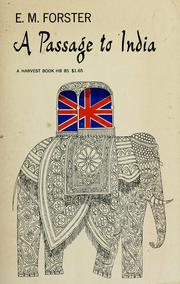
A Passage to India by E.M. Forster

 https://covers.openlibrary.org/w/id/6630638-M.jpg

It seems I'm reading and reviewing a lot of books lately that I was prejudiced against reading in my earlier days.  I've noticed that the last few posts begin with, "known about this book for years but didn't read it because...." or something like that.

Guess what?  I knew about E.M. Forester since college but had no desire to read him because the movies based on his novels, such as Howard's End and A Room With a View didn't interest me.  I enjoyed A Passage to India but didn't know it was by the same author.

Soooo...what was the impetus that impelled me to buy most of E.M. Forester's books?  Good question.  I will gladly tell you.

I read about him in biographies of writers that I loved.  There's a whole school of British writers that attended  Oxford University in the first twenty years of the twentieth century.  Based on the recommendation of writers I like I am now reading authors I didn't like.

E.M. Forester belonged to the latter group but now belongs to the first.

A Passage to India is about British expatriates in the country of the title.  Forester draws characters from English, Hindu and Muslim backgrounds and the complicated relationships that arise when different cultural semantics collide.

I found the dialogue, especially between the Indians, to hold a delicate charm.  They are funny and endearing but also hold to certain prejudices against each other-especially the Muslims and the Hindus.

The British are snobby to all Indians indiscriminately although some are sympathetic and befriend them.

Basic storyline:  Two women, Mrs. Moore and Adela Quested come to India to meet Mrs. Moore's son, Ronny Heaslop.  Adela is engaged to Heaslop who is a British official in India.  Presumably their married life will be spent largely in India.

Adela is excited and eager to tour the country and meet Indians.  She is naive and ignorant of the social boundaries that delineate her race from the natives.  Nevertheless, she and Mrs. Moore  are able to persuade Dr. Aziz, a Muslim physician who has befriended Mrs. Moore, to take them on a tour of the Marabar Caves.  An Englishman, Mr. Fielding, who is also friends with Aziz, is to accompany them.

 Fielding misses the train that takes the ladies to the Marabar Caves so Aziz and the women go alone. 
Aziz is an exuberant, emotional man and goes to great trouble and personal expense to make this an impressive tour for the ladies.  He hires servants, an elephant, and an incredible amount of food to take on the trip.  While Aziz feels warm affection for Mrs. Moore, largely because of the respect she shows him, unusual for a British citizen, he does not care for Adele and a lot of his generosity is motivated by personal pride and honor as it is out of genuine esteem.

 When they arrive, Mrs. Moore is too tired to walk further so Adela, Aziz and a servant tour the caves alone.  Adela innocently asks Aziz a question about his late wife, which he finds personal and offensive.  To hide his awkwardness he walks off into a nearby cave by himself and smokes a cigarette. 

When he returns, he finds Adela is gone.  He frantically looks everywhere for her,  running inside the other caves, asking the servant who knows nothing.  Finally he sees her down the hill talking to another woman, Mrs. Derek.  He runs down the hill calling to her, but the women get in the car and drive off before he can reach them.

Feeling his excursion is a failure, he rejoins Mrs. Moore, who hasn't seen Adela and can offer no explanation for her behavior and they return home.

When they get back, Aziz is arrested on charges of sexual assault against Adela.


This plot is merely the skeleton upon which Forster fleshes out his actual purpose.  He wants to show the tightly wound relationships between the British rulers over the Indian subjects in the 1920's, shortly before Indian independence.

What I admire most in Forster's writing here as well as in Where Angels Fear to Tread is his ability to switch narrating voices.  The three main voices are from the limited perspective of Adela, Mr. Fielding, Aziz and a third person omniscient narrator.  Because we hear their perceptions it is easy to sympathize with these characters and less so with the others whose thoughts we never learn and can only judge from their actions.

Forster switches back and forth between these voices so we can see and understand how they react to the words and actions of the other.  He shows how great misunderstandings occur, primarily because of how the English and Indian cultures process and express themselves.

There is a great deal of cultural prejudice on all sides, including between Indians of Muslim and Hindu religions.

Things come to a satisfactory conclusion and requires humility, repentance, and forgiveness for the main characters.  Adela eventually leaves India, admitting to herself she really doesn't love Heaslop.  After some gross misunderstandings between Fielding and Aziz created by their cultural differences, they eventually reconcile and resume their friendship.  

Fielding, although middle aged, visits England and marries Mrs. Moore's younger daughter.  Dr. Aziz also marries.  Even so, Forster implies that true love is not something anyone can attain.

It's apparent from the omniscient narrator that Forster himself believes in nothing and takes pains to show that, really, that is all life has to offer.  No one truly loves anyone else.  No one can know true love, romantic or otherwise.  Every potential friendship or marriage is tainted by an underlying ennui and emptiness.

Even so, I very much liked his characters and his story line development and if that's how Forster felt about life, too bad for him.

This is the second book I have reviewed of Forster.  I will be soon reading and reviewing more.


https://shawjonathan.files.wordpress.com/2011/01/emf.jpg


2.99 on Kindle