Showing posts with label India. Show all posts

Thursday, February 2, 2017

An Area of Darkness by V.S. Naipaul


https://www.panmacmillan.com/panmacmillancorporatesite/media/panmacmillan/Cover%20Images/V-S-Naipaul/9780330522830An%20Area%20of%20Darkness.jpg?ext=jpg 


An Area of DarknessAn Area of Darkness by V.S. Naipaul

My rating: 4 of 5 stars


I do not recall how I came to own An Area of Darkness by V.S. Naipaul. It's not a genre I normally read, but I did own it, and having it I decided to give it a try. It was worth it.


At first I was put off by the lack of emotion in the narrator's voice. He spoke of his family, his upbringing on the island of Trinidad, his family's Indian heritage, all as though he were an alien who was making observations and taking notes to report back to his home planet ("species seem to believe in many gods.....caste system...certain cultural values differ from fellow inhabitants of the island...").


As his journey progressed, for it was a journey on several levels, he became, if not more emotionally involved, at least interested.


And interesting. I have never traveled to India, although I did live in the Caribbean not far from Trinidad. My landlady and her family in Grenada were Indian and also from Trinidad. If I had not lived there I would not have known what a significant percentage of the population on the East Indian islands are descendants from India.


So I started reading the book with some understanding as to where the author was coming from. Naipual wrote this book in 1962-64 and I think some of his experience was different than the many Indians I interacted with on Grenada.


For one, he speaks of feeling something of a foreigner even though he grew up there. I lived on Grenada in the nineties and the Indians I met had absorbed the culture. They were Christians, regular church goers and interacted easily with other racial groups (mostly of African descent but also European). Naipaul's grandparents immigrated to Trinidad so he was closer in spirit to the home country. Or so he thought.


An Area of Darkness is Naipaul's record of his travels to India and his experiences there. He learned quickly that he was as foreign as any European. There were many cultural conflicts.


He quickly tired of the class system. He describes another Indian/European's frustration when he tried to get work done but was not getting his letters mailed quickly enough. He called in the clerk who took down his dictation to solve the problem.


"The secretary has many letters to write and she is backed up, so sorry."


"What do you mean? You take the dictation. Write out these letters for me so I can send them out. They are urgent."


"That is not my job. That is the secretary's job."


"It is now your job. Write out these letters and send them out."


Stubborn silence and noncompliance. Reporting his clerk to the job bureau accomplished nothing. So he called in his clerk again.


"I need to write another letter. Please scribe. "You're fired." Deliver that to the secretary and put it on the top of her pile as priority."


The clerk, realizing that if he gave such a letter to the secretary he would be humiliated, ran off and wrote out all the letters for the man. That is how things operated in India.


Another time he was in a train and had the bottom bunk. This is a coveted bunk because climbing up and down to the upper bunk was considered too much effort and beneath the dignity of the class of Indians who could afford to have a bunk while traveling on a train. The man assigned to the bunk above him was put out.


Naipaul who considered the lower bunk an inconvenience offered to change places with him. The man gladly agreed.


But the man remained seated on the upper bunk. By this time the train had already moved off and the porters had left the train, which meant the passengers would have to move their own belongings until the next stop when the porters would again be available. One of his class did not move his own things. That was the porter's job. Exasperated, Naipaul moved both his and the man's belongings.


Naipaul describes India as a country of form but not substance. What he means by this is that form is followed strictly to the letter but there is no substance to it. The untouchables come to a building. One flings dirty water out across the floor, another one swishes a dirty rag around and a third sweeps the water back into the bucket. The floor is as filthy as ever but no one notices because the form has been carried out to the letter.


Indians comment on the unhygienic practice of Westerners only using toilet paper while Indians also used water to clean themselves after using the bathroom. Meanwhile the city and countryside all over India is used as an open latrine. But nobody sees it; they only see what they believe is true. The form of their culture and religious practices.


Brahmin cows stagger around starving to death because they are holy. People starve to death or live off garbage because that is their Karma.


I could insert here my own observations as to how ideologues exist in every country. Worldwide people cling to beliefs and social systems even when they have been proven not to work but that is a discussion for another time, I suppose.


Naipaul calls Ghandi one of the greatest failures of India. He brought in ideas of an egalitarian society and human rights that were never put into practice. The Indians did what they always did. They made Ghandi into a Holy Man to be revered and enshrined while ignoring his teaching. Form is worshiped even though it is devoid of substance.


But the author does more than philosophize on the failings of Indian society. He carefully describes the people he comes into contact with and the places he visits. He goes on a pilgrimage, lives in a houseboat for a while, figures out how to get licenses for this and for that because apparently everything one does in India needs the permission of the government. He works and lives with Hindus and Muslims.


While Naipaul describes India and its people in rich colors, I think it would have helped if he had felt any kind of compassion or feeling of any kind because the book, while a vicarious traveler's treat, left me unmotivated to visit. I now long to read a book from a different perspective.


View all my reviews

Sunday, March 15, 2015

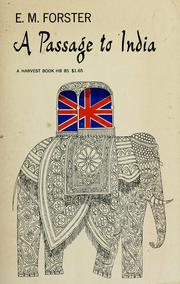
A Passage to India by E.M. Forster

 https://covers.openlibrary.org/w/id/6630638-M.jpg

It seems I'm reading and reviewing a lot of books lately that I was prejudiced against reading in my earlier days.  I've noticed that the last few posts begin with, "known about this book for years but didn't read it because...." or something like that.

Guess what?  I knew about E.M. Forester since college but had no desire to read him because the movies based on his novels, such as Howard's End and A Room With a View didn't interest me.  I enjoyed A Passage to India but didn't know it was by the same author.

Soooo...what was the impetus that impelled me to buy most of E.M. Forester's books?  Good question.  I will gladly tell you.

I read about him in biographies of writers that I loved.  There's a whole school of British writers that attended  Oxford University in the first twenty years of the twentieth century.  Based on the recommendation of writers I like I am now reading authors I didn't like.

E.M. Forester belonged to the latter group but now belongs to the first.

A Passage to India is about British expatriates in the country of the title.  Forester draws characters from English, Hindu and Muslim backgrounds and the complicated relationships that arise when different cultural semantics collide.

I found the dialogue, especially between the Indians, to hold a delicate charm.  They are funny and endearing but also hold to certain prejudices against each other-especially the Muslims and the Hindus.

The British are snobby to all Indians indiscriminately although some are sympathetic and befriend them.

Basic storyline:  Two women, Mrs. Moore and Adela Quested come to India to meet Mrs. Moore's son, Ronny Heaslop.  Adela is engaged to Heaslop who is a British official in India.  Presumably their married life will be spent largely in India.

Adela is excited and eager to tour the country and meet Indians.  She is naive and ignorant of the social boundaries that delineate her race from the natives.  Nevertheless, she and Mrs. Moore  are able to persuade Dr. Aziz, a Muslim physician who has befriended Mrs. Moore, to take them on a tour of the Marabar Caves.  An Englishman, Mr. Fielding, who is also friends with Aziz, is to accompany them.

 Fielding misses the train that takes the ladies to the Marabar Caves so Aziz and the women go alone. 
Aziz is an exuberant, emotional man and goes to great trouble and personal expense to make this an impressive tour for the ladies.  He hires servants, an elephant, and an incredible amount of food to take on the trip.  While Aziz feels warm affection for Mrs. Moore, largely because of the respect she shows him, unusual for a British citizen, he does not care for Adele and a lot of his generosity is motivated by personal pride and honor as it is out of genuine esteem.

 When they arrive, Mrs. Moore is too tired to walk further so Adela, Aziz and a servant tour the caves alone.  Adela innocently asks Aziz a question about his late wife, which he finds personal and offensive.  To hide his awkwardness he walks off into a nearby cave by himself and smokes a cigarette. 

When he returns, he finds Adela is gone.  He frantically looks everywhere for her,  running inside the other caves, asking the servant who knows nothing.  Finally he sees her down the hill talking to another woman, Mrs. Derek.  He runs down the hill calling to her, but the women get in the car and drive off before he can reach them.

Feeling his excursion is a failure, he rejoins Mrs. Moore, who hasn't seen Adela and can offer no explanation for her behavior and they return home.

When they get back, Aziz is arrested on charges of sexual assault against Adela.


This plot is merely the skeleton upon which Forster fleshes out his actual purpose.  He wants to show the tightly wound relationships between the British rulers over the Indian subjects in the 1920's, shortly before Indian independence.

What I admire most in Forster's writing here as well as in Where Angels Fear to Tread is his ability to switch narrating voices.  The three main voices are from the limited perspective of Adela, Mr. Fielding, Aziz and a third person omniscient narrator.  Because we hear their perceptions it is easy to sympathize with these characters and less so with the others whose thoughts we never learn and can only judge from their actions.

Forster switches back and forth between these voices so we can see and understand how they react to the words and actions of the other.  He shows how great misunderstandings occur, primarily because of how the English and Indian cultures process and express themselves.

There is a great deal of cultural prejudice on all sides, including between Indians of Muslim and Hindu religions.

Things come to a satisfactory conclusion and requires humility, repentance, and forgiveness for the main characters.  Adela eventually leaves India, admitting to herself she really doesn't love Heaslop.  After some gross misunderstandings between Fielding and Aziz created by their cultural differences, they eventually reconcile and resume their friendship.  

Fielding, although middle aged, visits England and marries Mrs. Moore's younger daughter.  Dr. Aziz also marries.  Even so, Forster implies that true love is not something anyone can attain.

It's apparent from the omniscient narrator that Forster himself believes in nothing and takes pains to show that, really, that is all life has to offer.  No one truly loves anyone else.  No one can know true love, romantic or otherwise.  Every potential friendship or marriage is tainted by an underlying ennui and emptiness.

Even so, I very much liked his characters and his story line development and if that's how Forster felt about life, too bad for him.

This is the second book I have reviewed of Forster.  I will be soon reading and reviewing more.


https://shawjonathan.files.wordpress.com/2011/01/emf.jpg


2.99 on Kindle