Burmese Days is a fictitious novel based on Orwell's own experience while working with the Indian Imperial Police in the 1920s. If E.M. Forster wanted to prick the British conscience in A Passage to India, Orwell wants to bludgeon it.
The story centers around a small group of British people living in a remote part of Burma, working in the jungle. Their one venue for socializing and amusement is a country club where all the expatriates gather to get on each other's nerves and drink themselves blue.
There's only one woman, Mrs. Lackersteen. She pompous and racist, refusing to learn the language other than the basic guttural Urdu she needs to order about servants. Her husband is a drunken, lecherous lout who, when not drunk, engages in sexual escapades with native women.
Most of the British men there do, but Mrs. Lackersteen's greatest fear is to be raped by an Indian because she knows that is every Indian man's ambition.
The rest of the characters are just as odious with the exception of the ones that are pathetic. John Flory would fall into the latter category. Flory is the main protagonist of Burmese Days.
Not that he doesn't do things that are odious. He keeps a Burmese girl, Ma Hla May, that he doesn't love, doesn't even really enjoy sleeping with but else is there to do in the jungle? Then the Lackersteen's niece come to live with them.
Elizabeth is a young woman come from Paris where she was living with her mother until she died, her father having already passed. Flory cannot contain his excitement to meet and befriend Elizabeth and kicks Ma Hla May, out. He's callous about it but she doesn't leave without putting up a fight.
Ma Hla May knows no depths in which to debase herself to keep Flory from throwing her over. She prostrates herself before him, cries, pleads, begs, cajoles and demands lots and lots of money.
Flory knows that Ma Hla May cares nothing for him. She even has her own lover, aside from Flory. But she has told the village people she is married to him. This gives her an elevated status. She spends the money he gives her as fast as she can run from his house to the market to buy garish trinkets and sarongs that she adorns herself with and parades herself in front of the other villagers. This is what she is pleading for. Not love, position.
Flory knows he should put his foot down. But he feels guilty. So he continually plies her with the rupees she demands just to make her leave.
After that, he spends money on himself to look more like a gentleman. Then he introduces himself to Elizabeth. They go for long walks together, to the market, to native dances. By her side, Flory talks continually, poetically, of his experiences in the jungle, the natives, the customs, culture all of which he appreciates and enjoys. He is desperately lonely and this young woman is the life raft that he clings too.
Too bad Elizabeth is too close-minded to appreciate it. Orwell makes a commentary on human nature. Whether he believes this or he's simply trying to explain his characters' attitudes, I'm not sure. He states that whatever happens to someone, albeit ever briefly, in their formative years, this will shape and color a person's thinking for the rest of their life.
Flory has an purple-blackish birthmark that covers one side of his face. He was tormented for it when a school boy and has allowed his disfigurement to determine his self worth. It doesn't, however, deter him from pursuing Elizabeth, his loneliness overriding his usual diffidence.
For her part, Elizabeth spent two years in a school for rich girls. Her parents weren't rich but lived extravagantly. They weren't able to keep it up and soon sunk into financial straits. Elizabeth spends the rest of her life comparing her circumstances and the people she meets to those two years around the privileged upper class. Therefore, if one wasn't interested in sports, hunting and spending scads of money, you fell under her category of "beastly" and boring.
Flory is well read and a deep thinker. Needless to say Elizabeth finds him uninteresting, even offensive. His desperate need for a companion blinds him to this fact and while he perceives her displeasure he can't arrive at why.
But Elizabeth is out to get married. Her aunt has made it very clear that her stay with them is only until she achieves this goal. Since Flory is the only game in town, she determines to settle for him. It all seems a cinch, although I can't imagine Flory being satisfied with such a simpleton for long.
It isn't meant to be, however. A young hot shot Lieutenant and youngest son of a Lord has arrived with the Indian policemen. Lieutenant Verrall is good looking and that's the only nice thing anyone can say about him. He's cold, rude, offensive, prideful and anti-social.
This doesn't stop Elizabeth and Mrs. Lackersteen from snubbing Flory and chasing after Verrall. Verrall finally notices Elizabeth and they spend all their evenings together. This almost drives Flory mad with despair.
Elizabeth and her aunt wait for the marriage proposal that is sure to come any day now. It doesn't come. It never comes. Verrall loathes women. Elizabeth was merely his temporary amusement. When he's transferred, he leaves without telling anyone.
During all this, a riot occurs. This riot is no random act of frustration and gnashing of teeth by the natives. It has all been orchestrated by U Po Kyin. U Po Kyin is a local magistrate and there aren't enough words in the English vocabulary to describe what a two-faced, treacherous, hateful, spiteful, disgusting, overgrown, conniving weasel and hugely successful magistrate he is.
He is a master of destroying men's lives both Burmese and British. Through blackmail, bribery, anonymous letters, thievery and betrayal U Po Kyin works his way up the ladder of political echelon. His adversary is Dr. Veraswami who is as kind and innocent as U Po Kyin is evil.
Flory and Veraswami are great friends and enjoy debating over the virtues of the British Raj. Ironically, Dr. Veraswami argues in favor of the English presence in Burma, and English people in general while Flory insists they are nothing more than a blooding-sucking colonial power.
U Po Kyin makes it his mission to destroy Dr. Veraswami and Veraswami knows this. He pleads with Flory to elect him to the English country club because it would elevate his status in the community and immunize him against U Po Kyin's schemes.
At first, Flory cowardly refuses to stand up to the other members of the club, but when a second riot breaks out -one not planned by U Po Kyin- Flory develops a temporary backbone, single-handedly quells the mob, and demands that Veraswami be elected as the token non white member to the club.
Everything seems to work out well. Elizabeth has returned to Flory after Verrall's desertion and Veraswami is going to become a member of the club. Then Ma Hla May makes an atrocious scene in the middle of a church service demanding money from Flory. She purposely has made herself as hideous and terrible looking as possible and acts like a crazy person. She has to be dragged out of the building. Flory isn't up to the occasion. To make matters worse, his face turns so pale that his birthmark stands out in dark contrast.
This is what Elizabeth cannot forgive him for. Not having a mistress but for having such an ugly birthmark so grotesquely standing out. She coldly dismisses him. Flory returns to his house and shoots himself.
Because suicide is taboo in Burmese culture, Veraswami's reputation also sinks because of his association with Flory. He is not elected to the club but is transferred to some remote hospital dump to practice medicine the rest of his life.
And you can guess who put Ma Hla May up to it.
U Po Kyin is elected to the club and eventually earns the title of Deputy Commissioner. Everything goes according to his plan. He cheats people, abuses young women, ruins people's careers and even causes the deaths of his fellow Burmese. His wife chides him for his evil acts insisting that he will come back in the next life as a rat or snake.
U Po Kyin is not concerned. He has been saving up money to build pagodas at the end of his life to earn his way up to Nirvana.
I find U Po Kyin's attitude very interesting. Apparently he believes in the effectiveness of lip service. He seems to think that it doesn't matter how black one's heart is as long as one performs the correct deeds he will be rewarded the prize of the virtuous.
He drops dead of a heart attack three days after being elected Deputy Commissioner, before he is able to build the pagodas. One can form their own conclusions. Is he scurrying around as a rat or a snake? Can a rodent or reptile act in a way that would merit coming back as a higher life form after it dies? I've never seen a virtuous snake or rat. Or any animal. Certainly not my dogs. They'd be returning as roaches.
I'm reminded of Mark 8:36: What does it profit a man if he gains the whole world just to lose his soul?
The other question is, how accurate a portrayal does Orwell provide of the British colonialists? Is this a rather heavy slathering of the very worst in human nature or is Orwell being objective?
I agree with Graham Greene when he criticized Virginia Woolf and E.M. Forster for creating characters who "wandered like cardboard symbols through a world that was paper-thin...there was no sense of reality in their writings....to lose sight of 'the religious sense' was also to lose any 'sense of importance of the human act.'
Evelyn Waugh said, "Without God, an author could not give his characters reality and depth." I believe this is the answer. Neither Forster or Orwell create characters with much redeeming value and I've never met such a person.
As Pierre discovered in War and Peace, it is by first loving people one invariably finds things to love about them.
And yet, I found Orwell's characters fascinating even if they were types and caricatures rather than real. He draws so well and with such logical precision. If I disagree with his outlook, I appreciate his ability to express it.
This is the first of three novels by George Orwell that I will be reviewing. The other two, Keep the Aspidistra Flying and Coming Up for Air will be posted as soon as I finish reading them.
It seems I'm reading and reviewing a lot of books lately that I was prejudiced against reading in my earlier days. I've noticed that the last few posts begin with, "known about this book for years but didn't read it because...." or something like that.
Guess what? I knew about E.M. Forester since college but had no desire to read him because the movies based on his novels, such as Howard's End and A Room With a View didn't interest me. I enjoyed A Passage to India but didn't know it was by the same author.
Soooo...what was the impetus that impelled me to buy most of E.M. Forester's books? Good question. I will gladly tell you.
I read about him in biographies of writers that I loved. There's a whole school of British writers that attended Oxford University in the first twenty years of the twentieth century. Based on the recommendation of writers I like I am now reading authors I didn't like.
E.M. Forester belonged to the latter group but now belongs to the first.
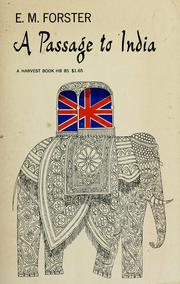
A Passage to India is about British expatriates in the country of the title. Forester draws characters from English, Hindu and Muslim backgrounds and the complicated relationships that arise when different cultural semantics collide.
I found the dialogue, especially between the Indians, to hold a delicate charm. They are funny and endearing but also hold to certain prejudices against each other-especially the Muslims and the Hindus.
The British are snobby to all Indians indiscriminately although some are sympathetic and befriend them.
Basic storyline: Two women, Mrs. Moore and Adela Quested come to India to meet Mrs. Moore's son, Ronny Heaslop. Adela is engaged to Heaslop who is a British official in India. Presumably their married life will be spent largely in India.
Adela is excited and eager to tour the country and meet Indians. She is naive and ignorant of the social boundaries that delineate her race from the natives. Nevertheless, she and Mrs. Moore are able to persuade Dr. Aziz, a Muslim physician who has befriended Mrs. Moore, to take them on a tour of the Marabar Caves. An Englishman, Mr. Fielding, who is also friends with Aziz, is to accompany them.
Fielding misses the train that takes the ladies to the Marabar Caves so Aziz and the women go alone.
Aziz is an exuberant, emotional man and goes to great trouble and personal expense to make this an impressive tour for the ladies. He hires servants, an elephant, and an incredible amount of food to take on the trip. While Aziz feels warm affection for Mrs. Moore, largely because of the respect she shows him, unusual for a British citizen, he does not care for Adele and a lot of his generosity is motivated by personal pride and honor as it is out of genuine esteem.
When they arrive, Mrs. Moore is too tired to walk further so Adela, Aziz and a servant tour the caves alone. Adela innocently asks Aziz a question about his late wife, which he finds personal and offensive. To hide his awkwardness he walks off into a nearby cave by himself and smokes a cigarette.
When he returns, he finds Adela is gone. He frantically looks everywhere for her, running inside the other caves, asking the servant who knows nothing. Finally he sees her down the hill talking to another woman, Mrs. Derek. He runs down the hill calling to her, but the women get in the car and drive off before he can reach them.
Feeling his excursion is a failure, he rejoins Mrs. Moore, who hasn't seen Adela and can offer no explanation for her behavior and they return home.
When they get back, Aziz is arrested on charges of sexual assault against Adela.
This plot is merely the skeleton upon which Forster fleshes out his actual purpose. He wants to show the tightly wound relationships between the British rulers over the Indian subjects in the 1920's, shortly before Indian independence.
What I admire most in Forster's writing here as well as in Where Angels Fear to Tread is his ability to switch narrating voices. The three main voices are from the limited perspective of Adela, Mr. Fielding, Aziz and a third person omniscient narrator. Because we hear their perceptions it is easy to sympathize with these characters and less so with the others whose thoughts we never learn and can only judge from their actions.
Forster switches back and forth between these voices so we can see and understand how they react to the words and actions of the other. He shows how great misunderstandings occur, primarily because of how the English and Indian cultures process and express themselves.
There is a great deal of cultural prejudice on all sides, including between Indians of Muslim and Hindu religions.
Things come to a satisfactory conclusion and requires humility, repentance, and forgiveness for the main characters. Adela eventually leaves India, admitting to herself she really doesn't love Heaslop. After some gross misunderstandings between Fielding and Aziz created by their cultural differences, they eventually reconcile and resume their friendship.
Fielding, although middle aged, visits England and marries Mrs. Moore's younger daughter. Dr. Aziz also marries. Even so, Forster implies that true love is not something anyone can attain.
It's apparent from the omniscient narrator that Forster himself believes in nothing and takes pains to show that, really, that is all life has to offer. No one truly loves anyone else. No one can know true love, romantic or otherwise. Every potential friendship or marriage is tainted by an underlying ennui and emptiness.
Even so, I very much liked his characters and his story line development and if that's how Forster felt about life, too bad for him.
This is the second book I have reviewed of Forster. I will be soon reading and reviewing more.

2.99 on Kindle
Back in the nineties, one of my sisters completed her Master's Degree in English Literature, boxed up all her books, stuck them in a closet in my parents' house and moved to France. While she was away I took the boxes out and carried them to my apartment. I read all of her books except those of a particular author.
It's not that I didn't try to like William Faulkner, I simply couldn't make head nor tails of what he was saying. He was so weird, obscure, and gruesome.
My sister hated Faulkner so I didn't receive any encouragement from the English Lit expert.
I don't know what motivated me to start reading him lately. Could have been the book covers. The Vintage paperback editions are particularly appealing. Maybe it always ningled me that I tried to read a literary great and failed.
Anyway, I checked As I Lay Dying out of the library and found myself slowly sucked into the story the way a rodent is hypnotized by a snake. I couldn't stop and, in a dark way, enjoyed the story.
 As I Lay Dying is a grim, surreal story about a backwoods family in the deep South. They are trying to bury their wife and mother in Jefferson, a
town far enough away to make it a real journey. Floods, overflowing
rivers, dead mules, a decaying corpse... nothing deters this family from
fulfilling the mother's dying wish. There's a zinger at the end but I
won't tell you what.
As I Lay Dying is a grim, surreal story about a backwoods family in the deep South. They are trying to bury their wife and mother in Jefferson, a
town far enough away to make it a real journey. Floods, overflowing
rivers, dead mules, a decaying corpse... nothing deters this family from
fulfilling the mother's dying wish. There's a zinger at the end but I
won't tell you what.
Each chapter is narrated by a
different character in the story. It also jumps back and forth in time
so that the reader sees a particular scene through various viewpoints. This is helpful in understanding what is going on. What is only peripherally understood by one narrator is made clear through the eyes of another.
Of course, it's all perceptual. Some of the narrators are young and don't understand what's going on themselves. Others possess disturbed minds and see things through a filtered lens.
One chapter is told by the dead woman (back when she's alive-time is not concrete in this novel). Apparently she hates (hated) all of her family members. The reader isn't sorry she's dead and wonders why any of her relatives would be.
Faulkner captures the spirit of a bygone South that I'm not sure exists anymore. If it ever existed. The characters, for all their diversity, were products of Faulkner's mind. How reliable an observer was he?
My sister would call him an unreliable one. What she learned about Faulkner was that he was bitter toward certain families in his Mississippi hometown who thought they were too good for him. According to her, his novels were his revenge against them.
 It's not the plots so much that interest me in Faulkner's stories. It's the way he tells the story. It's like a puzzle. Who is talking and what is it they're saying? Faulkner refuses to help the reader out. Here's how The Sound and The Fury starts out:
Through the fence, between the curling flower spaces, I could see them hitting. They were coming toward where the flag was and I went along the fence. Luster was hunting in the grass by the flower tree. They took the flag out, and they were hitting. Then they put the flag back and they went to the table, and he hit and the other hit. Then they went on, an I went along the fence. Luster came away from the flower tree and we went along the fence and they stopped and we stopped and I looked through the fence while Luster was hunting in the grass.
Any idea what's going on? I didn't. My smarty husband immediately guessed that the narrator was watching a golf game but that was not obvious to me.
Furthermore, the narrator, Ben Compson, is either mentally handicapped or autistic. The first quarter of the book is narrated by him. He is not an omniscient narrator. He only says what he knows as far as he is capable of understanding what is happening.
But he does accurately quote the other people around him. This includes siblings, his mother, and the black servants that care for him. Through Ben's concrete observations of what is happening to himself and what he see and hears, the reader is able to figure out character names and their relationships with each other.
Of course, Faulkner doesn't make it easy for you. Halfway through Ben's narration we find out that Ben's name was originally Maury. His mother changed it for complicated reasons. So when he's talking about Maury in the past he is actually talking about himself. Except when he's talking about his uncle whom he was named after. Insert a smile and a wink here.
Then there's Quentin. First, Quentin's a he, then Quentin's a she, then back to he, etc... I'm thinking what in the blazes is going on here?!? Finally in the last half of the book we discover there's two Quentins. Quentin Compson is the brother of Caddie who ran off, got married, and named her daughter after him. Since everything is from inside different people's minds, they simply think about what's going on, and what they think about what's going on, without offering the reader any information they don't have to explain to themselves.
There's only four chapters to the book. At 321 pages, that makes for long chapters. The first and last two chapters take place only a couple of days from each other. Naturally they're not in chronological order. That last two chapters are separated by one day. That day belongs to the first chapter. The second chapter is narrated by the brother Quentin eighteen years earlier.
The storyline? Not complicated. An old Southern family, the Compsons, is in its final decay. There is quite a list of characters but they mostly exist in the narrators' minds because they're either dead or have run away.
All that's left is one brother, Jason, Quentin-Caddie's daughter, Ben and the mother. The mother stays in bed most of the time demanding to be waited on hand and foot by Dilsey, the old family servant, and Dilsey's son, Luster, who also is in charge of Ben.
Jason has a small business but he's about the nastiest and meanest of the whole bunch. One thinks that Caddie and her brother Quentin escaped to get away from him. Caddie gets divorced and sends her baby back home. She sends money for her keep. Quentin never sees the money because Jason keeps it squirreled away for himself.
The last two chapters are mainly narrated by Jason and a angry little mind he has. His whole life seems to be bent on domineering his niece and cheating her out of her money. She knows this and finally breaks into his safe, steals the money, and runs off with a carnival hand. Jason demands police intervention but it seems there are no secrets in this small Mississippi town. The police chief insinuates that the person who may need to be arrested is Jason himself.
Even though Jason is a nasty, spiteful person, his mental narration is the most interesting. In all the venom, one hears the cry of despair over forsaken dreams, ambitions and frustrated plans. He's the most real of all the characters and the most poignant.
Well, not the most poignant. That would be the servants. Serving selfish people, having to care for a thirty year old man with the mind of a toddler, they show the most dignity and strength. Faulkner in his end notes says,
And that was all. These others were not Compsons. They were black:
Luster. A man, aged 14. Who was not only capable of the complete care and security of an idiot twice his age and three times his size, but could keep him entertained.
Dilsey (the housekeeper).
They endured.
Should you read Faulkner. For all the chaos, obscurity and grimness, I can honestly say I have found him to be a rich and rewarding read. A guilty pleasure in fact. I've only lately confided to my sister that I like reading him.
She doesn't approve.
I recently read an article in the New Yorker about one of their writers from the fifties. Maeve Brennan wrote a series of articles for their paper called The Long Winded Lady: Notes from the New Yorker which has been compiled into a book. The article compared Brennan to James Joyce in her ability to capture the essence and flavor of her native Ireland in her stories. In fact, the writer of that article quotes several Irish authors who considered Brennan as taking up Joyce's mantle. This piqued my curiosity and as a result, I've bought a few of her books.
The first one I have finished is called The Visitor. The story is told in third person from the view point of the protagonist. The story begins with a young lady on a train. She is heading back home to Ireland. The woman, Anastasia King, has been living with her mother in Paris for the past six years. Now that her mother has died she is returning home to Ireland to live with her grandmother.
When she arrives at her grandmother's house she comes to know that her grandmother doesn't want her there. The story unfolds slowly like a blooming flower on a timed camera. Bit by bit, the reader becomes aware of the facts. Anastasia's mother deserted her father who died broken-hearted. Anastasia, at the age of fourteen, chose to leave with her mother. They both stayed in Paris until her mother's death.
The grandmother cannot forgive her daughter-in-law. She does not want her granddaughter there as a sore reminder of painful circumstances.
But more than that, the grandmother wants simply to live in the past. She's kept her son's room as a perpetual shrine to him.
Through glimpses of conversation both present as well as remembered conversations, we come to understand that the grandmother wielded a lot of influence over her son. She viewed her daughter-in-law as competition and was careful to hold her in contempt. Her son took his cue from his mother and treated his wife contemptuously as well.
Anastasia's mother comes across as delicate and extremely sensitive. Eventually she runs away to escape her mother-in-law's dominion.
Even so, no one is caricatured. The grandmother is a human being with several sides to her rather than simply an ogre. She is not heartless. She cares about her granddaughter and will always provide for her. But she wants her to return to Paris. I can't judge her bitterness. If someone left me without bothering to contact me for six years until they had no other place to go, I would be a little hesitant to welcome them back into the fold as well.
This raises a question, however. Was Anastasia really so self-absorbed? She was very young when she left with her mother. Did her mother hold some kind of sway over her that prevented her from contacting her father or grandmother?
While Anastasia wanders around her hometown, and going to church she sees her mother. She sees her walking near her. She sees her kneeling in the church in a pew in front of her. Is she mentally unstable? Is she seeing a ghost? Because the story is narrated from Anastasia's point of view, we don't know.
Throughout the story, the Irish culture permeates each page. Reading the book, one has entered into Ireland, into an Irish family-at least one from the 1930's. One sees how the Catholic faith is a strong, integral part of the culture. How family relations affect each life.
There is a side story of a family friend whom Anastasia visits. This woman, Miss Kildare, tells Anastasia her story. She spent her entire life caring for her sickly mother. She met a man and fell in love with him but her mother refused to sanction the marriage. So they never married but they did continue to see each other in secret. The man even gave her a ring.
Tragically, the man is killed and the woman, with no one else in her life, cares for her mother until her death. Miss Kildare is now elderly and sick but with no one to care for her. She knows she is about to die. The woman asks Anastasia to place on her finger- after she is lying in her coffin- the ring the man gave her.
The Visitor story is really about human loneliness. Brennan shows four different women and their loneliness: Anastasia, her grandmother, the family friend and, indirectly through Anastasia's reflections, her mother. Each has different reasons for being lonely but the result is the same. At the same time each woman possesses a spirit that refuses to be defeated. It turns what might otherwise be a dreary story into a sweet, melancholy one.
I agree that Brennan is able to capture the Irish spirit through her writing. Even though she died unknown, her work is making a comeback. I look forward to reading other books by her as well.