It is a practically balmy day today. I have the house open and letting fresh air in. I took this photo back when it was a grey day. It's in front of my church. I could not resist the criss cross design of the various branches.
I am listening to piano music by a Danish composer and musician. The song is called Mary and the composer's name is Agnes Obel. I first heard this work at night while I was in bed. Josh has to play a little music before going to bed. In the dark it took on an especially dream like quality. This is not classical, just an indie musician but her playing takes me to ethereal places. Let me know if you like it.

 Howards End by E.M. Forster
My rating: 5 of 5 stars
Howards End lacks nothing that Forster's other books possess, which is to say it flows with the same fluidity, eloquence and contains the same sort of interesting characters as his other books. At least the ones I have read. The only books by Forster I have not read are Maurice and the Longest Journey. Maybe a one or two others, but Forster wrote a lamentably small amount of books, and it would be interesting to know why. I do not believe much is known about the author. I know there are a couple of biographies out but they seem to spend a great deal salaciously spelling out his sexual proclivities rather than analyzing his work.
Howards End seems to contain the same characters as Room With a View. We have the naive, artsy, independent, free thinking women only in Howards End they are sisters rather than mother and daughter. There is the moderately interfering spinster aunt, only Aunt Juley is not nearly so overbearing as the aunt in Room With a View. And we have the smug, elistist, prim and proper wealthy English family, the Wilcoxes.
Meg and Helen Schlegel with their brother Tibby are raising themselves since the death of their parents with Aunt Juley coming in occasionally to steer them in the correct direction without much success. Since the Schlegels have been left financially independent, they are not at anyone's mercy. This is significant as it allows the sisters and brother a lot of freedom in acting according to their will without considering the censure it might otherwise bring from "respectable" society. It also allows them to freely express themselves to the Wilcoxes without much concern as to offending their "proper" sensibilities.
The Wealthy English family, the Wilcoxes' lives intertwine with the Schlegels' when Helen has a brief and entirely imaginary affair with the Wilcoxes' youngest son, Paul. This takes place, or rather, doesn't take place at the Wilcox country home called Howards End. I think it is charming how English families name their residences. I think I should name my home. Maybe The Bestiary since it seems to be my animals who own the place.
Later, the Wilcoxes stay in town at an apartment opposite the Schlegels house called "6 Wickham Place" (which may merely be the address). Meg and Mrs. Wilcox strike up an interesting acquaintance. Mrs. Wilcox is an ethereal and mysterious person and in some ways, Meg and she have Spirits in common.
Without telling anyone that she is very sick, Mrs. Wilcoxes death comes across as a surprise to everyone, including her husband, Henry and her children, Paul, Charles, and Evie. Even more shocking is a note by her stating a wish that Howards End, which actually belongs to her, should go to Meg. The family decided to keep this note to themselves.
However, a variety of things transpire that cause everyone's life to take unexpected turns. For one, Henry, now widowed, falls in love with Meg. They eventually marry.
These are not two people one would connect to each other, the one being concrete and staid, the other being idealistic and philosophical but they do genuinely love each other and coexist with each other's differences well.
This is an attribute of the book, that I also found in Room With a View that I appreciated. No one's a toad. Each have their failings, but are drawn with sympathy. And the characters have sympathy for each other as well. I find I cannot hate anyone. Not even Charles who seems to go a little bit off his rocker at the end of the story.
Also, the married couples all seem to genuinely love each other, faults and differences not withstanding.
I think the genius in Forster's work is how he causes people of different worlds to collide and allow their differences to show off each other in a sharp relief. This makes each character all the more colorful. However, this affection and sympathy does not exist in Forster's final work, A Passage to India, which was written after a writing fast of almost fifteen years. One wonders what happened in the interim to cause a cynical turn in this last work of Forster.
There are more complications in this story which I would not like to give away so I'm giving only my brief sketch as to why I liked the book.
View all my reviews

It seems I'm reading and reviewing a lot of books lately that I was prejudiced against reading in my earlier days. I've noticed that the last few posts begin with, "known about this book for years but didn't read it because...." or something like that.
Guess what? I knew about E.M. Forester since college but had no desire to read him because the movies based on his novels, such as Howard's End and A Room With a View didn't interest me. I enjoyed A Passage to India but didn't know it was by the same author.
Soooo...what was the impetus that impelled me to buy most of E.M. Forester's books? Good question. I will gladly tell you.
I read about him in biographies of writers that I loved. There's a whole school of British writers that attended Oxford University in the first twenty years of the twentieth century. Based on the recommendation of writers I like I am now reading authors I didn't like.
E.M. Forester belonged to the latter group but now belongs to the first.
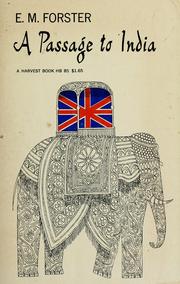
A Passage to India is about British expatriates in the country of the title. Forester draws characters from English, Hindu and Muslim backgrounds and the complicated relationships that arise when different cultural semantics collide.
I found the dialogue, especially between the Indians, to hold a delicate charm. They are funny and endearing but also hold to certain prejudices against each other-especially the Muslims and the Hindus.
The British are snobby to all Indians indiscriminately although some are sympathetic and befriend them.
Basic storyline: Two women, Mrs. Moore and Adela Quested come to India to meet Mrs. Moore's son, Ronny Heaslop. Adela is engaged to Heaslop who is a British official in India. Presumably their married life will be spent largely in India.
Adela is excited and eager to tour the country and meet Indians. She is naive and ignorant of the social boundaries that delineate her race from the natives. Nevertheless, she and Mrs. Moore are able to persuade Dr. Aziz, a Muslim physician who has befriended Mrs. Moore, to take them on a tour of the Marabar Caves. An Englishman, Mr. Fielding, who is also friends with Aziz, is to accompany them.
Fielding misses the train that takes the ladies to the Marabar Caves so Aziz and the women go alone.
Aziz is an exuberant, emotional man and goes to great trouble and personal expense to make this an impressive tour for the ladies. He hires servants, an elephant, and an incredible amount of food to take on the trip. While Aziz feels warm affection for Mrs. Moore, largely because of the respect she shows him, unusual for a British citizen, he does not care for Adele and a lot of his generosity is motivated by personal pride and honor as it is out of genuine esteem.
When they arrive, Mrs. Moore is too tired to walk further so Adela, Aziz and a servant tour the caves alone. Adela innocently asks Aziz a question about his late wife, which he finds personal and offensive. To hide his awkwardness he walks off into a nearby cave by himself and smokes a cigarette.
When he returns, he finds Adela is gone. He frantically looks everywhere for her, running inside the other caves, asking the servant who knows nothing. Finally he sees her down the hill talking to another woman, Mrs. Derek. He runs down the hill calling to her, but the women get in the car and drive off before he can reach them.
Feeling his excursion is a failure, he rejoins Mrs. Moore, who hasn't seen Adela and can offer no explanation for her behavior and they return home.
When they get back, Aziz is arrested on charges of sexual assault against Adela.
This plot is merely the skeleton upon which Forster fleshes out his actual purpose. He wants to show the tightly wound relationships between the British rulers over the Indian subjects in the 1920's, shortly before Indian independence.
What I admire most in Forster's writing here as well as in Where Angels Fear to Tread is his ability to switch narrating voices. The three main voices are from the limited perspective of Adela, Mr. Fielding, Aziz and a third person omniscient narrator. Because we hear their perceptions it is easy to sympathize with these characters and less so with the others whose thoughts we never learn and can only judge from their actions.
Forster switches back and forth between these voices so we can see and understand how they react to the words and actions of the other. He shows how great misunderstandings occur, primarily because of how the English and Indian cultures process and express themselves.
There is a great deal of cultural prejudice on all sides, including between Indians of Muslim and Hindu religions.
Things come to a satisfactory conclusion and requires humility, repentance, and forgiveness for the main characters. Adela eventually leaves India, admitting to herself she really doesn't love Heaslop. After some gross misunderstandings between Fielding and Aziz created by their cultural differences, they eventually reconcile and resume their friendship.
Fielding, although middle aged, visits England and marries Mrs. Moore's younger daughter. Dr. Aziz also marries. Even so, Forster implies that true love is not something anyone can attain.
It's apparent from the omniscient narrator that Forster himself believes in nothing and takes pains to show that, really, that is all life has to offer. No one truly loves anyone else. No one can know true love, romantic or otherwise. Every potential friendship or marriage is tainted by an underlying ennui and emptiness.
Even so, I very much liked his characters and his story line development and if that's how Forster felt about life, too bad for him.
This is the second book I have reviewed of Forster. I will be soon reading and reviewing more.

2.99 on Kindle