Showing posts with label British Literature;. Show all posts

Tuesday, November 12, 2013

Frankenstein or the Modern Prometheus by Mary Shelley


Halloween is over but who says I can't write another review on a scary book.  Besides, Frankenstein can't be said to be a "Halloween" book in the sense that those kinds of books involve the supernatural.  Frankenstein is not a horror book in that sense, but it is a deeply psychological, disturbing account of one woman's idea of humanity.

A young scientist, Victor Frankenstein, becomes obsessed with the idea of creating life.  He neglects his family, friends and himself for over a year until he finally achieves what he has devoted every waking hour to accomplish.

The moment his creature comes to life, Frankenstein is immediately horrified at what he has done.  He deserts his creation and tries to forget about him.  As time goes by, he becomes hopeful that his horrible creation has simply gone away.  He soon discovers his mistake when the creature murders his younger brother and frames the nanny, who hangs for the crime.

The creature eventually  approaches Frankenstein and fills him in on all that he's been doing since Frankenstein abandoned him.  What follows is the thrust of the entire novel.  The monster pours out his heart to Frankenstein.  The reader discovers that the monster is intelligent, articulate, eloquent and desperately lonely.  His yearnings and desires are the same as humans.  He longs to be loved and to belong to people.

But his looks make him an outcast.  All who see him are repelled by him.  Not only repulsed but develop an absolute hatred for him and try to kill him.  No one asks questions first.  They all believe he should be destroyed based purely on his exterior appearance.  This point is clear  when the monster meets a blind man with whom he has a conversation and who shows him kindness and compassion.  So it's not his personality or any primitive thinking or behavior on the monster's part that turns people against him.

The rejection and murderous antipathy against him enrages the monster and makes him desperate.  He demands that Frankenstein make him a mate so he will not be desolate.  This at first Frankenstein agrees to do but later destroys the woman creature before he brings her to life.  The reason is because he fears that together they would create a race of fearsome "uber creatures"  that could potentially take over the world.

In revenge, the monster kills directly or inadvertently, every family member and friend of Frankenstein's, including his bride on their wedding night.

What I find interesting is that it is not considered wrong by Frankenstein or anyone else to try to murder the monster (or "creature" or "daemon" or "fiend" as he is also called-but never "Frankenstein") based solely on the fact that he is grotesque looking.  But Frankenstein asserts that the reason his creation deserves to be destroyed is because of the crimes he has committed.  The monster did not commit any of these crimes until after his isolation and alienation drove him to it.  I'm not justifying what the monster did but only trying to point out the double standard.

Now that he is equally alone and desperate, Frankenstein's one purpose in life is to destroy what he made.  He hunts the monster all over the world.  The monster stays just out of reach, but not so far that Frankenstein gives up.

Both the monster and Frankenstein end up in the arctic regions of the world where they are discovered by the captain of an ice bound ship.  By this time, Frankenstein has driven himself beyond his strength and health.  He collapses and is taken aboard the ship where, dying,  he relates the entire story to the Captain, who is the original narrator of the book.

When he dies, the monster appears in the Cabin and confronts the captain.  Upon learning that Frankenstein's vengeful obsession has finally killed him, the monster bounds out of the window of the cabin and disappears...to end his own life?  Who knows.

Mary Shelley started writing this book when she was nineteen and it was published when she was twenty-one.  Her husband, Percy Blythe Shelley heavily edited the novel but an edition came out in 2008 that removed Percy's additions and contains only Mary's original story.  It would be interesting to compare.

I looked up the origins of Prometheus.  In Greek mythology he was a titan who brought fire to the human race.  For doing so he was punished by being chained to a rock where an eagle would come and devour his liver every day.  Prometheus also came to symbolize the human quest for scientific knowledge when it over reaches itself.

I am not sure what Shelley's point was in writing the story (other than her dream and the writing contest she participated in one night in Geneva with her husband and other writers).  She was not a Christian but she seems to implicate God in some respects.  Is she saying that man's fall from Eden was due to their Creator's rejection of them? Is she saying man shouldn't try to play God?  

Does she believe in the human soul or that life can be created without it?  Did the monster have a soul?   If there is no soul, then what makes murder wrong?  You've simply turned an animate life form into an inanimate one.  What makes life valuable?  Surely more than the need to simply preserve the human race.

What she does successfully portray, either intentionally or not, is humanity without mercy or compassion for the desperate or the fallen.  Frankenstein's abhorrence of his creation seems to be based on the presumption that he himself is not fallen.  The Bible says all are desperately wicked. Romans 3:23

I compare this to the life of Jesus who forgave even the most sinful when they fell at his feet in repentance. 

If Mary Shelley's book typifies secular philosophy then even though it maintains a certain moral code,  it certainly provides no hope for those who can't keep to that code.


.99 on Kindle


Saturday, June 8, 2013

Jane Eyre by Charlotte Bronte


    The first time I read Jane Eyre, I was sixteen years old.  When I finished my thoughts were filled with disgust:  How did I possibly enjoy all the teen romance books I had previously read when they were nothing but a bunch of drivel?  This book is what true romance is all about!


      Since then I have read Jane Eyre several times, the most recently a couple of weeks ago, and each time I’ve read it I’ve gotten something more out of it.


Spoiler Alert!


       I suppose everyone has either read the book or seen one of the many movies made about it,   Just in case, know that I will be giving away some crucial plot developments so if you don’t know the story, don’t rob yourself of the thrill of surprise, shock and discovery by reading my review.


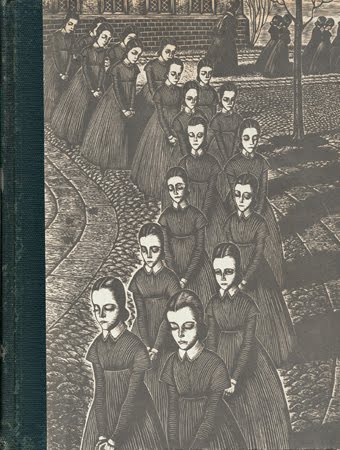
        An orphaned girl, Jane Eyre, is sent away to live in a strict boarding school where she suffers abuse and neglect.  After graduating she gets a job as a governess to a young French girl at a manor, Thornfield Hall, out in the country.  She eventually meets the Master of the house, Edward Rochester, and, as time progresses, she falls in love.


       Why does she fall in love?  For the first time, someone treats her with respect, treats her as his equal.  Spends time with her, enjoys her company as much as she enjoys his.  She fights against her feelings because she knows their stations in life will prevent them from ever marrying.


        In addition to that, it appears Rochester intends to marry another.  A young woman from a neighboring manor seems to have won his affections.  Blanche, tall, as beautiful as a Spanish princess, strong willed and high spirited has made it clear that she determines to have Rochester for a husband.  Who can fight against her beauty, her charms, her passionate personality?


        Not Rochester.  He talks to Jane often of his nuptial plans.  She tries to bear it but one evening she is over come with emotion.  The most romantic scene in the whole book, and my favorite ensues:


        Do you think I can stay to become nothing to you?  Do you think I am an automation?-a machine without feelings?  and can bear to have my morsel of bread snatched from my lips, and my drop of living water dashed from my cup?  Do you think, because I am poor, obscure, plain, and little, I am soulless and heartless?  You think wrong!-I have as much soul as you, - and full as much heart!  And if God had gifted me with some beauty, and much wealth, I should have made it as hard for you to leave me, as it is now for me to leave you.  I am not talking to you now through the medium of custom, conventionalities, or even of mortal flesh:-it is my spirit that addresses your spirit; just as if both had passed through the grave, and we stood at God’s feet, equal, -as we are!”

       “As we are!” repeated Mr. Rochester “-so,” he added, enclosing me in his arms, gathering me to his breast, pressing his lips on my lips: “so, Jane!


  It turns out, that Rochester was purposely provoking Jane in order to draw this confession out.  There is a lot of witty dialogue in this section of the novel, including some telling ones on the mercilessness of the upper class towards the people “beneath them.” 


        Rochester declares his mutual love for Jane and they plan to marry.


        They don’t marry, however, due to the fact that at the wedding altar, someone announces the Rochester has a wife still living.  This pre existing wife turns out to be a lunatic.  Rochester tempts Jane to still stay with him. He claims their love does not need to be bound by conventional norms.  Which is another way of saying, “Be my mistress.”


      Jane shows her mettle by tearing herself away from Rochester and running away under the cover of the early morning, flees to she knows not where, and almost starves to death before ending up in an obscure village at the house of a minister, St John the Baptist, and his sisters, Diana and Mary.  A whole sub story occurs here as Jane learns to live again and enjoy her life with her new found friends.


      Again, Jane is tempted.  Not by love this time, but still by one who wants to marry her.  St. John the Baptist wants her for a wife so she can travel with him as a missionary to India.  Again Jane shows her mettle by standing strong against one who has a powerful personality and is determined to bend her to his own will.


      The contrast between Rochester and St. John are dramatic.  Rochester has black hair and coal black eyes.  His personality is one of passion and fire.  St. John is as handsome as an Adonis with blonde hair and blue eyes.  He is as icy and Rochester is fiery.


        I found this section of the book especially fascinating because St. John does not try to tempt Jane through love or romance but by manipulating her conscience.  He does not tell her that HE wants her to come to India but that GOD does.  If she refuses to come, she is not opposing St. John but rebelling against God.  The dialogue that ensues back and forth between Jane and St. John is compelling.  But although St. John gives forceful reasons, uses inflammatory language and religious “powerspeak”  to vanquish Jane’s objections, she’s up to the challenge and counters his every point.


      St. John doesn’t give up, however, and it seems victory is his through wearing Jane down through attrition.

           But just as Jane is ready to give in to his demands, something unexpected happens. 


           There is a lot of religious symbolism and many implications that God’s hand is involved in each turn of event in the story, but this is the first time in the novel where the story delves into the obvious supernatural.


             Jane runs out of the house, listening intently to something.  What has she heard?  Rochester’s voice calling to her.  Is she mad?  She doesn’t know, she doesn’t care.  She packs and returns to Thornfield Hall. 


             By this time, Jane has become independently rich.  It turns out she wasn’t completely abandoned but had an Uncle living in the Caribbean.  This Uncle is also the one who had connections to Rochester’s wife’s family and through a series of coincidences was able to prevent Rochester’s bigamous plans.  However, the episode so upset him that he became seriously ill and eventually died. He left all his money to Jane Eyre.

       Jane is now not only rich, she is filthy rich.  Through the inheritance she discovers that St. John and his sisters are her cousins (Yes, cousins married back then. Let’s move on.) She generously divides her riches with her cousins, which still leaves her a very wealthy woman. 

      She returns to Rochester to find him a shattered man.  His lunatic wife had finally succeeded in setting Thornfield Hall on fire and, as he was trying to save her, she jumped from the roof to her death.  A beam falls on Rochester causing him to lose an eye and one of his hands.

     Jane doesn’t care about his mutilated state and since they are now free to marry, they do.  Together they travel the world, keep house, have children and are frequently visited by Diana and Mary, St. John having finally left for India without her.


       As a teenager I identified with Jane Eyre because I was shy and withdrawn.  I had my few close friends but much of my time was spent indoors either practicing the piano or reading books. I could identify with her sheltered existence, her need to experience the world, to fall in love....


       Later, in my twenties, I had fallen in love, gotten married...so I no longer needed vicarious romance but I still loved Jane because of the inner fire that is buried inside her tiny frame until it is ignited- not only by love, but by having the strength to do what is right when every thing inside of her wanted to do what was wrong.


       As the years and a divorce went by, I once again connected to Jane because I understood her struggle to survive and, after procuring a secure living, suffering through loneliness and depression because humans were made to do more than just exist.  I felt her longing for something more.  For a relationship with someone who was her intellectual and emotional equal.  I also respected her determination to sacrifice this desperately needed relationship in order not to compromise her Christian beliefs.


      The Christian symbolism throughout the novel did not become obvious to me until this last time when I read it.  One example is when Jane tells Rochester that she dreamt of a maniac coming into her room and the next morning finding her bridal veil torn in two from top to bottom.  (Matthew 27:51)


  And, of course, the conclusion that reflects Matthew 5:29-30.


    Besides all that, Jane Eyre has those wonderful ingredients that make it an enduring novel.  Powerful, multidimensional characters, strong dialogue and not only an outer, overlying story, but many underlying stories.  And, I’ve already mentioned the religious symbolism.


      In another few years, I’ll have entered into another season of life.  I wonder what I’ll discover in Jane Eyre then?
Charlottte Bronte 1816-1855

      This will be my last post for a couple of weeks.  I'm taking my son on a trip to Europe as a graduation present to him.  I won't tell you where we're going, I'll just say Buon Viaggio, Auf Weiderluege, Au Revoir, y hasta el tercero de Julio! God bless!


.99 on Kindle


Sunday, May 19, 2013

The Private Memoirs and Confessions of a Justified Sinner by James Hogg


Knight Death and Devil by Albrecht Durer (1472-1528AD)


This is one of the most fascinating and enjoyable books I’ve read in a while.  It was written in the early 19th century and the story is placed a century earlier than that. 


The story takes place in Scotland where a family of Colwan live on the lordly estate of Dalcastle. George Colwan, the Lord of the Manor marries a woman, Rabine, as different from himself as if he were trying to create a marriage out of chiaroscuro counterpoint.  George is one for gaiety and frivolity while his wife, a staunch Calvinist, rejects any practice that might be even remotely light hearted. Their differing views cause such a breach in their relationship that at first Lady Dalcastle returns to the home of her father.  Therein follows a pretty funny episode.

 
Rabine's father wants to know why she has left her husband and returned to his estate.  His daughter rants for a while describing her husband’s moral and religious failings.  Her father professes to be so upset and offended by his son-in-law’s unchristian behavior towards his daughter that he proceeds to beat his daughter claiming that since his son-in-law is not present to receive his due flagellation, his wife is the appropriate proxy.


“What do you mean, sir?” said the astonished damsel.


“I meant to be revenged on that villain Dalcastle,” said he, “for what he has done to my daughter.  Come hither, Mrs. Colwan, you shall pay for this.”


So saying, the baillie began to inflict corporal punishment on the runaway wife.  His strokes were not indeed very deadly, but he made a mighty flourish in the infliction, pretending to be in a great rage only at the ‘Laird of Dalcastle’.  “Villain that he is!” exclaimed he, “I shall teach him to behave in such a manner to a child of mine...Take you that and that, Mrs. Colwan, for your husband’s impertinence!”

Rabine may be narrow minded but she’s not completely stupid.  She understands that this is her father’s not so subtle way of saying, “you made your bed etc...”  So she returns to her husband at Dalcastle.  They lead separate lives and stay in separate parts of the castle.  Lady Dalcastle develops a close relationship with the local Presbyterian minister while Mr. Colwan blatantly takes on a mistress.


 It’s not clear whether Mrs. Colwan and the minister have anything other than a relationship based on common religious principles, but she produces two sons, the oldest, George, who belongs to Lord Colwan and a younger, Robert, who may or may not be the Reverend's son.


It’s these two sons from which the real story begins.  George is raised by his father and the other by the mother. It is the son, Robert,  raised by Lady Dalcastle around whom the story centers. 


George is found murdered.  As the facts come to light, it reveals that it is his Robert, brother (or half brother) that murdered him.


The story is narrated in an interesting way. It’s not many writers that should attempt switching person narratives in a story but Hogg does it brilliantly.  First the circumstances surrounding George is described through an editor who briefly uses first person but for the most part writes in third person.  As the culprit is eventually found to be Robert, the narrator changes to first person narrative with Robert as the narrator. The final chapter of the book uses a different first person narrator and concludes with a final statement of the murderer.


This book reflects James Hogg’s fascination with the religious beliefs and country lore of the Gaelic people of Scotland.  It is rich in colloquial dialect and idiomatic use of the language as well as a sophisticated eloquence in expression that no longer exists in our modern usage of the language.


The story is deeply psychological in nature.  After he is arrested for his brother’s murder, while in prison, the Robert writes down his confession.  It is titled, “The Private memoirs and Confessions of a Justified Sinner: written by Himself.”


In his narrative, Robert explains his religious upbringing at the hands of his simple minded mother and the religiously narrow Reverend Wringhim.  It is imprinted on him from an early age that those who are chosen cannot lose their salvation therefore, they cannot do anything-be it ever so heinous- that would send them to hell.


From the first section of the book through the eyes of  the editor, we get a picture of Robert as an arrogant, anti-social person.  This enables the reader to understand how such a person could become led into a false understanding of what it means to be chosen or the assurance of salvation.


I believe some people might read into Hogg’s book an anti-reformed theology attitude, but this underestimates the level of sophistication of Hogg’s writing.  People’s beliefs are so much more complicated than simply black and white.  It is possible to hold onto a vestige of the truth and through one’s own pride and self-will distort that truth until what the person believes is no longer truth but falsehood.  This is the case with Rabine.  Her intention was never to cultivate a close relationship with God or glorify Him through sincere worship, but to inflate her own vanity in believing she was superior to her husband. 


She nurtures this same pride into her son who develops it to a degree that she never anticipated.  In the end she dimly begins to understand the Frankenstein she has unwittingly created. 


And that is what happens.  In his own words, Robert meets with a man, Gil-Martin, who wields a powerful influence over his life.  As Robert expands on his relationship with this other man it becomes apparent to the reader that this other person is not human but in fact something evil.  As the story progresses we become aware that Robert is under the complete sway of a demon.


The demon persuades Robert that he must “purge” the earth of all of those who are not chosen.  That it was not murder to do so, but, in fact, was work commissioned to him by God.  He quotes all sorts of scripture to justify this point.  Robert wavers at first, but doesn’t have the strength or knowledge of Scripture to counter him.  Apparently, for all his mother and the Reverend’s teachings, endowing her son with a grounded knowledge in Scriptures wasn’t included.


The Last Judgement by Luca Signorelli 1500AD

The discussions back and forth between the demon and Robert remind me of Jesus’ temptation by Satan in the desert.  The difference was that Jesus did know his Bible and was able to point out how Satan twisted Scripture in an attempt to tempt Jesus into committing wicked acts.


Gil-Martin uses the same tactics on Robert but, unlike Jesus, he has no defense.  Consequently, he commits various acts of murder and other wicked deeds, even some to his own horror. It’s a great illustration of someone who becomes a slave to his own corrupted nature.


The story ends a hundred years later when a grave is found at a crossroads.  It is the burial of a suicide.  The grave is dug up and Robert’s manuscript is discovered in the grave site.
I've read some reviews on this book that suggest that Gil-Martin could be a figment of Robert's imagination but the reason I don't think so is because after Robert's death, third party witnesses claim to see two people preparing to hang themselves but the grave reveals only one.


James Hogg came from farmer stock.  He over came the British class caste by educating himself and becoming a nationally renowned writer.  His stories often target the upper class and portray the common man as the hero.


Indeed, it is in the servants that we hear the truth of God’s word spoken. 

The servant John tells Lord Dalcastle exactly the sort of man he is:


“Well, John, and what sort of general character do you suppose mine to be?”


“Yours is a Scripture character, sir, an’ I’ll prove it.”


“I hope so, John.  Well, which of the Scripture characters do you think approximates nearest to my own?”


“...Ye are the just Pharisee, sir, that gaed up wi’ the poor publican to pray in the Temple; an’ ye’re acting the very same pairt at this time, an’ saying i’ your heart, ‘God I thaink thee that I am not as other men...”


A debate ensues between the servant John and Dalcastle where as the latter thinks it is a good thing to be a self-righteous Pharisee while John correctly points out that Jesus' parable was a warning against religious hypocrisy.


It is a clever method on Hogg’s part to have true wisdom disguised in heavy Gaelic dialect while the aristocrats, with their cultivated speech, are blind to the truth and are full of self-satisfaction.


The book should be a matter of interest, I think, to all Christians, simply because the topic of predestination and assurance of salvation are hotly debated subjects between denominations.


Below I’ve included the links to other blogs that have also reviewed this book from a different viewpoint than mine.  Thanks to Brian at Babbling Books for calling this great book to my attention.  I have since downloaded all of James Hogg’s books onto my Kindle (they’re free!)


James Hogg


 $1.99 on Kindle


Babbling Books

http://www.independent.co.uk/arts-entertainment/books/reviews/book-of-a-lifetime-the-private-memoirs-and-confessions-of-a-justified-sinner-by-james-hogg-7621915.html

http://en.wikipedia.org/wiki/The_Private_Memoirs_and_Confessions_of_a_Justified_Sinner

http://www.bewilderingstories.com/issue262/justified_sinner_rev.html