Listening to Chopin's Complete Works.
Brooklyn Bridge by Emil Holzhauer
While in Florida I visited an old friend whom I had not seen in many years. We knew each other in Florida but lost touch when she moved to Spokane, Washington and I moved to New Jersey.
She recently moved back to Florida so I spent an afternoon with her last week while my parents were at a doctor's appointment.
My friend and her family are some of the most interesting people I know personally. Debbie has a sister who is a Hollywood actress, their daughter is a sculptor in Boston and most interesting of all, Debbie's husband, Ed, a journalist and writer, has a famous uncle.
Ed's uncle is Emil Holzhauer, one of the Ashcan Artists. Holzhauer was a student of Robert Henri. Debbie and Ed live in Holzhauer's house on a bayou near my parents' home.
Here are some photos of Holzhauer's work in their house:
The precious lady in the hall is Ed's older sister. She suffers from dementia and is the sweetest person you could meet. Hercule (of course I brought him, he's so clingy) liked her a lot. He politely refused the Teddy Bear she offered him, however.
I asked Ed if he'd Beta-read a mystery I wrote. As I was sending it to him, one of my birds hit the screen and sent the attachment off to the Cloud Grave yard in the sky. So I sent him a ghost story I wrote. Of course now I'm pins and needles hoping he likes it.
For some reason, I didn't take a photo of Debbie and Ed. Oh well. Next time.

 The Collected Novellas of Stefan Zweig: Burning Secret, A Chess Story, Fear, Confusion, Journey into the Past by Stefan Zweig
My rating: 5 of 5 stars
This particular review is only of the story Confusion. I have reviewed the previous stories separately.
Confusion is about a young man who becomes the student to a professor at the university he attends. The professor's expertise lies in Shakespeare's works. The student becomes obsessed with this professor and his work. Finally he rents a room in the same house the professor and his wife are living.
Things are strange. The wife is emotionally distant and sardonic. The professor is in turns, kind and gentle and caustic and cold. This puts the young man in turmoil. He doesn't know why the older man is treating him like this.
Also the professor takes to disappearing for a few days, telling no one of his whereabouts.
Furthering the mystery, his fellow students and the other professors have become cold toward the student and begun to exclude him from their circles.
Nothing is solved until the end, and I won't give it away, just to say, that I find so many things unrealistic and wrong about it.
View all my reviews
Here is some lovely music to read by: Liszt in Love.
On the 4th of July I left Texas for Florida. Passing Jackson Mississippi, I saw their fireworks display, which I appreciated. I hate missing out on the beautiful fireworks.
The reason I left on the 4th was so I could stay through to the 11th, and celebrate with my parents in their 63rd wedding anniversary.
My mother cannot walk independently, but that did not slow us down. We simply wheeled her around in the wheel chair. We went to several areas where we could enjoy the water.
I also wheeled her around neighborhoods that she and I both walked through and talked, back when we were both younger.
In the evenings I read to them. I finished three of the Narnia Chronicles, plus read a ghost story I wrote. My mom said she enjoyed it. I know she's my mother, but I think she would tell me if it wasn't any good. My dad said I started to many sentences with the word, "I". He was right. I set about correcting that.
I think for 83 and 84 years of age, they haven't done too badly. They don't get tired of telling how they met at Carswell AFB in Ft Worth, fresh out of tech training while they were still teenagers. They married at the ages of 20 and 21 and have stuck it out through the lovely times and the rough patches. I have the greatest respect and love for my parents.

 The Cornish Coast Murder by John Bude
My rating: 4 of 5 stars
This is the sort of book that is considered a nice, comfortable mystery to read on a rainy day. Life got really busy so there were gaps between the days I was able to read, so this book took a little longer to finish and I'm afraid I may have forgotten key events or characters. It also may be that they were a little hard to keep track of, but I think it's my fault, not the author's.
A vicar and a doctor meet Monday nights for dinner and sharing stories. Together they pay for a monthly package of mysteries to share. This evening is interrupted by an emergency at a local neighbor's house. They both arrive to find the neighbor, Julius Tregathan, lying dead in his living room. He has been shot through the head.
The shots came from outside, there were three although only one hit its mark, the holes through the window being discernible.
As the story progresses, we get to know the kind of man Tregarthan was and also who would have the motive to murder him.
This story was rather a slow burner, but I really appreciated how we get to try to figure out who murdered the man and why as the Inspector and Chief build up first one, then another, and then yet another theory as to who committed the murder, how they committed it and why. The continual evolution of their theories as new data enters the picture is probably the most interesting part of the book.
I believe I will be reading more of John Bude.
View all my reviews
I posting early because tomorrow I'm leaving for Florida. It might take me a day to answer comments, but I will do my best.
Well, you can listen to it also, but this is what I was listening to when I wrote this review: the Best Blues.
For the month of July I've been sending patriotic post cards. Here are a few:


 Fear by Stefan Zweig
My rating: 5 of 5 stars
Fascinating psychological tale about a woman who has everything: wealth, good family, security, whatever she wants. She's not bored, but neither does she care about anything. She calmly drifts through her life. She has children. They are there, but they hold little interest for her. She lets the governess and her husband tend to them.
She's perfectly self-satisfied, self-absorbed and completely non reflective. Her whole life is taken for granted.
There's another man in her life. She doesn't love him, but she enjoys the attention, the time together. The fact that she's cheating on her husband doesn't come into consideration. She simply doesn't think about anything that does not provide personal gratification.
Then one day, she is leaving her lover's apartment when she is confronted by a hag of a woman who accuses her of sleeping with her boyfriend. The hag screeches and screams and demands money to remain quiet about it.
The woman is terrified and gives her all the money she has on her. The hag says it's not enough. She wants more. The woman promises more and rushes away.
This is turning point of a placid, selfish existence into one of horror. The woman cannot sleep or eat. Somehow the hag has found where she lives. No matter how much money she gives the women, it is never enough. The hag is an albatross. She can't escape her, nor can't stand up to her-she's not used to fighting battles.
The woman becomes haggard as time goes on, she thinks of ending her life. Telling her husband is unthinkable. She'd rather die.
This story was a torment to get through, because, even though I did not like the lady, she was so helpless before the merciless hag.
I will not spoil the story, except to say, it ends in an unexpected way.
View all my reviews
Hope everyone is safe and have a wonderful 4th of July.

.
Listening to Debussy's piano music.

 Means to an End by John Rowan Wilson
My rating: 4 of 5 stars
John Rowan Wilson is one of those accidental discoveries, which has led me on a quest to find all of his books. This is not easy because the author is long gone and his books are all out of print.
In Means to an End we see the dark underbelly of the business world. Chris Marshall has inherited a job with his father's corporation. He doesn't like the job, but after a failed attempt to make it as an artist in Paris, he has largely been drifting through life.
He knows and the rest of the company knows that he is there as fluff. He contributes nothing to the business, yet out of the blue, the boss wants to send him to Europe to deal with their wings in London and Paris.
This is strange, because he does so little here, what is he going to do there? Nothing, as he soon finds out. Everyone is smiley and polite, but their attitude is basically, don't you worry your pretty little head about anything, we've got everything covered.
And then an employee in Paris kills himself. Why? No one cares. Except Marshall. What is going on? He finds the widow and talks to her. It turns out that her husband was getting underpaid for his work, and finally lost his head and shot at the French head of the Paris branch of the company.
Marshall finally sees something he can deal with. But he makes some discoveries that shatter his belief in the goodness of human nature. Apparently the company has not been dealing honestly and has even been involved in illegal activities on an international level. Marshall is about to be both boat rocker and whistle blower.
But he is absolutely alone. His own father started the business, taking advantage of post WWII Europe's financial straits. Everybody else in the company, including his brother, are more concerned about keeping peace, their job and comfortable livings.
If this were a movie, everyone would behave like superheroes and have above board morals. When reading the book, I could not help but wonder, just how brave would I be in such a situation. I can think of times in my own work where I chickened out when I knew something was not right. I also had to quit because it was killing my morale. It's not so easy to be a superhero without a script guaranteeing a soft landing.
Wilson is British, but his protagonist is American. I was impressed with how deftly he nailed the voices of his American characters. He didn't make parodies out of them, as too many British authors are tempted to do. They were human. Flawed, heavily flawed, but still human beings. So were his British characters. Those are easy to parody too...stiff upper lip, hip, hip...I walk and act like this because I have a pole up my rear...the British and Americans were people you could despise but also feel for. They were real.
So were the French characters as far as that goes. Existential, fatalistic...but that's how 20th century French writers describe their own people.
Finally, Wilson showed great knowledge and insight into the international business world, even though he was educated and trained as a Doctor.
This is my second book by him and I hope to read more.
View all my reviews
Here is another discovery: Ivor Gurney: A Gloucester Rhapsody
I really hit the jackpot this past week. I went to my library to find that they were giving away a lot of their history books. I began to help myself. A librarian came out and I was embarrassed, because I was greedily and brazenly emptying the shelves. But she told me to take all I wanted and brought me a couple of more bags. All in all I got over 40 free books. Score!
As you can see it is mostly American History.
But with some Russian History and also some books about the Middle East.
Berfore writing my review on Goodreads, I read another man's review of the same story. I should have known I would not like his review, because his abrasive posts had already caused me to unfriend him. So you will see that some of my review is colored by my reaction to the other review.
 The Burning Secret by Stefan Zweig
My rating: 5 of 5 stars
I'm somewhat nonplussed at some of the loutish reviews over this story. At least one of them. Maybe the reader has never known loneliness. Maybe he's an insensitive clod. Maybe he yawns over the fact the author took his own life.
Whatever the reason he found all the characters contemptible. I found this story moving and at times heart-wrenching.
The story centers around a young boy. He's twelve but mature-wise he's much younger, more like a nine year old. Probably that was normal back in a time when the culture wasn't so hyper-sexualized as it is today.
The boy and his mother are at a resort for the boy's health, which is delicate. You read that a lot in literature written before the discovery of antibiotics. We'd all be delicate back then; those of us that survived our infancy, that is.
The boy has always been introverted and socially awkward, not finding it easy to interact with his peers. This naturally results in a great loneliness on his part.
Then, he is befriended by a man at the hotel. He is an officer on vacation. At first the boy is surprised, diffident and then overjoyed at the attention this man gives him. Because I have worked closely with children, I understand how so little effort on an adult's part towards them has huge consequences in their life. Yet most adults throw this opportunity away, even with (especially with) their own children.
The boy becomes obsessed with the officer. His waking moments are to see this man, at the restaurant, everywhere. Because Zweig writes the thoughts of his characters, we gain such an acute insight into their motives, not only theirs, but human nature in general. Of course if you aren't really interested in other people you could find this style of writing uninteresting. Sorry, I'm still chaffed about that other review.
But the boy comes to a tragic realization. The Officer is, in fact, not interested in him at all, but instead was using him to meet his mother with whom he hopes to have a brief affair. A week long amusement to alleviate the boredom while he is on vacation.
At first the boy is heartbroken. Then he recovers. He's angry and his anger and hatred make him remorseless. His innocence prevents him from understanding what is truly going on, but he understands enough to realize he has a certain hold over his mother and the Officer. Both of them regard him with a certain fright because of how he could expose them.
The story continues and concludes, but I won't reveal anymore, in case you want to read it for yourself.
I wonder if Zweig himself was this young boy and his own hypersensitive nature is what compelled him to write stories like this as well as commit suicide.
View all my reviews
Here is a new work for me: Florida Suite by Frederick Delius.

 Vlad the Impaler: The Real Count Dracula by Enid A. Goldberg
My rating: 5 of 5 stars
This short book was packed with interesting information about Vlad Dracula, the real man who inspired Bram Stoker's vampire novel.
Reading about the life of this real Dracula, if I had to choose between the two, I'd take the vampire over this real life tyrant.
Vlad Dracula was the son of Vlad Dracul senior and was "Dracula" which means "little dragon" or more appropriately, "little devil", except there was nothing little about the monstrosities Vlad Dracula committed against friend and foe alike. Who was friend or foe depended on who Dracula believed would help him attain and keep power. These would switch back and forth fairly rapidly.
He came by this philosophy honestly. When his father was in power, the area that later became known as Romania in Transylvania was wedged between the Holy Roman Empire and the Ottoman Empire. As a last ditch effort to stay in power, Vlad Senior sent Vlad Jr. and his brother Rudi to the Sultan of the Ottomans as prisoners in exchange for his help to fight the Western Europeans.
Vlad and Rudi spent several years in prison with the Ottomans. After Vlad's release he returned home under the promise he would help the Sultan's cause in bringing Transylvania under Ottoman rule. Vlad did not keep his promise. This was a habit with him.
After the death of his father, Vlad Dracula took over, at times fighting the Ottomans, which included his brother who chose to stay with the Ottomans, killing other brothers and former friends. Other times he fought with the Ottomans against the soldiers of western Europe. It all depended on who would help him stay in power.
He was also vengeful. The ruling class in Transylvania, the Boyers, were responsible for killing his father. He invited them to a feast after which he had them all impaled and their bodies left to rot on stakes. This was called The Forest of the Impaled. There is a wooden engraving showing Vlad eating a meal among this horrible forest.
As for the older men, the women and children, he forced them to climb a mountain and build a castle, called Castle Dracula, which can still be seen today and has probably been used in horror movies. These builders were literally worked to death and the trail to the mountain top where the castle resides is paved with the skeletons of the builders.
Furthermore he created a severe police state where even minor infractions were punished by death. Whole villages were murdered in Vlad's determination to maintain control. His subjects feared him more than they feared the Turks.
Vlad seemed not only to be capable of heartless, violent pragmatism, he was also sadistic. It was not enough to make his victims die. He enjoyed watching them suffer as they died slowly.
Some historians say Vlad Dracula killed as many people as the Bubonic plague which also ravished Europe around the same time. While that may be an exaggeration, it is estimated that his death toll may have approached a hundred thousand or more.
And his reign only lasted seven years. Eventually, Dracula was overpowered by soldiers of the Roman Empire, killed and beheaded. His truncated body is buried beneath the floor of the Comana Monastery, surrounded by swampland in Romania.
While this book can seem gruesome, it provides and interesting an informative account of life in middle Europe during the 15th century. While life during these unsettling times was violent and cruel by any account, still Vlad took it to a whole other level that turned him into a nefarious legend and, an inspiration for many vampire legends.
View all my reviews
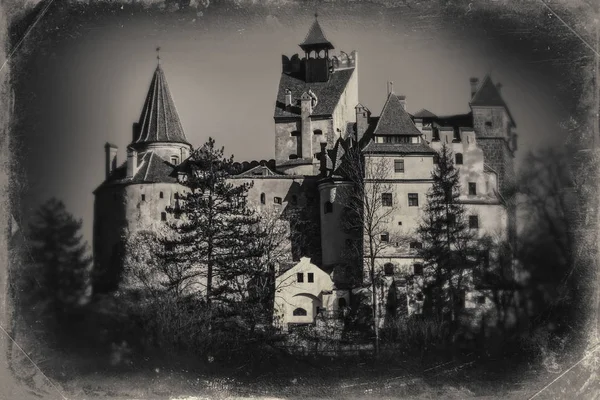 |
| Castle Dracula |
Here is Ralph Vaughn Williams' In the Fen Country. Williams is one of my favorite composers. His music makes me think of lush landscape paintings.

 The Zoo on the Road to Nablus: A Story of Survival from the West Bank by Amelia Thomas
My rating: 5 of 5 stars
There is a rarity among non fiction writers to engage the reader as Amelia Thomas has. I found this book refreshing in that it serves as a documentary of the lives of both human and animals in one of the political hotbeds of the world, while showing the goodness, the sadness, the uncertainty and harshness of a place far away from the imagination of the western mind.
Qalqilya is on the border of Palestine and Israel, about an hour north of Jerusalm. I probably passed it without knowing it last October during my stay in Israel. Pity.
A Palestinian veterinarian, Dr. Sami has great dreams for his zoo. Once it was a beautiful place with a luscious environment for exotic animals for the British overlords to enjoy. Now it is a dilapidated facility with a few animals fighting for survival. The political tensions between Israel and Palestine make the zoo's existence low on anyone else's list of concerns.
Through Thomas, we follow Dr. Sami around as he fights, begs, cajoles and pleads with city officials, other zoos in Egypt and Israel to help populate his forlorn zoo and keep the animals alive and healthy.
He seems to be fighting a losing battle. His animals die, some because they weren't viable to begin with, some because keeping wild animals alive in enclosures is hard and costly and some, it turns out, because somebody was poisoning them.
The reader gets a glimpse of a country whose value on human life has become numb due to violence and a fatalistic philosophy. Animals are not accorded that much respect. His daughter comes home to find out an odious aunt has killed her beloved pet chicken and roasted it for her personal culinary delectation. She refuses to speak to her father for two weeks.
But Dr. Sami loses neither optimism nor resourcefulness. He takes under his wing and into his office newborn bears, ibexes, and monkeys who, in spite of being nursed by Dr. Sami still suffer a high mortality rate. He travels to Egypt to possibly procure some animals from a similarly neglected zoo, where the animals are treated even worse, because the keepers won't even feed the animals unless the zoo visitors pay them.
While the animals are seen with no rights respecting treatment, neither are the humans. The zoo's manager, due to his own stupidity, is ravaged by a camel. He ends up several weeks in the hospital and comes out a withered man. However, the camel is not destroyed.
Not that an attempt on the camel's life is not made. The manager's son creeps in at night and shoots the camel in the jaw. He is not arrested or charged, but his father disowns him because of the shame. It's a different world.
My personal opinion is that, while I understand that children in Palestine deserve a place to go to to alleviate the dreariness of a war torn country, I don't think it should be at the expense of suffering animals. Thanks to the high mortality rate of his animals, Dr. Sami has quite a taxidermy collection going. Maybe it would be better to show the children a museum of stuffed animals. They could see exotic animals and stuffed animals would be easier to maintain.
As sad as this story was, I'm glad I read it and appreciate Thomas' combination of writing skill and compassion in writing this little known zoo's story.
View all my reviews


