Sunday, July 5, 2015

A Maigret Trio by Georges Simenon (Maigret's Failure; Maigret in Society; and Maigret and the Lazy Burglar)


Hello from the Hill Country, south of Austin Texas.  Josh and I are enjoying our first anniversary returning to near where we spent our honeymoon.  This time we're staying in an Airstream Trailer.  It's cute and cozy.  I told Josh I think it would be fun to live here.  I would only need an outside room because even though I could squeeze my active library in the trailer I would need another room to house the rest of my books and also the occasional guest.

Josh said, yeah and that outside room would need to have four rooms inside of it and a full bath and high ceilings then he wouldn't mind living in an Airstream, either.  

Well, it was a romantic thought.


While here I finished the last of three novels by Georges Simenon.  Simenon was a Belgian writer best known for his prolific amount of murder mysteries centered around a Parisian detective, Inspector Jules Maigret.

Maigret is a cynical slow moving character that is incapable of drawing conclusions as to the moral compass murderers and thieves live by.  He seems to solves these problems because they are his job and they seem to ningle him like some mathematical problem that gives him no peace until he finds the solution.

None of his stories are formulaic.  In the three murders in this collection the people are murdered for very different reasons.  The first man is an extremely unpleasant man and everyone connected to him, including his family, had good reason to want him dead.  This of course leaves the reader clueless as to the actual perpetrator because everyone else had equally good motives and when we do find out who did it, it leaves one shrugging and thinking, "Oh. That one did it."  

The next one,  everyone involved in the victim's life is suspected, especially one unpleasant and uncooperative caregiver to the dead man but the ending is as unexpected as it is different from the first story.  Not all things or people are as they seem.

Finally, the last story is about a petty thief who is brutally murdered.  Maigret had dealings with the man before and had grown to have a sort of, not affection, but perhaps a compassion, for him.  Maigret himself doesn't know how to describe it.  He simply cannot dislike the man, even though in my opinion, he was a creep.  Apparently this murder victim, Honore Cuendet is some sort of adrenaline junkie.  He carefully cased his houses, only of the very rich, and only robbed them while they were at home.

Because a parallel storyline about a gang of bank robbers travels abreast with the murder mystery, one assumes there's a connection but it turns out to be a red herring (sorry for the spoiler).  And the actual murderers are people who one could not have suspected because they were barely in the story.  Yet the conclusion is entirely logical.

I don't know if everyone would enjoy Simenon's stories.  He writes as though everyone were clinically depressed.  No one shows emotion over anything.  I know it is a characteristic, even a stereotype, of French culture but everyone, I mean  everyone, has mistresses or are mistresses.  There is really no moral compass to anyone's life.

When Maigret interviews a girlfriend of Cuendet, he asks why the victim never married her.  The woman shrugs and replies that she assumes he probably already had a wife.  As if it were of no importance.

And yet, Maigret does not have a mistress.  His wife is there in the background, calm, loving and supportive.  When he is woken at 2am for an investigation, she is immediately in the kitchen making him coffee.  She is waiting for him when he returns at the end of a harrowing day.

Strangely there is no emotion revealed between the two of them but the actions show a genuine love: her's through support and his through his implied fidelity.

While I find none of the characters sympathetic or particularly likeable, I still enjoyed romping through the Parisian streets with this laconic inspector and encountering the different character types that he must confront in order to solve his murders.

Whether Simenon is giving the reader a realistic taste of Parisian life and culture, who knows?  As Oscar Wilde says, perhaps our image of a thing is more enjoyable than the actual thing itself.

http://media-1.web.britannica.com/eb-media/76/9376-004-5EC30368.jpg
Georges Simenon (1903-1989)


Sunday, June 28, 2015

Trip to Europe Day 1 Dublin, Ireland

One year ago today, Josh and I got married.  This week we are going to vacation in the Texas Hill Country where we spent the first part of out honeymoon.  For that post you can go here.  The rest of our honeymoon was spent in Europe.  Here is the first post of a series that will be descriptions and photos of the places that we traveled a year ago.


http://upload.wikimedia.org/wikipedia/commons/b/b1/KellsFol032vChristEnthroned.jpg 
For the second part of our honeymoon,  Josh and I flew to Dublin, Ireland, for a couple of days. We arrived at midnight our time, six in the morning Dublin time.  Our hostel room wasn't available until 2pm.  That gave us quite a bit of time to tour the city before checking in.  Luckily, the hostel let us store our baggage in one of their closets so we didn't have to drag it everywhere.

 http://upload.wikimedia.org/wikipedia/commons/8/8e/KellsFol292rIncipJohn.jpg 

After finding a small cafe for breakfast we trucked the ten blocks or so to Trinity College.

The  Library at Trinity College is where the Book of Kells is kept.  I have a facsimile copy at home and was excited about seeing the original.  You only get to see four pages of the original because they keep the books intact underneath glass, but I'm glad I got to see what I did.  The library alone was worth the ticket, even though I think the library itself is free to tour.  The ticket was only to see the Kells.

For those who don't know, the Book of Kells is an illuminated manuscript containing the four Gospels of the Bible.  I don't know if it's intricate Celtic art can be surpassed.  I'll include some photos.

The book was found buried in Kells, Ireland and dates back to 800 AD.


http://www.100objects.ie/wp-content/uploads/2012/09/book-of-kells.jpg.jpg


 The library was just incredible.  I can't describe it.  The photos speak for themselves. This post is the first of a thirteen day tour of Ireland and Germany.  The Kells only took up the first couple of hours of our morning.  The next post will describe our visit to the National Museum of Art and St. Patrick's Cathedral.


I believe I could happily live in a library like this.  Maybe I should look into summer jobs there.  This summer I will be alternatively posting reviews and photos of Europe.  I hope you enjoy them.


Sunday, June 14, 2015

High Rise Stories: Voices From Chicago Public Housing compiled and edited by Audrey Petty

 http://voiceofwitness.org/wp-content/uploads/2013/08/HRS-cov-web1.jpg

 Years ago, I attended graduate school in Chicago.  Even then I liked climbing to the top of the tallest edifices in the world so one fine morning I was standing on the top floor of the John Hancock building.  Back then, the John Hancock building was the second tallest building in Chicago (the Sears Tower, now called the Willis Tower, being the first).  As I looked out the window of one side I saw, according the to map on the wall, Cabrini Green.

I had heard of Cabrini Green.  The government housing had been made famous by the seventies TV show, "Good Times", but I was surprised to see that it was situated smack dab in the middle of some of the most expensive real estate in all of Chicago on the near north close to Lake Shore Drive.  I had assumed it was on the South Side where the bulk of public housing and where most of Chicago's ethnic minority lived.

Apparently the thought behind putting Cabrini Green in the near north was that a projects housing development would thrive surrounded by wealth rather than poverty.

It didn't work.  Cabrini Green became infamous for being the most dangerous neighborhood in Chicago.

High Rise Stories are a collection of essays written down as they were told by people who lived in the government housing experiment that began in the 1940's and ended in the late nineties when the buildings were finally razed to the ground.  The book includes stories by families that lived in Cabrini Green as well as the Robert Taylor Homes, Ida B. Wells Homes and a few other housing development that were built inside mixed income neighborhoods in hopes that the association would allow the black community to integrate with the larger society.

That the experiment became one of the most catastrophic travesties in the history of human rights is a matter of record and the reason why these neighborhoods were ultimately destroyed.  While this book does not try to answer how this came to be, the stories from the twenty-five tenement dwellers offer a lot of insight.

Stories from the older inhabitants, people who moved into the apartments during and after WWII, have mostly good memories of living there.  The renters had jobs, they paid the affordable rent, their lives were centered around their families-which were intact  and nuclear- and the neighborhood community.

Then, starting in the sixties the neighborhoods started changing for the worse.  They became more and more dangerous throughout the seventies until in the eighties, they were virtual war zones. Gang violence and drug trafficking were so prolific that it wasn't safe to leave your apartment.  Snipers from different gangs staked out on top of the buildings and would shoot passersby, often for random reasons.  The most famous incident was when seven year old Dantrell Davis was killed by a sniper as he walked to school.

The stories by people who lived in these homes during the seventies, eighties and nineties have very different stories to tell.  Families are no longer intact.  None of the narrators in their forties or younger come from a home with a mother and a father.  Each had children before reaching their twenties, some were involved in gangs, all of them had gotten involved in drugs.  It was the same story of poverty, violence,  and criminal records that prevented them from breaking out of a vicious cycle.

As the violence got worse, so did the living conditions.  The land lords and maintenance workers refused to make repairs, which caused the apartments to become rat and roach infested,  utilities didn't work.  People began using the halls for toilets.  The elevators wouldn't work and eventually the shafts became filled with trash.

But it didn't start out that way.  The tenants of the forties and fifties did not live like that, so what happened? 

One can only form conclusions since the book only provides us with stories told by individuals who lived there.  One thing that stuck out was the break down of the family.  The book records this fact through the narrators but gives no explanation as to why this happened.  Neither does it provides any explanation as to why drug -related and gang violence became so prevalent. There is an apparent correlation with the break down of the family unit, parent absenteeism, and crime and violence, but how did this develop?

Another obvious conclusion is that government assistance doesn't help.  Families started out strong and ended up dysfunctional under this limited socialist experiment.  The government cannot do the families' jobs for them.  

The reason for building these neighborhoods is also very telling.  Both World Wars left Chicago with an acute labor shortage.  This caused a massive migration of black families from the South to come to Chicago for work.  The white communities in the city did not want their neighborhoods integrated and riots broke out.

In an effort to quell this, the government created neighborhoods where black people could live safely.  That was the original intent of these homes: to stop racial violence.  This also explains why the government homes are entirely of one race of people.  

It was really a make shift solution at best.  Perhaps it did initially quell violence but it also prevented large communities of people from integrating into society and becoming productive members of that society.  With government assistance, the short result may have been positive but in the long run it created generational poverty and a horrible environment of squalid living conditions that sounds like something out of Somalia.

 When the CHA (Chicago Housing Authority) removed people from their homes to raze these building, they gave them housing vouchers so they could move into the new government buildings they were constructing to replace the old ones.  It seems the powers that govern Chicago are so committed to their socialist ideologies, they believe that if they start over with the same plan but with brand new buildings, the results will turn out differently.  Isn't that some kind of insanity?

The buildings are unnecessary because the original reasons for building them no longer exist.  All neighborhoods are open to every race and there are laws that ensure it be so.

A majority of the former occupants of Chicago's Government Homes seem to agree.  Less then ten percent have agreed to use the vouchers.  The rest have chosen to assimilate with the rest of Chicago.  That should tell the housing authority something.


Sunday, June 7, 2015

The Dain Curse by Dashiell Hammett; The Bridge Over the River Kwai by Pierre Boulle, Wednesday the Rabbi Got Wet by Harry Kemelman; The History of Christianity by David Bentley Hart; The Club of Queer Trades by G. K. Chesterton


I've done it again.  I've let too many books pile up so here's the skinny on the last five books I've read:


https://pulpjournals.files.wordpress.com/2010/06/2593335951_e812939389_o.jpg
The Dain Curse by Dashielle Hammett

Dashiell Hammett wrote The Maltese Falcon and The Thin Man both of which became popular Hollywood movies in the thirties and forties of the last century.  Hammett was a prolific author who wrote many murder mysteries, defining the hard nosed private eye.  The Dain Curse starts with what else? a murder.

Mr. Leggett is found dead in his diamond making laboratory in the second floor of his home.  At first we think it's the wife.  She has the motive.  But no, it turns out it's the daughter who actually has the motive.  Wait a  minute, the daughter is just the desperate junkie and member of a cult and needs saving by her fiance.  So he did it.  No he didn't!  He gets murdered too.  Looks awfully like the daughter did it.  Guess what!  She didn't and you'll never guess who did it because there are so many characters and suspects and it really is the least likely one who did it after all.  A nice fun read when you need a break from the heavier stuff.


http://www.empireonline.com/images/features/misleading-movie-posters/bridge-over-the-river-kwai.jpg

The Bridge Over the River Kwai by Pierre Boulle

I had heard so much about this book and I finally got around to reading it.  It is worth reading, even if you're not interested in WWII stories.

A  troop of British soldiers gets caught by the Japanese and is put to work to build a bridge yes, over the river Kwai in Thailand.  This will enable the Japanese to drive their trains with supplies across the continent.  It is an essential traveling point for the Japanese and any sabotage would seriously hamper their efforts to win the war.

Naturally, the soldiers do their best to make as defective a bridge as possible.  

But they are called up short by their commander, Colonel Nicholson, who is also prisoner.  He informs them that, as Englishmen, they are going to show these Japanese their superiority by making the most perfect bridge ever.   Colonel Nicholson tyrannically presides over the building of this bridge, indifferent to the health or welfare of his subordinates.  They are going to make a bridge that will publicly establish the superiority of the English over their enemies.

Little known to Nicholson, a British intelligence operations group is watching and making preparations to blow up the bridge.

This book is filled with suspense and is fascinating in its psychology.  How someone can become so obsessed with his idée fixe that he loses sight of the reality of the situation.  The British objective was not to prove their superiority but to win a war, which meant defeating their enemies, not aiding and abetting them.

I really had no idea how the story was going to end and I could barely wait to find out.  Highly recommended reading.


http://d.gr-assets.com/books/1331533290l/944291.jpg
Wednesday the Rabbi Got Wet by Harry Kemelman

I picked this up from a book fair for a dollar.  The title appealed to me.  This is one of a series of stories by Kemelman about Rabbi Small.  It also is a murder mystery of sorts.  The most interesting thing about this book is not the storyline, however.  It is Kemelman's observations, as told by the Rabbi and other members of his synagogue concerning the culture of Judaism:  orthodox vs reform, Christianity compared to Judaism.  The purpose of religion, is Judaism a religion (hint:  not to Rabbi Small) and so on.  I have always been interested in Jewish culture and I found this book both interesting and enlightening.  In fact I went and bought the Rabbi's other days of the week.


http://ecx.images-amazon.com/images/I/61BDKFjrGgL._SX258_BO1,204,203,200_.jpg
The History of Christianity by Davie Bentley Hart

A year ago I finished twelve volumes of the history of Christianity by a Roman Catholic publisher.  Needless to say, the account had a definite Catholic slant but was also fair and objective and extremley informative.

This books is written by a member of the Eastern Orthodox Church.  It is a much shorter and concise history, being one volume with fifty-one chapters, each only a couple of pages long dealing with an era of Christianity from the death of Christ to the present day.  Since Hart is Orthodox, his slant is somewhat different.  That is not to say the record of historical events are different, just his conclusions regarding certain historical events.

I enjoyed this book because it showed up certain facts that I had not previously appreciated, such as the role of certain men who developed the Cyrillic alphabet (named after Cyril, one of two monks who traveled to Russia and developed the alphabet so the Bible could be read in the heart language of the people) and also the Byzantine viewpoint of the schisms that took place between the Eastern and Western branches of the church. 


http://blitheringbookster.com/home/wp-content/uploads/2013/09/The-Club-of-Queer-Trades.jpg
The Club of Queer Trades by G. K. Chesterton

And lastly, my beloved Chesterton!  The Club of Queer Trades is typical Chesterton, always making one think outside the box.

The club of Queer Trades is a group whose members can only join if they are engaged in an unusual job but one they can make a living at.

There are six stories, each one a mystery- and forget about having any idea whatsoever of what's going on until the protagonist, Basil Grant, enlightens you at the very end.  The stories are fun and mysterious. My edition has Chesterton's own illustrations which I find cute.  That may sound strange but I don't know how else to describe them.

Sunday, May 24, 2015

The Idiot by Fyodor Dostoevsky


Sir Percival Piggybottom shared his thoughts and insights with me on The Idiot by Fyodor Dostoevsky.  Amazingly, his opinions exactly reflected my own.  What can I say?  Great minds think alike.  Here's what we have to say.


I've said it before and I'll say it again.  Reading a novel by Dostoevsky is like stepping into a world wind.  There's no down time.  Just when you think a certain scene or situation is coming to an end, someone else shows up and away we go again with nary a pause for breath.  No character possesses neutral emotions either.  Everyone is either turning white with rage or red with...with...even more rage.

The story starts on a train where we meet our hero Prince Lev Nikolaevich Myshkin.  He is returning to Russia after many years in Switzerland.  On the train he meets Parfyon Semyonovich Rogozhin.  Little do these two men know but they are going to play profound roles in each other's lives.

While riding Prince Myshkin relates his background.  Some years past he suffered a mental break down and was sent to a hospital in Switzerland until he recovered.  Now, though still a young man, the Prince is returning to Russia.  He knows no one but hopes to make a few contacts.

Rogozhin immediately brings up the topic of a woman he is obsessed with, Nastasya Filipovna Barashkova.  He is going to propose to her.  He has raised an insane sum of money, which she has demanded, in order to achieve his desire: her hand in marriage.

Insane is an appropriate word here.  Because all the major players in this novel are insane.  Or desperate.  Or angry.  Or emotionally out of control.  Hence the unalleviated excitement that relentlessly rides the entire novel.

Nastasya is a fascinating character study in her own right.  One doesn't know whether to hate or pity her.  Born into a poverty-stricken family, she was orphaned very young but being very beautiful was soon taken up by Afanasy Ivanovich Totsky, a wealthy man of high society, who took her and basically kept her for himself.  No need to spell that out.

Being orphaned and helpless, Nastasya had no choice but to submit to Totsky's..let's call it what it is... sexual abuse.  But a time comes when Nastasya is no longer the helpless one.  She realizes that she holds Totsky's reputation in her hands, especially since he now wishes to marry into an important family.  Totsky understands that he is no longer the one in control of their relationship and his one objective is to get rid of her.  He attempts to acheive this by marrying Nastasya off to a clerk of General Epanchin who also happens to be the father of the woman he wishes to marry.

Totsky offers this clerk, Ganya Ivolgin, 70,000 rubles to marry Natasha. Ganya was pursuing General Epanchin's youngest daughter Aglaya but he breaks his relationship with her and everything looks settled.  Nastasya holds an evening party at her apartment to seal the deal.  

Why Ganya would want to marry Nastasya, other than for the money is beyond me. She lets her contempt for him be known at every opportunity.  She delights in making a fool of him.  And she has one last trick up her sleeve.  

Late in the evening Nastasya's party is crashed by Rogozhin and a bunch of rowdies.  He has come with the money Nastasya has demanded to marry him.  Nastasya grabs the money, throws it in the fire, and tells Ganya he can have it if he'll pull it out.  Then she runs off with Rogozhin.

  Where does the Prince fit in?  He loves Nastasya.  But not the way the other men do.  He feels compassion for her and he wants to save her.  He also proposes to Nastasya.  She understands his pure love but doesn't feel worthy of it so repels him.

Meantime there's Agláya Ivánovna.  Aglaya is a nut case in her own right.  She loves the Prince and wants to marry him.

Then she doesn't.

Then she does.

No she doesn't.  She hates him.

She's madly in love with him!

No, never!

That pretty much describes Aglaya. Strangely enough, the Prince also loves her and in a real romantic sense, but instead of doing the common sense thing and blow her off, his emotions corresponds to her mood swings.

I'm in ecstasy, she loves me!

I'm crushed, she hates me!

Yay!

Aaaaaa!

I really cannot figure the Prince out.  It's interesting how the other characters respond to him.  They all consider him a fool, even calling him an idiot to his face.  Yet, one by one, they each develop an attachment to him and soon find that they need him to turn to, confide in, be listened to.  He's the only one that genuinely loves and believes in the goodness in each person.

Dostoevsky digs deep into the human soul and bares the desperate sin that lurks there.  By doing so he reveals the light of God that shines on that darkness and disperses it.

There are no tidy endings in real life and Dostoevsky certainly doesn't provide any in his writing.  This book probably has the least satisfying ending of any of the books I've read, with maybe the exception of Demons (also titled, The Possessed).

Spoiler alert!  Don't continue reading if you don't want to know how the story ends.

As much as the Prince loves people, his belief in their inner goodness is finally shattered.  He finally breaks it off with Aglaya (or she breaks it off, who can tell?) and proposes marriage to Nastasya who, after living with Rogozhin, accepts.  

Everything proceeds as planned.  Nastasya, adorned as a princess, approaches the church where the Prince is waiting for her.  In the crowd she sees Rogozhin.  She screams and jumps into his arms.  They run off together.

After searching all over town and St Petersburg, the town where Rogozhin lives, he finally finds them.  Rogozhin, after hiding out in his family apartments, comes to the Prince and brings him home.  

The final part is surreal.  Rogozhin talks about all sorts of nonsense with the Prince but we finally become aware of Nastasya lying under a sheet on a bed in the corner of his room.   Both he and the Prince spend the night together discussing what to do because the body will soon begin to smell.

Eventually they are found out.  Rogozhin is sent to Siberia and the Prince truly becomes an idiot.  Relapsed into madness he is sent back to the hospital in Switzerland.


There is ever so much more to this story than can be related here.  I cannot begin to count the number of characters in the cast.  As my husband, Josh, said.  "How many people can fit into one room? Can you imagine a stage production of this story?"

Every character is a story all by him or herself.  But if you want those stories, you'll simply have to read the novel for yourself.

Percy says, "I would not have tried to love two women at once.  Wait.  Yes I would.  I'm a Guinea Pig.  That's how we reproduce."


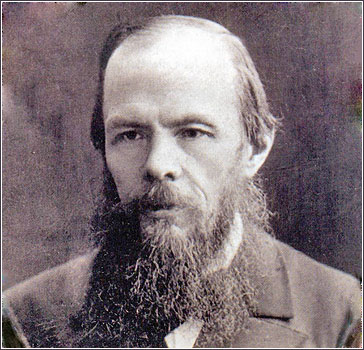
https://rickrozoff.files.wordpress.com/2011/05/dostoevsky.jpg


Kindle .99


Thursday, May 21, 2015

When Pigs Read

Our family has increased with a couple of furry additions.  Luckily they're huge readers so they fit right in.


This is Little Bear.  She likes to start the day off with some Kale and the Wall Street Journal


Here is a piggie after my own heart.  She loves Dostoevsky, although she was saddened at how "The Idiot" ended.  When asked her name she informed us that she was called "Zorgon the Destroyer".  However, we prefer to call her Princess Priscilla Piggybottom.


Is it a bookshelf?


Of course not!  It's home to a pair of book loving piggies.


Both Little Bear and Princess Piggybottom enjoy Celtic Art


Little Bear was simply shocked at the language and subject matter of  D. H. Lawrence's Lady Chatterly's Lover.  She found it so upsetting we had to quit reading half way through the novel.
She let her opinion be known in no uncertain terms.

These are our Hermit Crabs, Hermie and Kermie.  They're not much readers.


And that's enough silliness for one week.  I promise to post a book review next time.  (Princess Priscilla Piggybottom wants to impart her insight on "The Idiot." Stay tuned...)


Sunday, May 10, 2015

Three books I've just finished: Shadows and Chilvalry, We Never Make Mistakes and In Defense of Elitism


   My "have read" pile is, well, piling up so I'm going to knock out three books with one review.  I know the reviews are short and don't do the books justice but hopefully they will whet your appetite to read the books for yourselves.


http://ecx.images-amazon.com/images/I/51LunAJJl2L._SY344_BO1,204,203,200_.jpg
  
Shadows and Chilvalry: C.S. Lewis and George MacDonald on Suffering, Evil and Goodness by Jeff McInnis

George MacDonald was a Victorian author and Christian minister.  He wrote children's fantasies that spurred the imagination of countless people and particularly one.  MacDonald is credited with being the inspiration of one of the twentieth century's greatest apologists and fantasy writers, C.S. Lewis.
In his book, Shadows and Chivalry, Jeff McInnis informs the reader of both MacDonald's and Lewis' belief concerning God and His relationship to people, how they expressed those beliefs in their fiction and how the former author influenced the latter.

McInnis offers an insightful look on the particular topics of the title:  suffering, evil and goodness.  He offers an informative and interesting analysis of several of MacDonald's and Lewis's stories and how they portray each of these human experiences.


http://ecx.images-amazon.com/images/I/51H665KRP4L._SY344_BO1,204,203,200_.jpg

We Never Make Mistakes by Aleksander Solzhenitsyn translated by Paul W. Blackstock

We Never Make Mistakes are two short novels that paint a grim picture of Soviet life in the early twentieth century.  The first story, An Incident at Krechetovka Station is about a Red Army lieutenant, Zotov, who is in charge of a railroad station during WWII.  A stranger arrives who insists that he has missed his train and needs to take the next one.  At first Zotov is willing to help him, but then he becomes suspicious.  Is this man who he says he is or a deserter?  Zotov becomes tormented between the fear of letting a lawbreaker get away and arresting an innocent man whom he knows will meet an unspeakable fate if charged.  His decision haunts him the rest of his life.

In the second story, Matryona's House, a school teacher is living with an elderly lady, Matryona.  Through the teacher's eyes we see the woman's poverty and hardship.  Her house is falling apart, with mice running up and down the walls.  She barely has enough to subsist on.  She cannot work because of government regulations, she can not grow food because of government regulations, she can not receive government assistance because of government regulations. 

Both stories show how socialized economies and government micromanagement over the individual cause widespread poverty and even starvation.  I shared this story with a friend of mine from Moldova. She said, "Look down the road, Sharon.  Where do you think your own country is heading?"


http://ecx.images-amazon.com/images/I/4118Un3e-eL.jpg
In Defense of Elitism by William A. Henry III

 Henry attacks our egalitarian culture on many levels.  He defies the "victimhood" labels given to minorities.  He argues that women need to stop classifying themselves as a minority. He provides statistics showing that the assertion that women make less money than men for the same jobs is a myth.  He contends that these special interest groups are not asking for equal rights but privileged ones. 

He also attacks the public school system with its dumbing curriculum down so that even a college education doesn't hold the value it had fifty years ago. 

I agree with a lot of what he says.  I don't like being viewed through the lens of my gender and I certainly don't view others that way.  We are people.  I can't worry about other's prejudices.  Prejudice will always exist.  At least I know that every job I got was by my own credentials.  Henry makes a good argument that affirmative action will always leave women and minorities wondering if they got the job due to their qualifications or their gender/race.

I agree that much of what we're seeing is thinly veiled government control over individuals right to live according to their own convictions.  If I want to stay home and raise my children and keep house, that doesn't make me oppressed.  Conversely, if I want to work professionally, I want to get the job according to my qualifications.  I don't want the job "given" to me in order to fill a gender quota.

There are other assertions that Henry makes that I vehemently oppose.  He is anti-religion- especially Christianity and he expresses those beliefs in the most venomous of terms.  

I also disagree with his attitude that some kids aren't meant for college so we need to stop wasting our time with them.  He points to Europe as an ideal.  I've lived in Europe.  I have a Master's degree but I promise I would have been sent to a labor camp had I been educated in the European elitist system.  Man doesn't make perfect systems and our man made evaluations of people's intellect doesn't accommodate everyone's intelligence.  I don't have much faith in America's public school system either but that's another story.