Sunday, April 12, 2015

Kafka Was the Rage by Anatole Broyard


Anatole Broyard came from a French Creole family that moved to Brooklyn while he was a child.  After serving in the Army he moved to Greenwich Village in 1947 to forge an identity for himself with the avante-garde sub culture of artists, writers and musicians, otherwise known as the "Beat Generation".

This was a time when Kafka was the rage, as were the Abstract Expressionists and revisionism in psychoanalysis. (pg.3)

Broyard's book is a memoir of his early years there before he went on to become a critic and essayist for the New York Times.

He writes mostly of his sex life.  First it's with an artist named Sheri who was a protege of the artist Anais Nin.  Broyard moves in with Sheri and they live in her filthy, dingy apartment.  Sheri comes across as someone who never cleans or bathes.  When Anatole asks for the key to the hall bathroom she tells him to use the sink.  When he tells her there are dishes in the sink she responds that they have to be cleaned anyway.  Months later when he moves out he notes that the same dishes were still in the sink.  Ew.

There are other women but it would get monotonous to describe them all.  What I suppose Broyard was trying to present as Bohemian and fascinating comes across as rather boring and not very hygenic.  It's strange because  he seemingly wants to present his life in the Village as one of freedom of sexual repression and intellectual stimulation.  

It's hard to know how intellectually stimulating it was because, while he mentions the bookshop he opened and that he and all his friends discussed Kafka, Hemingway, Mailer etc.. that he attended several classes on pyschoanalysis taught mostly by German Jews who had fled Germany, he never involves the reader in those discussions.  Personally I would have found that a lot more interesting than hearing about how strange and deviant his lovers were.

That begs the question.  He talks of how the forties was a time of unleashing the desires that had been bound by uptight cultural norms.  He is arrogant in his belief that they had so much more freedom than people who limited themselves to monogamy and family.  

Yet none of his relationships sound free.  He is interested in these women for their sex.  He describes nothing else about them except how strange they are.  He portrays himself as a naive inexperienced kid who is used and manipulated by these women. 

Sometime after breaking off his relationship with Sheri,  he visits his parents in Brooklyn to find Sheri there looking at old family albums, sitting on his mother's lap.  His mother doesn't want her there but doesn't know how to extricate herself from underneath her.  Then Sheri pushes the button on the recliner causing both her and his mother to flip backward.  This view of Sheri allowed Broyard's parents to see that she never wore underwear.

It seems to me it is Broyard that is being manipulative.  He wants us to find these women disgusting because he wants to justify abandoning them.  He uses the same strategy in describing the other women in the book.  

He manipulates the reader by what he fails to mention as well.  First of all, he wasn't some kid fresh out of high school.  He was a 26 year old coming out of the army.  Secondly, by the time he moved in with Sheri, he had abandoned a wife and daughter.

I think that freedom, in Broyard's sense, is another word for selfishness.  He waxes eloquent for several pages at how inhibited and repressed the American culture was back then about sex.  He found it impossible to believe anyone could be happy being married with children.

Speaking as a member of the monogamous club, I can attest that his belief is based on a faulty premise.  He proves this himself by showing in his book how empty and self-absorbed he and his social circle was.

He apparently came to this same conclusion because this memoir, which was left unfinished, was published by his wife of 29 years after his death. 


Sunday, April 5, 2015

A Treasury of the Great Children's Book Illustrators by Susan E. Meyer


Any of us who have had children have collected at least a superficial amount of books illustrating fairy tales and other fantastical stories written for children. This wonderful book  devotes a chapter each to twelve illustrators whose careers span from the Civil War to post WWII.

The author uses a formula for each biography:  where the illustrator was born, how they were raised, where they got their education, how their careers got launched and their unique style of illustrating.  Most of them are British but a few are from other countries.  Also described is the special relationship that some of them had with the authors.


http://www.carlemuseum.org/sites/default/files/554813436_shepard_01_web.jpg
 E.H. Shepard (1879-1976)

Such is the case with E.H. Shepherd and A.A. Milne.  Shepherd is best known for his Winnie the Pooh illustrations which made him hugely popular in America more so than in England.  He patterned Winnie the Pooh after a beloved bear of his own rather than the original.  This is obvious to anyone who has seen the original Winnie in the Children's branch of the New York City library.  Shepherd also illustrated The Wind in the Willows by Kenneth Graham.  Shepherd developed close friendships with both authors which may indicate why his illustrations are so endearing.


http://www.kismetgirls.com/arabian_tents/arabian_tents_images/alice_in_wonderland_mad_hatters_tea_party.png
 John Tenniel (1820-1914)

Not all illustrators and authors got along, however.  This is true for Lewis Carroll and his illustrator, John Tenniel.  At first Carroll wanted nothing to do with Tenniel's illustrations but the success of Alice in Wonderland forced him to admit that Tenniel's illustrations contributed to the book's popularity.  It took some persuading for Tenniel to illustrate the "abrasive" Carroll's Alice Through the Looking Glass


 Arthur Rackham (1867-1939)
Rackham's Mad Hatter bears a remarkable resemble to himself.
While Tenniel's illustrations for the Alice books are the most famous they are not the only ones, nor the most beautiful.  That award would go to Arthur Rackham.  At least the female characters are lovely.  His other characters are surreal and grotesque.  However, Rackham is most famous for his fairy tale illustrations with which he adorned many books, Grimm's, Aesop's, not to mention international collections.  He enjoyed inserting himself in the pictures as a goblin or some other creature.  In the above illustration for Alice in Wonderland, Rackham has drawn himself as the Mad Hatter.
                                                                   
http://spiritoftheages.com/AR%20AFB%20C3.jpg
The King's son demands the giant's youngest daughter to wed from The Battle of the Birds
   
https://roomcandy.files.wordpress.com/2008/08/beatrix-potter-illustration.jpg
The Tale of Jeremy Fisher
http://i.ytimg.com/i/IdtrAVeAyhgbqqC5Zl71ig/mq1.jpg?v=505049e4
Beatrix Potter (1866-1943)
      
Some of the illustrators wrote their own stories.  Beatrix Potter did this.  She wrote stories in letters to a young boy who was sick in bed for a period of time.  Years later, she asked for the stories back and luckily (!) the boy and his siblings had kept the letters and were able to give them to her.  She published these stories along with her own illustrations.  Thanks to a family that didn't throw letters away, Peter Rabbit and company were saved from oblivion.


http://www.artisallwehave.com/wp-content/uploads/2011/08/edward-lear-owl-pussycat.jpg
Edward Lear (1812-1888)

The Owl and the Pussy-cat went to sea

   In a beautiful pea-green boat,

They took some honey, and plenty of money,

   Wrapped up in a five-pound note. 

Edward Lear didn't illustrate his own stories but he did illustrate poems he made up.  His limericks are probably more famous than the drawings he created to accompany them.  The book of limericks that I own aren't even illustrated by him but by another famous illustrator, Edmund Dulac.


http://www.capuletart.com/wp-content/uploads/2011/11/firebird.jpg
Edmund Dulac (1882-1953)  from The Firebird

Dulac, a Frenchman, was a contemporary of Rackham.  He was influenced by middle eastern and oriental art and illustrated Arabian Nights, Russian Fairy Tales as well as traditional western fairy tales by Hans Christian Anderson.  The colors he uses in all his illustrations are filled with rich, vibrant color.


http://www.dorsetlife.co.uk/wp-content/uploads/710-ed-Wimborne-1.jpg
 Kate Greenaway (1846-1901)


 Another female illustrator is Kate Greenaway.  Her illustrations are a little dated looking now, but were loved for their idyllic settings filled with charming children.  Although, it has been remarked that "for all their playfulness and charm, Greenaway's girls are actually melancholy, dispirited, and strangely detached from period or place."

  Kate never married but she held a fairly intense relationship with her "lover in writing" John Ruskin.  He was her closest confidant and- even though they rarely met in person- her most faithful critic and biggest influence on her painting.


http://www.brainpickings.org/wp-content/uploads/2012/08/nielsen_eastofthesun7.jpg
Kay Nielson (1886-1957)

My favorite illustrator after Rackham is someone I had not known about before, Kay (pronounced "Kye") Nielson.  Nielson was a Dane who unfortunately died in obscurity but whose art has since made a comeback.  His illustrations reflect his Nordic background and are, in my opinion, exquisite.


http://artinsightsmagazine.com/wp-content/uploads/2013/02/48213.jpg
Howard Pyle (1853-1911)

The last three illustrators in the book are American:  Howard Pyle, N.C. Wyeth and W.W. Denslow.

https://eavice.files.wordpress.com/2010/01/pirates.jpg

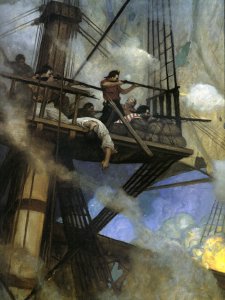
Pyle, a strict Puritan, relegated himself to historical legends and adventure novels about pirates, Indians, cowboys, Robin Hood and Arthurian legends by authors such as Robert Louis Stevenson, Daniel Defoe, and James Fenimore Cooper- as did his pupil N.C. Wyeth.  Denslow is famous for his Wizard of Oz paintings.
http://homeschoolcommons.com/wp-content/uploads/2012/06/wonderfulwizardo00baumiala_0081.jpg
 W.W. Denslow (1856-1915)


I found this book in the library but shortly after diving into it I ordered a good used copy online.  Of course what money I saved from buying the book for a couple of dollars has probably been countermanded by all the collections of fairy tales and the like that I've bought filled with the illustrations of these wonderful artists.


Sunday, March 29, 2015

Twelve Years a Slave by Solomon Northup


I heard the movie was horribly violent, something I'm extremely sensitive to, so I never saw Twelve Years a Slave.  I happened to come across the book at a  bargain table in Walmart.  The price, an alluring $2.97, motivated me to pick the book up and glance through it.  When I realized that it was a non fiction book written by a former slave of the 19th century, I bought the book and read it in a couple of days.

Solomon Northup was a free black man born, educated and raised in the north until in 1841, around the age of thirty, he was kidnapped and sold into slavery in Washington DC.  He was married at the time and had children but none of them knew how or why he disappeared until twelve years later.

Perhaps most of you have seen the movie so I don't need to retell the story. Instead I will touch upon those things which most impressed me.

First, Northup is an eloquent story teller.  His writing skills attest to the type of education he received and the ability of black people to become well educated and cultivate their God given intelligence like any other race.  That seems an obvious thing to say today, but it must have been surprising, even amazing at the time the story was written.  One of the justifications used to enslave black people was that they weren't as "evolved" as white people.

Another thing that impressed me was the even handed story telling.  Northup could have demonized every white person in his story but he chose to speak honestly of his experience.  He speaks of his first owner, William Ford, as a God-fearing, kind and merciful man.  He treated his slaves with justice, never forcing them to work more than they could bear and as a result received far more work out of them than any tyrant would have.  Northup observes that if all slave masters were as Mr. Ford slavery would never have died out because men and women under such care would have been content to serve all their lives.

Ford was the exception rather than the rule, however.  Northup makes an acute commentary of the dastardly effects slavery has upon the human soul.  Not only does it rob the slave of dignity and humanity, it brutalizes the slave owner as well.  People who could have been kind, caring, and edifying citizens were reduced to brutish thinking, robbing themselves of any dignity or respect they might otherwise have possessed had they not been slave owners.

And unfortunately for Northup, the next owners he served under certainly vied for the prize of being the most despicable, hateful, animalistic monsters ever to plague the planet.  Northup describes in heart breaking terms the savage treatment under the hands of people who suffered no accountability for their actions.  At least not while alive.

The final thing which impressed me, and I don't know if the movie brought this out, was Northup's Christian faith that gave him the strength and hope to press on through his trials, knowing that one day there would be a deliverance and a reckoning, even if at the time he didn't know if it would happen during his lifetime.  I believe that is why there is no trace of bitterness in his account of his ordeal.

Another interesting point to the story was Northup's meticulous descriptions of life on plantations.  He details the daily routine of slave life, cotton harvesting and also of corn.  These descriptions make his book a valuable record of history.

I'm glad that instead of spending the rest of his days shaking his fist at God and asking "why?"  Northup instead used his twelve years to expose the evils of an accepted practice and contributed to its eventual elimination.

http://www.comicbookreligion.com/img/s/o/Solomon_Northup.jpg
Solomon Northup


Fully illustrated 1853 Edition:


Sunday, March 22, 2015

Burmese Days by George Orwell


Burmese Days is a fictitious novel based on Orwell's own experience while working with the Indian Imperial Police in the 1920s.  If E.M. Forster wanted to prick the British conscience in A Passage to India, Orwell wants to bludgeon it.

The story centers around a small group of British people living in a remote part of Burma, working in the jungle.  Their one venue for socializing and amusement is a country club where all the expatriates gather to get on each other's nerves and drink themselves blue.

There's only one woman, Mrs. Lackersteen.  She pompous and racist, refusing to learn the language other than the basic guttural Urdu she needs to order about servants.  Her husband is a drunken, lecherous lout who, when not drunk, engages in sexual escapades with native women.

Most of the British men there do, but Mrs. Lackersteen's greatest fear is to be raped by an Indian because she knows that is every Indian man's ambition.

The rest of the characters are just as odious with the exception of the ones that are pathetic. John Flory would fall into the latter category. Flory is the main protagonist of Burmese Days.

Not that he doesn't do things that are odious.  He keeps a Burmese girl, Ma Hla May,  that he doesn't love, doesn't even really enjoy sleeping with but else is there to do in the jungle? Then the Lackersteen's niece come to live with them.

Elizabeth is a young woman come from Paris where she was living with her mother until she died, her father having already passed.  Flory cannot contain his excitement to meet and befriend Elizabeth and kicks Ma Hla May, out.  He's callous about it but she doesn't leave without putting up a fight.

Ma Hla May knows no depths in which to debase herself to keep Flory from throwing her over.  She prostrates herself before him, cries, pleads, begs, cajoles and demands lots and lots of money.

Flory knows that Ma Hla May cares nothing for  him.  She even has her own lover, aside from Flory.  But she has told the village people she is married to him.  This gives her an elevated status.  She spends the money he gives her as fast as she can run from his house to the market to buy garish trinkets and sarongs that she adorns herself with and parades herself in front of the other villagers.  This is what she is pleading for.  Not love, position.

Flory knows he should put his foot down.  But he feels guilty.  So he continually plies her with the rupees she demands just to make her leave.

After that, he spends money on himself to look more like a gentleman.  Then he introduces himself to Elizabeth.  They go for long walks together, to the market, to native dances.  By her side, Flory talks continually, poetically, of his experiences in the jungle, the natives, the customs, culture all of which he appreciates and enjoys.  He is desperately lonely and this young woman is the life raft that he clings too.

Too bad Elizabeth is too close-minded to appreciate it.  Orwell makes a commentary on human nature.  Whether he believes this or he's simply trying to explain his characters' attitudes, I'm not sure.  He states that whatever happens to someone, albeit ever briefly, in their formative years, this will shape and color a person's thinking for the rest of their life.

Flory has an purple-blackish birthmark that covers one side of his face.  He was tormented for it when  a school boy and has allowed his disfigurement to determine his self worth.  It doesn't, however, deter him from pursuing Elizabeth, his loneliness overriding his usual diffidence.

For her part, Elizabeth spent two years in a school for rich girls.  Her parents weren't rich but lived extravagantly.  They weren't able to keep it up and soon sunk into financial straits.  Elizabeth spends the rest of her life comparing her circumstances and the people she meets to those two years around the privileged upper class.  Therefore, if one wasn't interested in sports, hunting and spending scads of money, you fell under her category of "beastly" and boring.

Flory is well read and a deep thinker.  Needless to say Elizabeth finds him uninteresting, even offensive.  His desperate need for a companion blinds him to this fact and while he perceives her displeasure he can't arrive at why.

But Elizabeth is out to get married.  Her aunt has made it very clear that her stay with them is only until she achieves this goal.  Since Flory is the only game in town, she determines to settle for him.  It all seems a cinch, although I can't imagine Flory being satisfied with such a simpleton for long.

It isn't meant to be, however.  A young hot shot Lieutenant and youngest son of a Lord has arrived with the Indian policemen.  Lieutenant Verrall is good looking and that's the only nice thing anyone can say about him.  He's cold, rude, offensive, prideful and anti-social. 

This doesn't stop Elizabeth and Mrs. Lackersteen from snubbing Flory and chasing after Verrall.  Verrall finally notices Elizabeth and they spend all their evenings together.  This almost drives Flory mad with despair.

Elizabeth and her aunt wait for the marriage proposal that is sure to come any day now.  It doesn't come.  It never comes.  Verrall loathes women.  Elizabeth was merely his temporary amusement.  When he's transferred, he leaves without telling anyone.

During all this, a riot occurs.  This riot is no random act of frustration and gnashing of teeth by the natives.  It has all been orchestrated by U Po Kyin.  U Po Kyin is a local magistrate and there aren't enough words in the English vocabulary to describe what a two-faced, treacherous, hateful, spiteful, disgusting, overgrown, conniving weasel and hugely successful magistrate he is.

He is a master of destroying men's lives both Burmese and British.  Through blackmail, bribery, anonymous letters, thievery and betrayal U Po Kyin works his way up the ladder of political echelon. His adversary is Dr. Veraswami who is as kind and innocent as U Po Kyin is evil. 

Flory and Veraswami are great friends and enjoy debating over the virtues of the British Raj.  Ironically, Dr. Veraswami argues in favor of the English presence in Burma, and English people in general while Flory insists they are nothing more than a  blooding-sucking colonial power. 

U Po Kyin makes it his mission to destroy Dr. Veraswami and Veraswami knows this.  He pleads with Flory to elect him to the English country club because it would elevate his status in the community and immunize him against U  Po Kyin's schemes.

At first, Flory cowardly refuses to stand up to the other members of the club, but when a second riot breaks out -one not planned by U Po Kyin- Flory develops a temporary backbone, single-handedly quells the mob, and demands that Veraswami be elected as the token non white member to the club.

Everything seems to work out well.  Elizabeth has returned to Flory after Verrall's desertion and Veraswami is going to become a member of the club.  Then Ma Hla May makes an atrocious scene in the middle of a church service demanding money from Flory.  She purposely has made herself as hideous and terrible looking as possible and acts like a crazy person.  She has to be dragged out of the building.  Flory isn't up to the occasion.  To make matters worse, his face turns so pale that his birthmark stands out in dark contrast.

This is what Elizabeth cannot forgive him for.  Not having a mistress but for having such an ugly birthmark so grotesquely standing out.  She coldly dismisses him.  Flory returns to his house and shoots himself.

Because suicide is taboo in Burmese culture, Veraswami's reputation also sinks because of his association with Flory.  He is not elected to the club but is transferred to some remote hospital dump to practice medicine the rest of his life.

And you can guess who put Ma Hla May up to it.

U Po Kyin is elected to the club and eventually earns the title of Deputy Commissioner.  Everything goes according to his plan.  He cheats people, abuses young women, ruins people's careers and even causes the deaths of his fellow Burmese.  His wife chides him for his evil acts insisting that he will come back in the next life as a rat or snake.

U Po Kyin is not concerned.  He has been saving up money to build pagodas at the end of his life to earn his way up to Nirvana.

I find U Po Kyin's attitude very interesting.  Apparently he believes in the effectiveness of lip service.  He seems to think that it doesn't matter how black one's heart is as long as one performs the correct deeds he will be rewarded the prize of the virtuous.

He drops dead of a heart attack three days after being elected Deputy Commissioner, before he is able to build the pagodas.  One can form their own conclusions.  Is he scurrying around as a rat or a snake?  Can a rodent or reptile act in a way that would merit coming back as a higher life form after it dies?  I've never seen a virtuous snake or rat.  Or any animal. Certainly not my dogs. They'd be returning as roaches.

I'm reminded of Mark 8:36What does it profit a man if he gains the whole world just to lose his soul?

The other question is, how accurate a portrayal does Orwell provide of the British colonialists?   Is this a rather heavy slathering of the very worst in human nature or is Orwell being objective? 

I agree with Graham Greene when he criticized Virginia Woolf and E.M. Forster for creating characters who "wandered like cardboard symbols through a world that was paper-thin...there was no sense of reality in their writings....to lose sight of 'the religious sense' was also to lose any 'sense of importance of the human act.'

Evelyn Waugh said, "Without God, an author could not give his characters reality and depth."  I believe this is the answer.  Neither Forster or Orwell create characters with much redeeming value and I've never met such a person.  

As Pierre discovered in War and Peace,  it is by first loving people one invariably finds things to love about them.

And yet, I found Orwell's characters fascinating even if they were types and caricatures rather than real.  He draws so well and with such logical precision.  If I disagree with his outlook, I appreciate his ability to express it.

This is the first of three novels by George Orwell that I will be reviewing.  The other two, Keep the Aspidistra Flying and Coming Up for Air will be posted as soon as I finish reading them.


Sunday, March 15, 2015

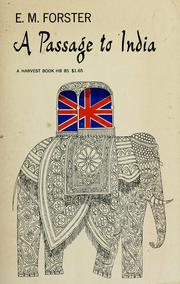
A Passage to India by E.M. Forster

 https://covers.openlibrary.org/w/id/6630638-M.jpg

It seems I'm reading and reviewing a lot of books lately that I was prejudiced against reading in my earlier days.  I've noticed that the last few posts begin with, "known about this book for years but didn't read it because...." or something like that.

Guess what?  I knew about E.M. Forester since college but had no desire to read him because the movies based on his novels, such as Howard's End and A Room With a View didn't interest me.  I enjoyed A Passage to India but didn't know it was by the same author.

Soooo...what was the impetus that impelled me to buy most of E.M. Forester's books?  Good question.  I will gladly tell you.

I read about him in biographies of writers that I loved.  There's a whole school of British writers that attended  Oxford University in the first twenty years of the twentieth century.  Based on the recommendation of writers I like I am now reading authors I didn't like.

E.M. Forester belonged to the latter group but now belongs to the first.

A Passage to India is about British expatriates in the country of the title.  Forester draws characters from English, Hindu and Muslim backgrounds and the complicated relationships that arise when different cultural semantics collide.

I found the dialogue, especially between the Indians, to hold a delicate charm.  They are funny and endearing but also hold to certain prejudices against each other-especially the Muslims and the Hindus.

The British are snobby to all Indians indiscriminately although some are sympathetic and befriend them.

Basic storyline:  Two women, Mrs. Moore and Adela Quested come to India to meet Mrs. Moore's son, Ronny Heaslop.  Adela is engaged to Heaslop who is a British official in India.  Presumably their married life will be spent largely in India.

Adela is excited and eager to tour the country and meet Indians.  She is naive and ignorant of the social boundaries that delineate her race from the natives.  Nevertheless, she and Mrs. Moore  are able to persuade Dr. Aziz, a Muslim physician who has befriended Mrs. Moore, to take them on a tour of the Marabar Caves.  An Englishman, Mr. Fielding, who is also friends with Aziz, is to accompany them.

 Fielding misses the train that takes the ladies to the Marabar Caves so Aziz and the women go alone. 
Aziz is an exuberant, emotional man and goes to great trouble and personal expense to make this an impressive tour for the ladies.  He hires servants, an elephant, and an incredible amount of food to take on the trip.  While Aziz feels warm affection for Mrs. Moore, largely because of the respect she shows him, unusual for a British citizen, he does not care for Adele and a lot of his generosity is motivated by personal pride and honor as it is out of genuine esteem.

 When they arrive, Mrs. Moore is too tired to walk further so Adela, Aziz and a servant tour the caves alone.  Adela innocently asks Aziz a question about his late wife, which he finds personal and offensive.  To hide his awkwardness he walks off into a nearby cave by himself and smokes a cigarette. 

When he returns, he finds Adela is gone.  He frantically looks everywhere for her,  running inside the other caves, asking the servant who knows nothing.  Finally he sees her down the hill talking to another woman, Mrs. Derek.  He runs down the hill calling to her, but the women get in the car and drive off before he can reach them.

Feeling his excursion is a failure, he rejoins Mrs. Moore, who hasn't seen Adela and can offer no explanation for her behavior and they return home.

When they get back, Aziz is arrested on charges of sexual assault against Adela.


This plot is merely the skeleton upon which Forster fleshes out his actual purpose.  He wants to show the tightly wound relationships between the British rulers over the Indian subjects in the 1920's, shortly before Indian independence.

What I admire most in Forster's writing here as well as in Where Angels Fear to Tread is his ability to switch narrating voices.  The three main voices are from the limited perspective of Adela, Mr. Fielding, Aziz and a third person omniscient narrator.  Because we hear their perceptions it is easy to sympathize with these characters and less so with the others whose thoughts we never learn and can only judge from their actions.

Forster switches back and forth between these voices so we can see and understand how they react to the words and actions of the other.  He shows how great misunderstandings occur, primarily because of how the English and Indian cultures process and express themselves.

There is a great deal of cultural prejudice on all sides, including between Indians of Muslim and Hindu religions.

Things come to a satisfactory conclusion and requires humility, repentance, and forgiveness for the main characters.  Adela eventually leaves India, admitting to herself she really doesn't love Heaslop.  After some gross misunderstandings between Fielding and Aziz created by their cultural differences, they eventually reconcile and resume their friendship.  

Fielding, although middle aged, visits England and marries Mrs. Moore's younger daughter.  Dr. Aziz also marries.  Even so, Forster implies that true love is not something anyone can attain.

It's apparent from the omniscient narrator that Forster himself believes in nothing and takes pains to show that, really, that is all life has to offer.  No one truly loves anyone else.  No one can know true love, romantic or otherwise.  Every potential friendship or marriage is tainted by an underlying ennui and emptiness.

Even so, I very much liked his characters and his story line development and if that's how Forster felt about life, too bad for him.

This is the second book I have reviewed of Forster.  I will be soon reading and reviewing more.


https://shawjonathan.files.wordpress.com/2011/01/emf.jpg


2.99 on Kindle


Sunday, March 8, 2015

As I Lay Dying (1930) and The Sound and the Fury (1929) by William Faulkner


Back in the nineties, one of my sisters completed her Master's Degree in English Literature, boxed up all her books, stuck them in a closet in my parents' house and moved to France.  While she was away I took the boxes out and carried them to my apartment.  I read all of her books except those of a particular author.

 It's not that I didn't try to like William Faulkner,  I simply couldn't make head nor tails of what he was saying.  He was  so weird, obscure, and gruesome.

My sister hated Faulkner so I didn't receive any encouragement from the English Lit expert.

I don't know what motivated me to start reading him lately.  Could have been the book covers.  The Vintage paperback editions are particularly appealing.  Maybe it always ningled me that I tried to read a literary great and failed.

Anyway, I checked As I Lay Dying out of the library and found myself slowly sucked into the story the way a rodent is hypnotized by a snake.  I couldn't stop and, in a dark way, enjoyed the story.

http://d.gr-assets.com/books/1349818792l/77013.jpg

As I Lay Dying is a grim, surreal story about a backwoods family in the deep South.  They are trying to bury their wife and mother in Jefferson, a town far enough away to make it a real journey.  Floods, overflowing rivers, dead mules, a decaying corpse... nothing deters this family from fulfilling the mother's dying wish. There's a zinger at the end but I won't tell you what.

Each chapter is narrated by a different character in the story.  It also jumps back and forth in time so that the reader sees a particular scene through various viewpoints.  This is helpful in understanding what is going on.  What is only peripherally understood by one narrator is made clear through the eyes of another. 

Of course, it's all perceptual.  Some of the narrators are young and don't understand what's going on themselves.  Others possess disturbed minds and see things through a filtered lens.  

One chapter is  told by the dead woman (back when she's alive-time is not concrete in this novel).  Apparently she hates (hated) all of her family members.  The reader isn't sorry she's dead and wonders why any of her relatives would be.

 Faulkner captures the spirit of a bygone South that I'm not sure exists anymore.  If it ever existed.  The characters, for all their diversity, were products of Faulkner's mind.  How reliable an observer was he?

My sister would call him an unreliable one.  What she learned about Faulkner was that he was bitter toward certain  families in his Mississippi hometown who thought they were too good for him.  According to her, his novels were his revenge against them.


https://onehundredonebooks.files.wordpress.com/2011/09/sound_and_the_fury-cover.jpg

It's not the plots so much that interest me in Faulkner's stories.  It's the way he tells the story.   It's like a puzzle.  Who is talking and what is it they're saying?  Faulkner refuses to help the reader out.  Here's how The Sound and The Fury starts out:

Through the fence, between the curling flower spaces, I could see them hitting.  They were coming toward where the flag was and I went along the fence.  Luster was hunting in the grass by the flower tree.  They took the flag out, and they were hitting.  Then they put the flag back and they went to the table, and he hit and the other hit.  Then they went on, an I went along the fence.  Luster came away from the flower tree and we went along the fence and they stopped and we stopped and I looked through the fence while Luster was hunting in the grass.

Any idea what's going on?  I didn't.  My smarty husband immediately guessed that the narrator was watching a golf game but that was not obvious to me.

Furthermore, the narrator, Ben Compson, is either mentally handicapped or autistic.  The first quarter of the book is narrated by him.  He is not an omniscient narrator.  He only says what he knows as far as he is capable of understanding what is happening. 

But he does accurately quote the other people around him.  This includes siblings, his mother, and the black servants that care for him.  Through Ben's concrete observations of what is happening to himself and what he see and hears, the reader is able to figure out character names and their relationships with each other.

Of course, Faulkner doesn't make it easy for you. Halfway through Ben's narration we find out that Ben's name was originally Maury.  His mother changed it for complicated reasons.  So when he's talking about Maury in the past he is actually talking about himself.  Except when he's talking about his uncle whom he was named after.  Insert a smile and a wink here.

Then there's Quentin.  First, Quentin's a he, then Quentin's a she, then back to he, etc... I'm thinking what in the blazes is going on here?!?  Finally in the last half of the book we discover there's two Quentins.  Quentin Compson is the brother of Caddie who ran off, got married, and named her daughter after him.  Since everything is from inside different people's minds, they simply think about what's going on, and what they think about what's going on, without offering the reader any information they don't have to explain to themselves.

There's only four chapters to the book.  At 321 pages, that makes for long chapters.  The first and last two chapters take place only a couple of days from each other.  Naturally they're not in chronological order.  That last two chapters are separated by one day.  That day belongs to the first chapter.  The second chapter is narrated by the brother Quentin eighteen years earlier. 

The storyline?  Not complicated.  An old Southern family, the Compsons, is in its final decay. There is quite a list of characters but they mostly exist in the narrators' minds because they're either dead or have run away. 

 All that's left is one brother, Jason, Quentin-Caddie's daughter, Ben and the mother.  The mother stays in bed most of the time demanding to be waited on hand and foot by Dilsey, the old family servant, and Dilsey's son, Luster, who also is in charge of Ben.  

Jason has a small business but he's about the nastiest and meanest of the whole bunch.  One thinks that Caddie and her brother Quentin escaped to get away from him.  Caddie gets divorced and sends her baby back home.  She sends money for her keep.  Quentin never sees the money because Jason keeps it squirreled away for himself.  

The last two chapters are mainly narrated by Jason and a angry little mind he has.  His whole life seems to be bent on domineering his niece and cheating her out of her money.  She knows this and finally breaks into his safe, steals the money, and runs off with a carnival hand.  Jason demands police intervention but it seems there are no secrets in this small Mississippi town.  The police chief insinuates that the person who may need to be arrested is Jason himself. 

Even though Jason is a nasty, spiteful person, his mental narration is the most interesting.  In all the venom, one hears the cry of despair over forsaken dreams, ambitions and frustrated plans.  He's the most real of all the characters and the most poignant. 

Well, not the most poignant.  That would be the servants.  Serving selfish people, having to care for a thirty year old man with the mind of a toddler, they show the most dignity and strength.  Faulkner in his end notes says, 

And that was all.  These others were not Compsons.  They were black:

Luster.  A man, aged 14.  Who was not only capable of the complete care and security of an idiot twice his age and three times his size, but could keep him entertained.

Dilsey (the housekeeper). 

They endured.

Should you read Faulkner.  For all the chaos, obscurity and grimness, I can honestly say I have found him to be a rich and rewarding read.  A guilty pleasure in fact.  I've only lately confided to my sister that I like reading him.

She doesn't approve. 


Sunday, March 1, 2015

Where Angels Fear to Tread by E. M. Forester

 https://margo187.files.wordpress.com/2014/02/2117263763.jpeg

This is the first book I've read by E. M. Forster.  He's another author, like Thackeray, that I was never motivated to read, especially after seeing the movies Howard's End and A Room With a View, neither of which impressed me much.

As I said in a previous post, there are seasons to read certain books.  And this is apparently the season for me to read E.M. Forster as well as Thackeray (and Evelyn Waugh but more about him later).

Spoiler alert:  Don't read my review if you don't want to know how the story ends.

Lilia, the widow of the son of a upper crust family, the Herritons, takes it into her head to travel to Italy by herself.  Her primary objective is to escape the domination of her late husband's family.  While in Italy she meets an Italian and impulsively marries him.

Philip, the brother of Lilia's late husband, travels to Italy to retrieve her but finds that it is too late.  He meets the husband, Gino, finds him to be a working class regular fellow that is likeable, but, tragically, not English, hence the scandal.

Philip returns to England empty handed and for the first half of the novel we read about Lilia and her life free from the Herritons.

Except it isn't free.  She finds that Italian culture is not advantageous for women.  They are expected to lead largely confined lives.  Lilia finds herself stuck in a house, alone most of the time, friendless, and for the most part husbandless.  Gino, being a man, is not limited to staying at home but enjoys a robust social life with both men and women. And since he doesn't need to work having married a woman with money, his socializing is pretty much unfettered.

Half way through the book, Lilia has a child and dies in childbirth.  You feel relief for her that she finally has escaped.  

The rest of the book is about the Herritons.  They discover Lilia had a child because Gino has been sending postcards and photos of the baby to Lilia's young daughter whom she left behind with her husband's family (as a mother I will never, ever understand how anyone could do that).

The matron of the family, Mrs. Herriton determines that they must rescue Lilia's baby from the abominable fate of being raised Italian and sends Philip back, along with his sister Harriet, to negotiate terms  with Gino (aka bribe) to gain custody of the little boy who is now nine months old.

Philip and Harriet go to Italy.  Philip spends time with Gino, finds that he likes him a great deal and also realizes that Gino is never going to relinquish his baby.  He returns to the hotel to inform his sister of this.

At the hotel he finds his sister gone and frantically looks for her. He finds her in a horse and carriage on the way to the train station.  He jumps into the carriage to discover that his sister has kidnapped the baby and intends to rush back to England with it.

This never happens. The carriage runs into a ditch and overturns.  The baby is killed.

  Many observations can be made about this strange little story.  E.M. Forester, as in his Passage to India (which I've just started reading), is making a pretty scathing statement about his countrymen.  In the Herriton's effort to rescue a baby from the barbarity of a Mediterranean, Papist upbringing, they themselves commit a number of barbarities.  They attempt to buy a baby, and when that fails, one of them kidnaps the baby and commits manslaughter.

Now, not all the Herritons are presented so starkly.  Really just mother and daughter.  Philip is caught in the crossfire.  He  didn't want to rescue Lilia and neither did he want to buy Gino's baby.  But neither does he seem possess the strength to stand against the tide of his family.  

One other character of significance is included in this tale. A Miss Abbot.  Lilia meets Miss Abbot when she first arrives in Italy and is encouraged by her to marry Gino.  Later, Philip meets Miss Abbot in Italy and finds a contrite woman who regrets her part in Lilia's marriage.

When Philip returns to Italy he finds Miss Abbot there ready to fight Gino for the baby.  After meeting with Gino, she makes an about face and convinces him never to give up his baby but to never marry again either.

Philip, with his interactions with her both times in Italy finds that he has fallen in love with Miss Abbot.  They return to England together but it is not meant to be.  On the return trip, Philip realizes that Miss Abbot has fallen in love with Gino.

I suppose this novel, like A Passage to India, was E.M. Forster's call to the British to awaken their conscience to their own particular brand of racial superiority.  Today it seems rather quaint.  With our politically correct social boundaries, westerners bend over backwards to spine breaking contortions to persuade the world and themselves that they are inclusive and tolerant and pro diversity.  Which is fine as long as it's sincere and not merely for show.

E.M. Forster's writing style is fast flowing and I enjoy his dialogue and story developments.  I have since bought very nice hardcovers of A Room With a View and Howard's End.  You can expect reviews of them in the future. 

http://media-1.web.britannica.com/eb-media/82/11782-004-305E324D.jpg